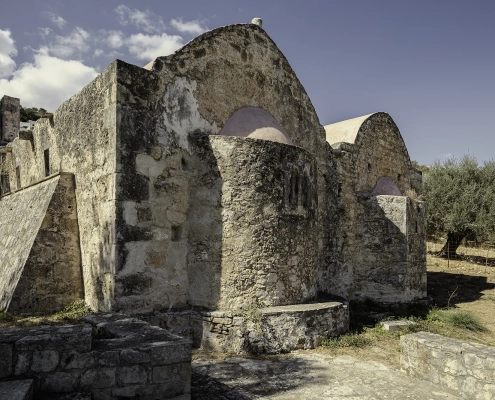
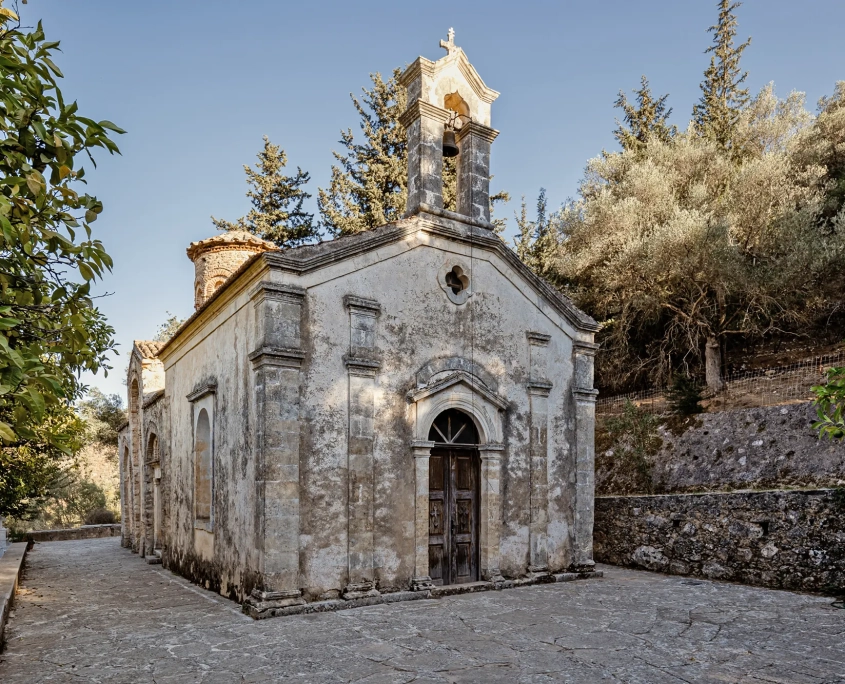
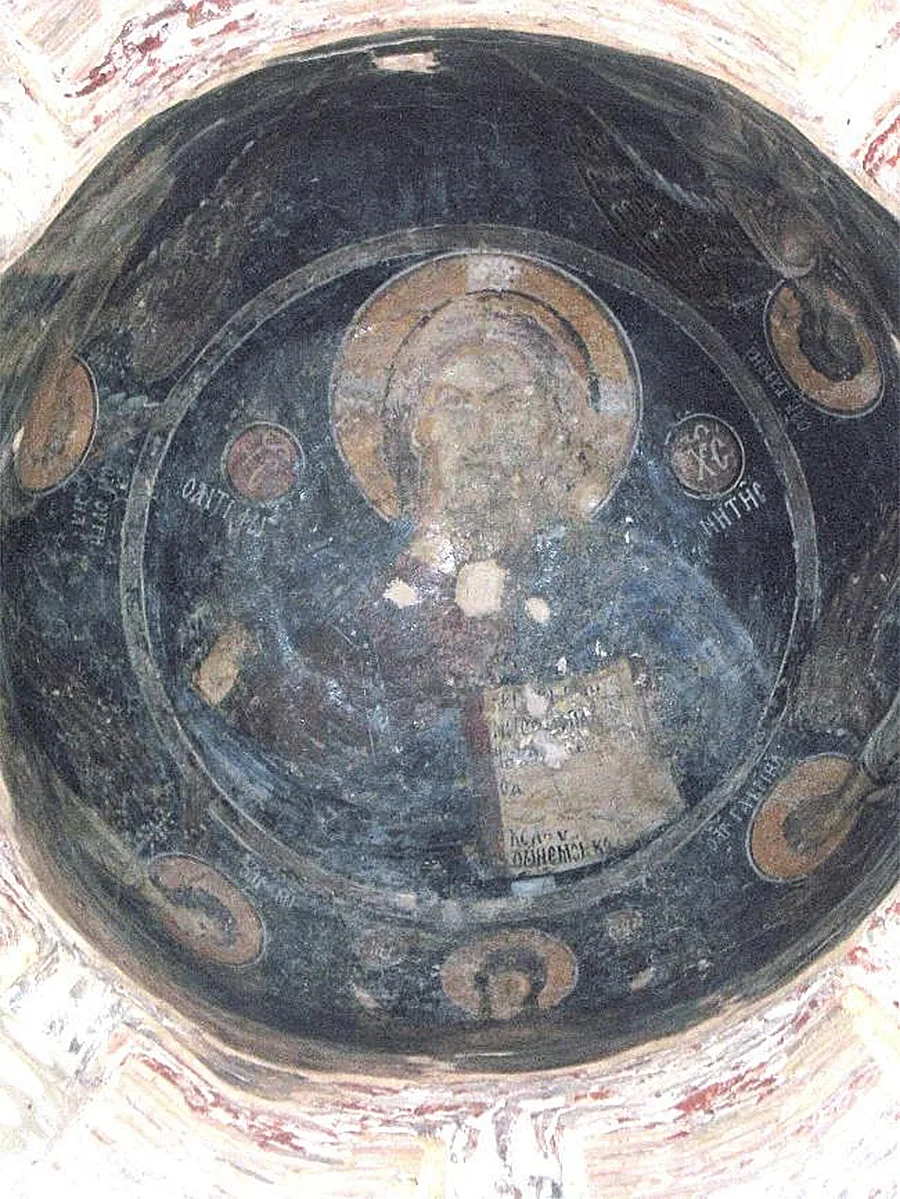
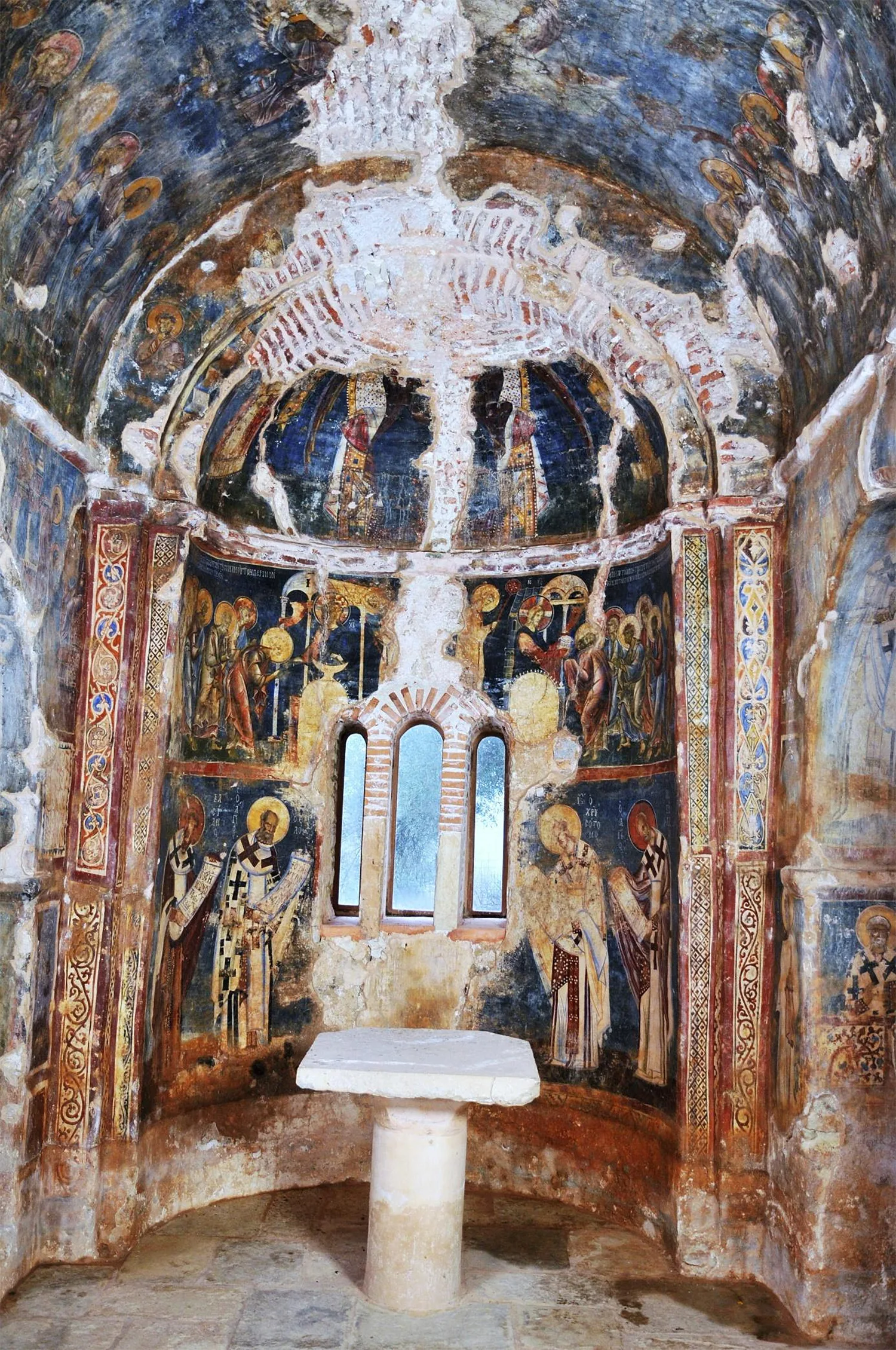
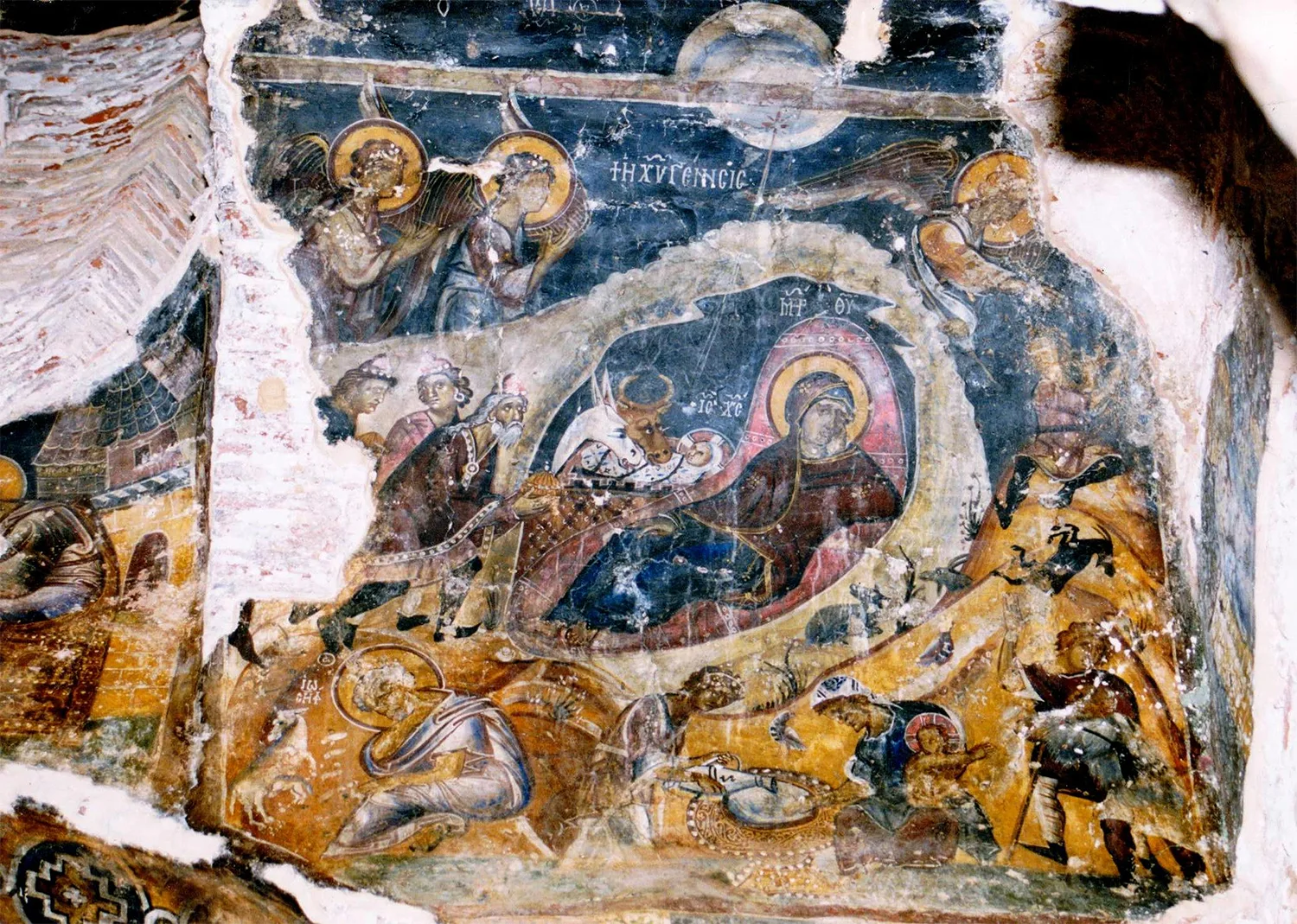
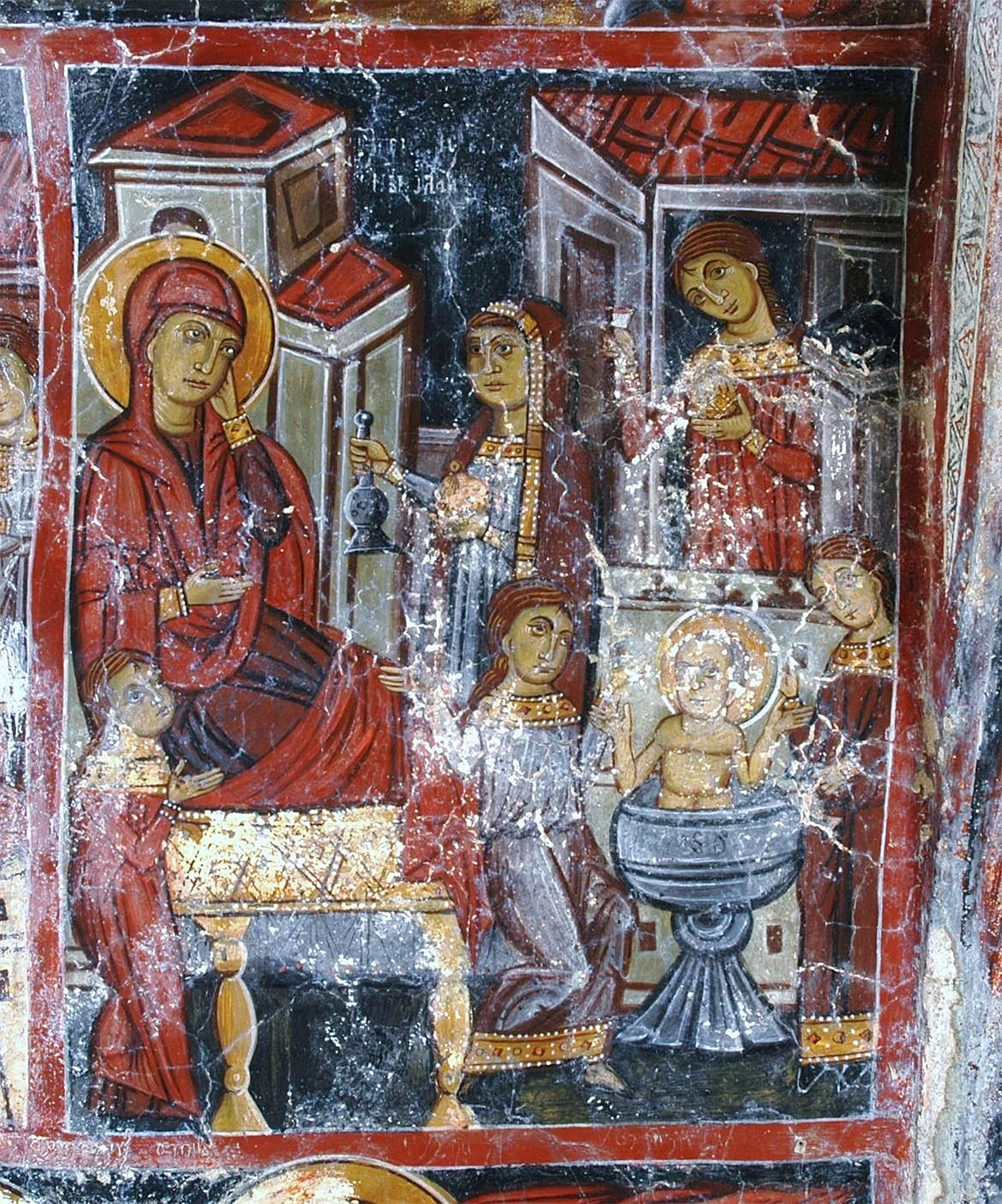
Most of the fresco decoration has survived, making this one of the most fully preserved iconographic programmes on the island.
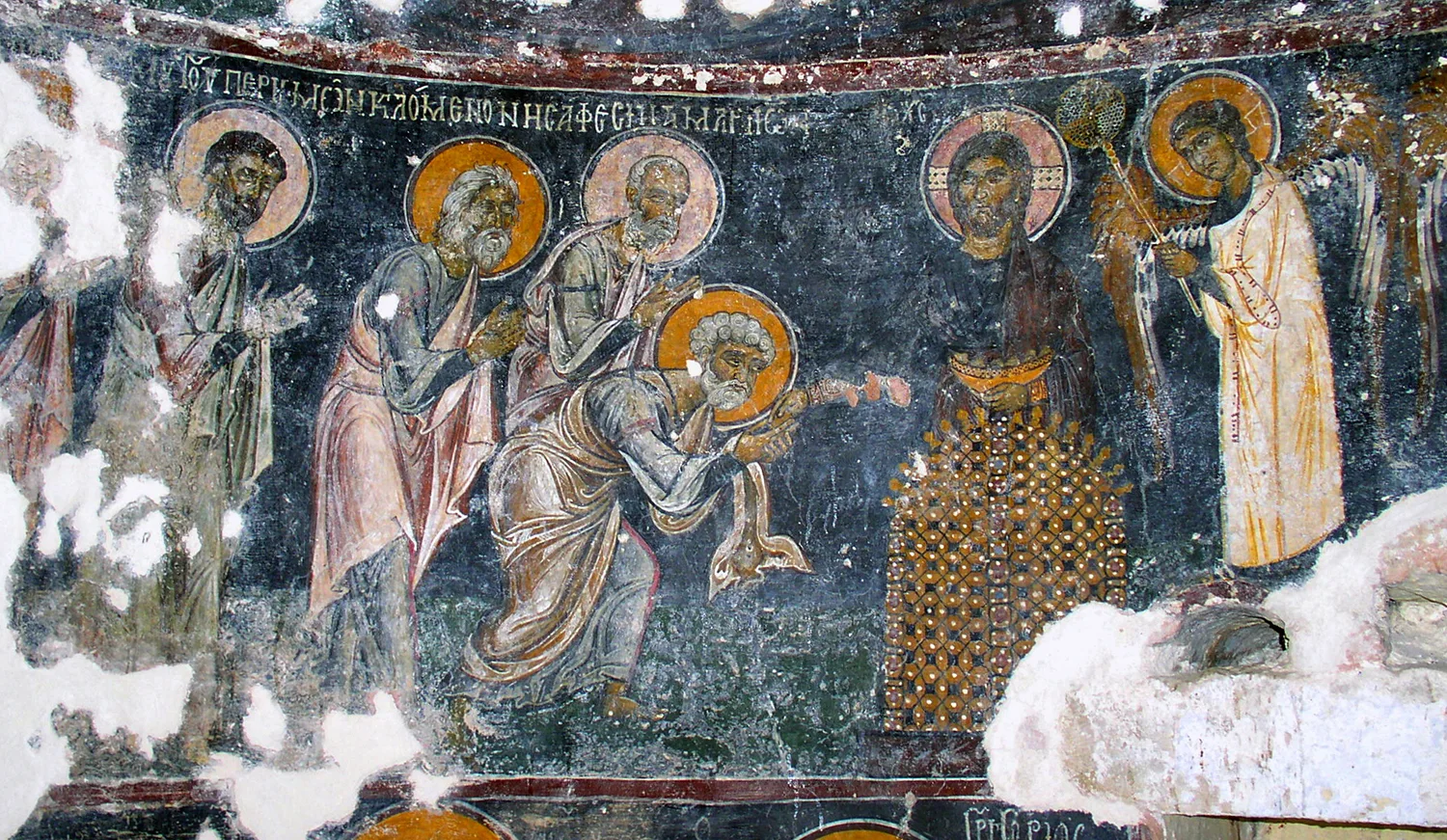
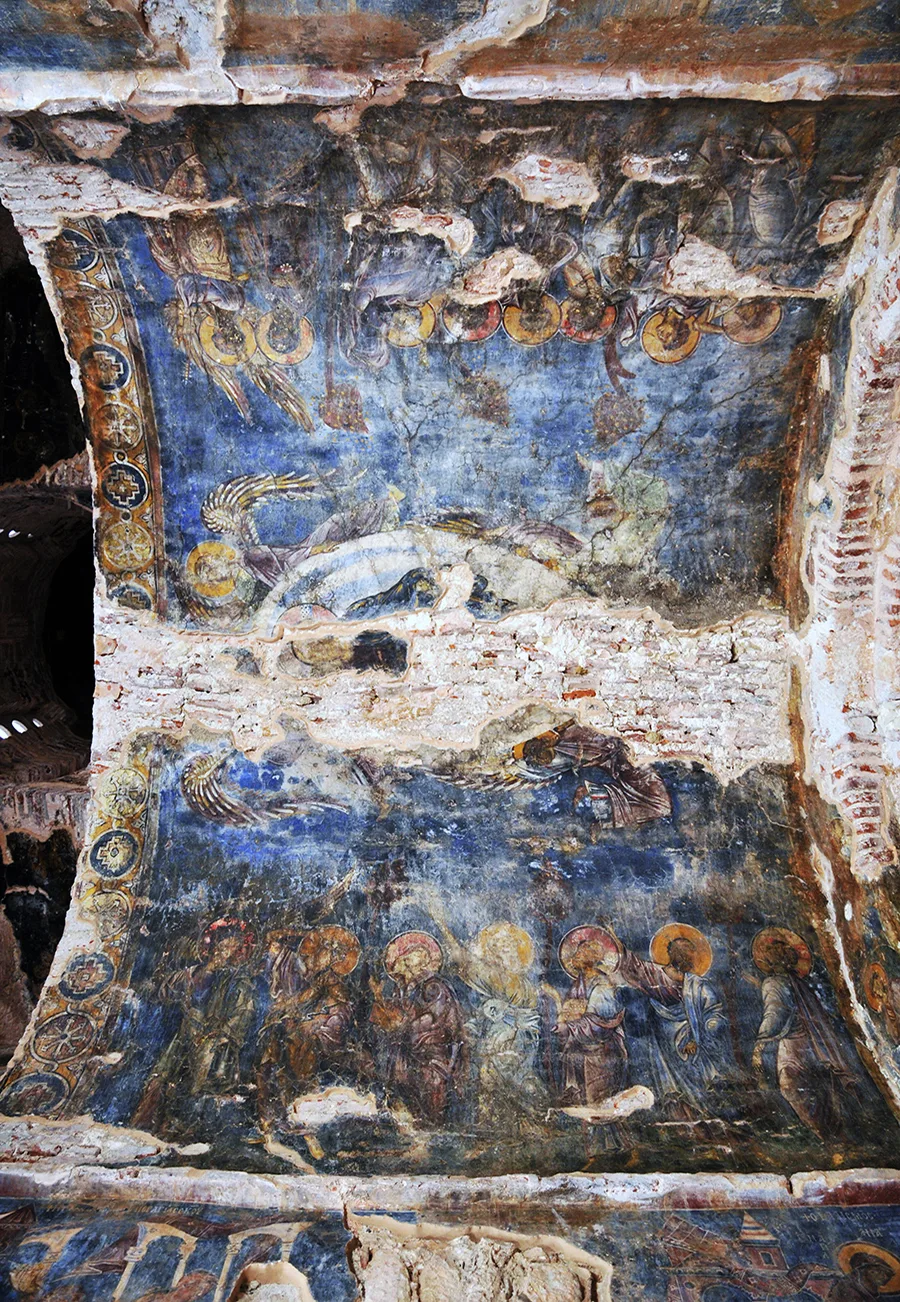
The scene of the Ascension that adorns the eastern barrel vault stands out vividly. It is a multi-figured scene, with the figures comfortably arranged in space, their intense movements indicated by their flowing garments. The otherworldly environment of the theophany, the manifestation of the divine, is indicated by the movement of the olive trees, shaken as if by a windstorm, and by the strongly twisted postures of the figures, reflecting their inner turmoil. The figures are turned towards the ascending Christ, who is illuminated within a mandorla borne by angels.
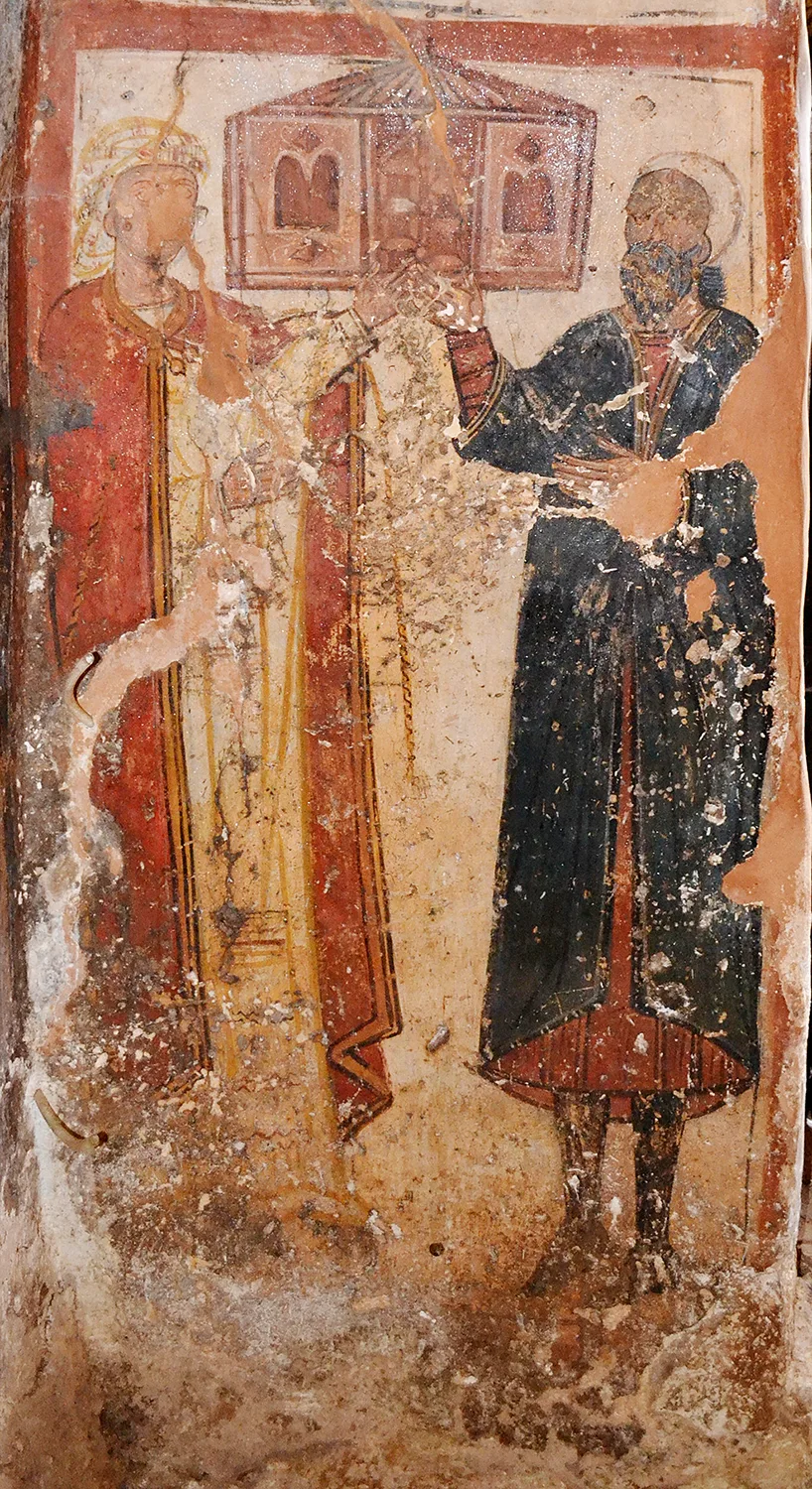
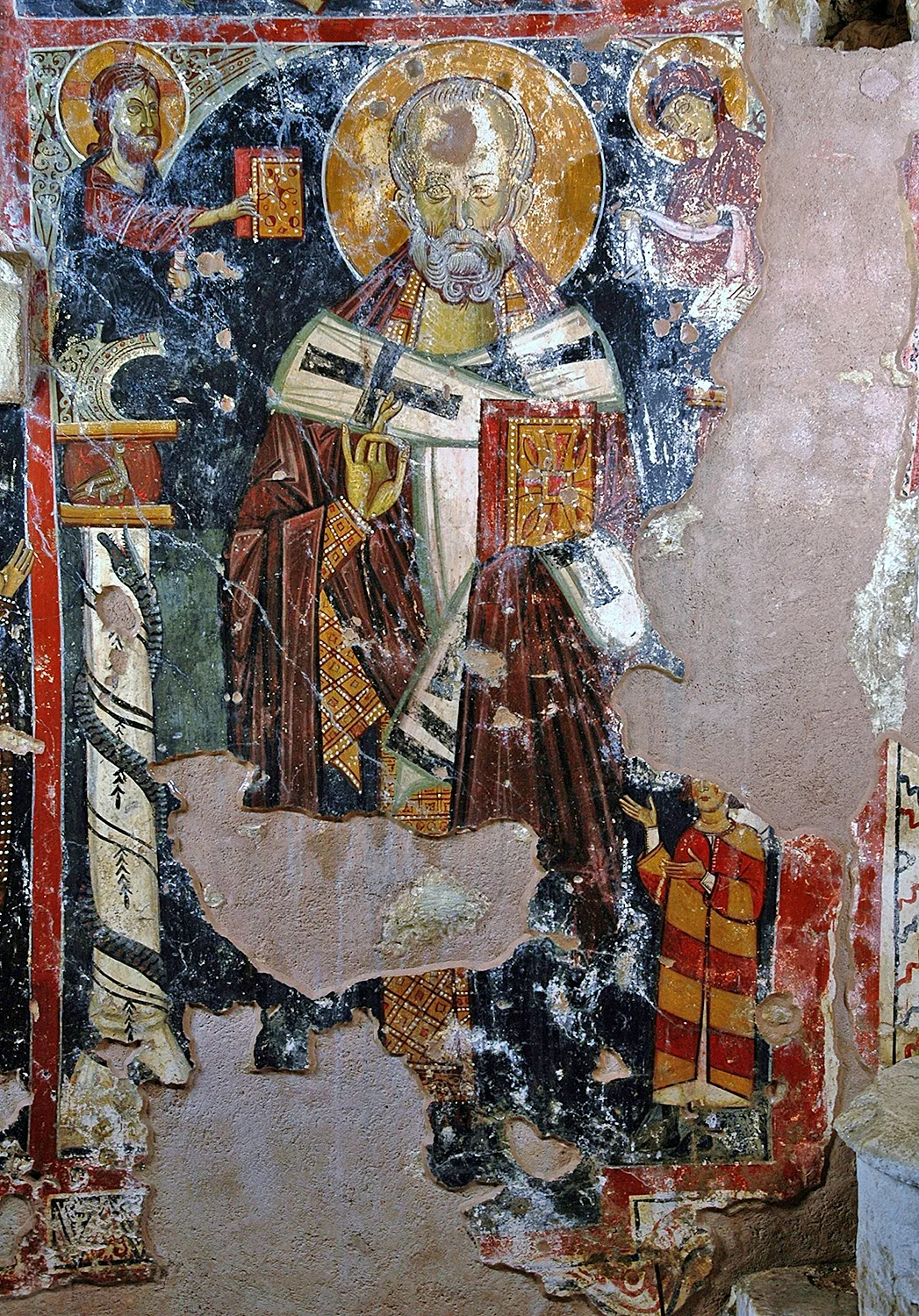
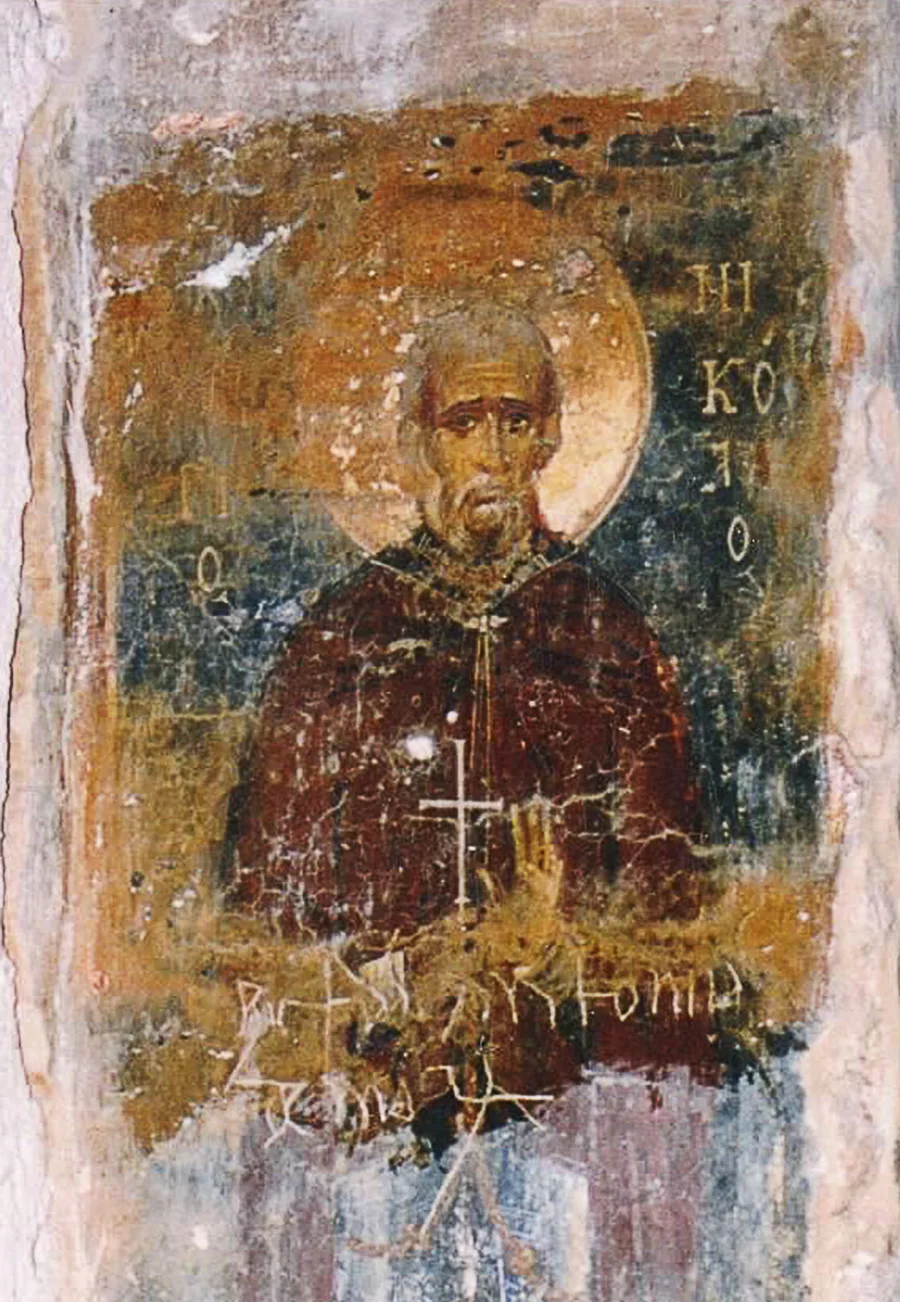
Another figure that stands out is that of Nicholas the Studite, who is depicted on the west face of the northeast pier of the dome. Nicholas was the abbot of the historic Stoudion Monastery in Constantinople during the Iconoclasm. A fanatical iconolater, he fought for the veneration of religious images. Nicholas, originally from neighbouring Kydonia (Chania), lived during the period of the Arab conquest of Crete. The inclusion of his figure at a time when the local community had risen up against the Venetian newcomers is a telling reference to the struggles of prominent ecclesiastical figures from Crete in support of the Orthodox doctrine and the Orthodox Church, which was then being persecuted by the Catholic Church.
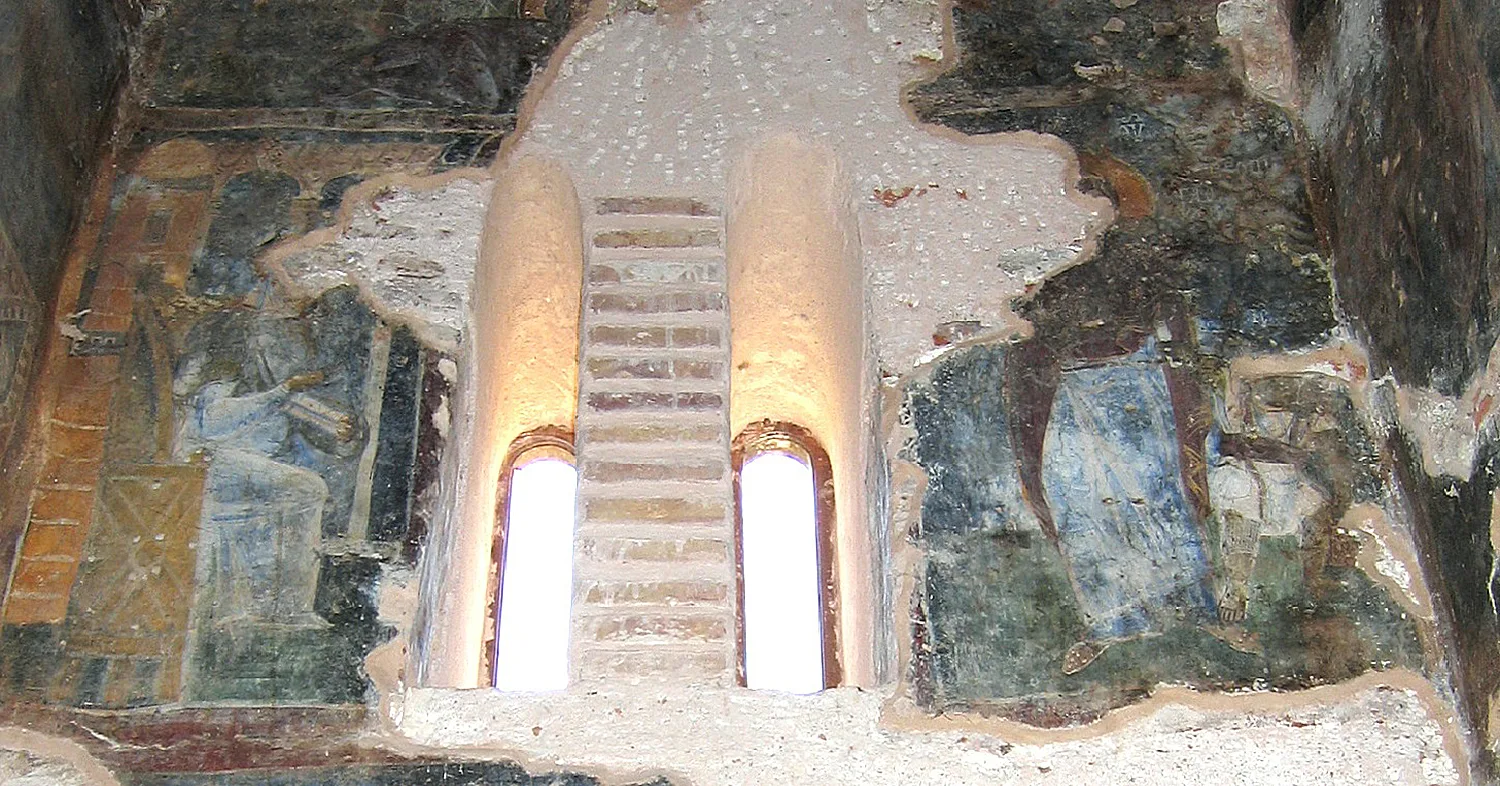
Two scenes are also distinguished by their rarity. They are those of the School of Christ, depicted in the second fresco zone above the north window of the church. The young Christ is being dragged towards the enthroned teacher by his mother. Interestingly, the inscription reads: “Go, thou who hast made heaven and earth, to the teacher.” The paradoxical inscription and the unusual portrayal, almost a caricature, of the rebellious young Christ lend a humorous note to the scene. The boldness of the scene, its humorous elements and its content, effectively exalting teaching above even the Creator of heaven and earth, capture the ideology of the upper class and reveal the air of renewal that prevailed in the intellectual sphere after the Fourth Crusade.
-
-
The Ascension. East arch.
-
-
Nicholas the Studite, on the west face of the northeast pier of the dome.
-
-
The School of Christ, south front, in the second fresco zone.