Wells of the Venetian period in Gavalochori
Outside the village of Gavalochori, near the village cemetery, are preserved numerous wells of the Venetian period and the modern era.
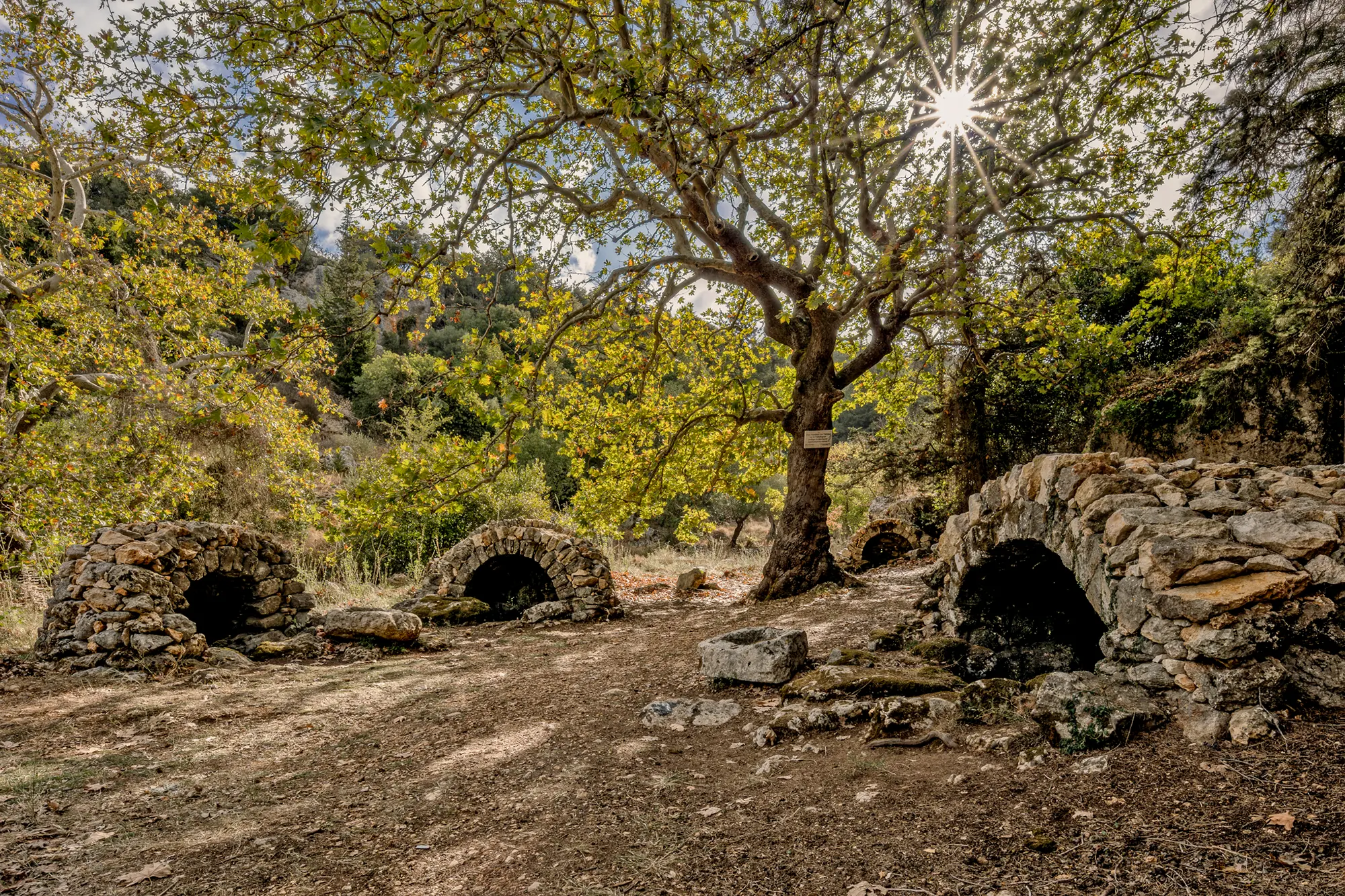
They are dry-stone structures with very thick walls in order to make them watertight. The above-ground part of the structures was vaulted, with an opening on one side enclosed by a low wall. In front of the openings are stone water troughs for animals.
The modern troughs are concrete with a square mouth.
The wells are located in a gorge that runs down from Xirosterni (“dry trough”). A seasonal stream ran through the gorge. Two bridges are preserved on the site: an older one, probably of the Ottoman period, with a cobbled surface, and a newer one over which the modern road passes.
The wells collected water from the drainage of the surrounding area. They were the village’s main source of water.
-
- Wells of the Venetian period, Palailoni (source: Sotiris Zapantiotis).
-
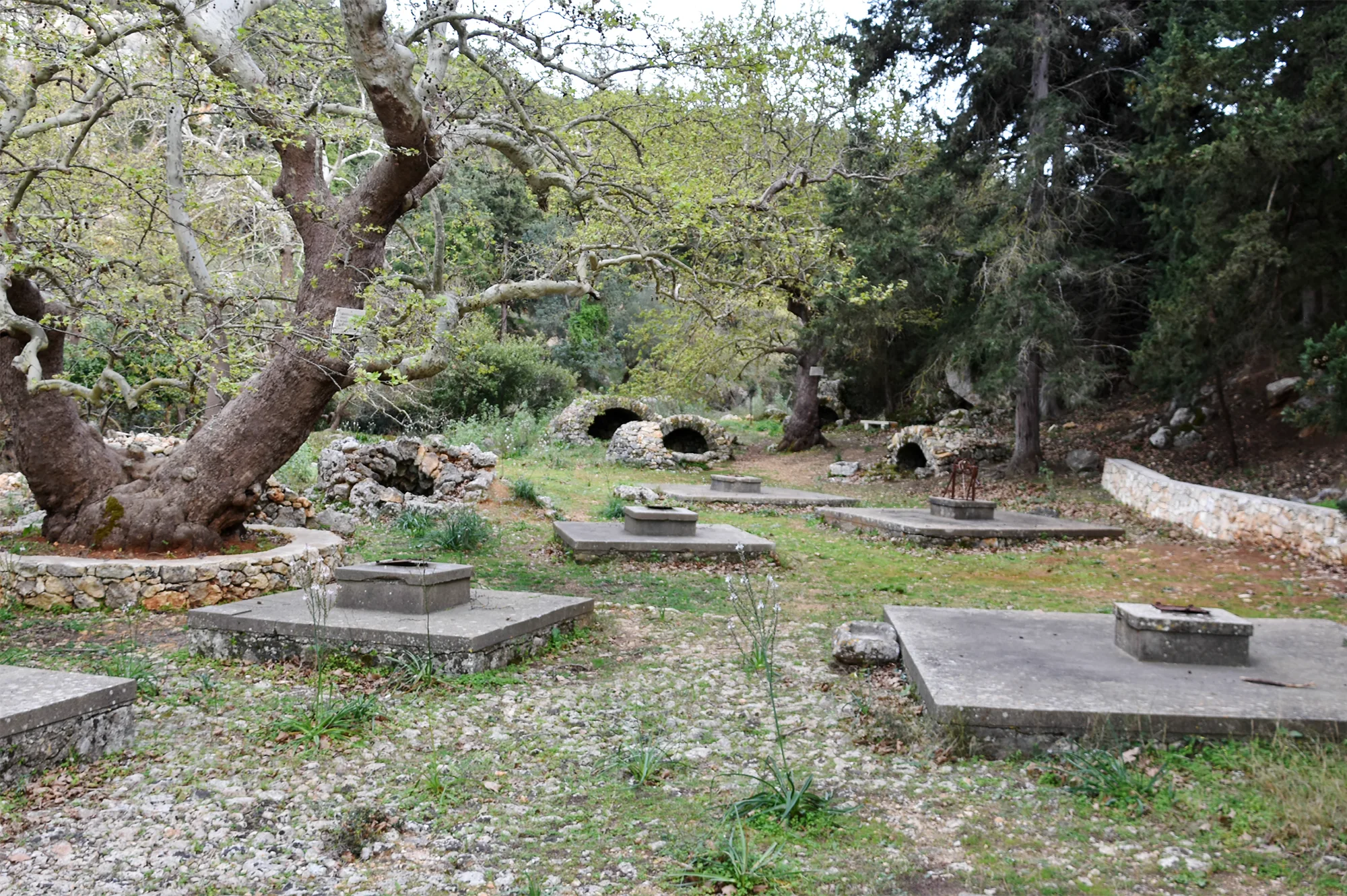
- Wells of the Venetian period, Gavalochori. The newer and older wells can be distinguished (source: Marianna Aggelaki).
 Wells of the Venetian period in Gavalochori in the Route of Timelessness
 Wells of the Venetian period in Gavalochori in the Route of Water
Used for various purposes, they were a gathering place important both for survival and as a communal space for socialising.
-
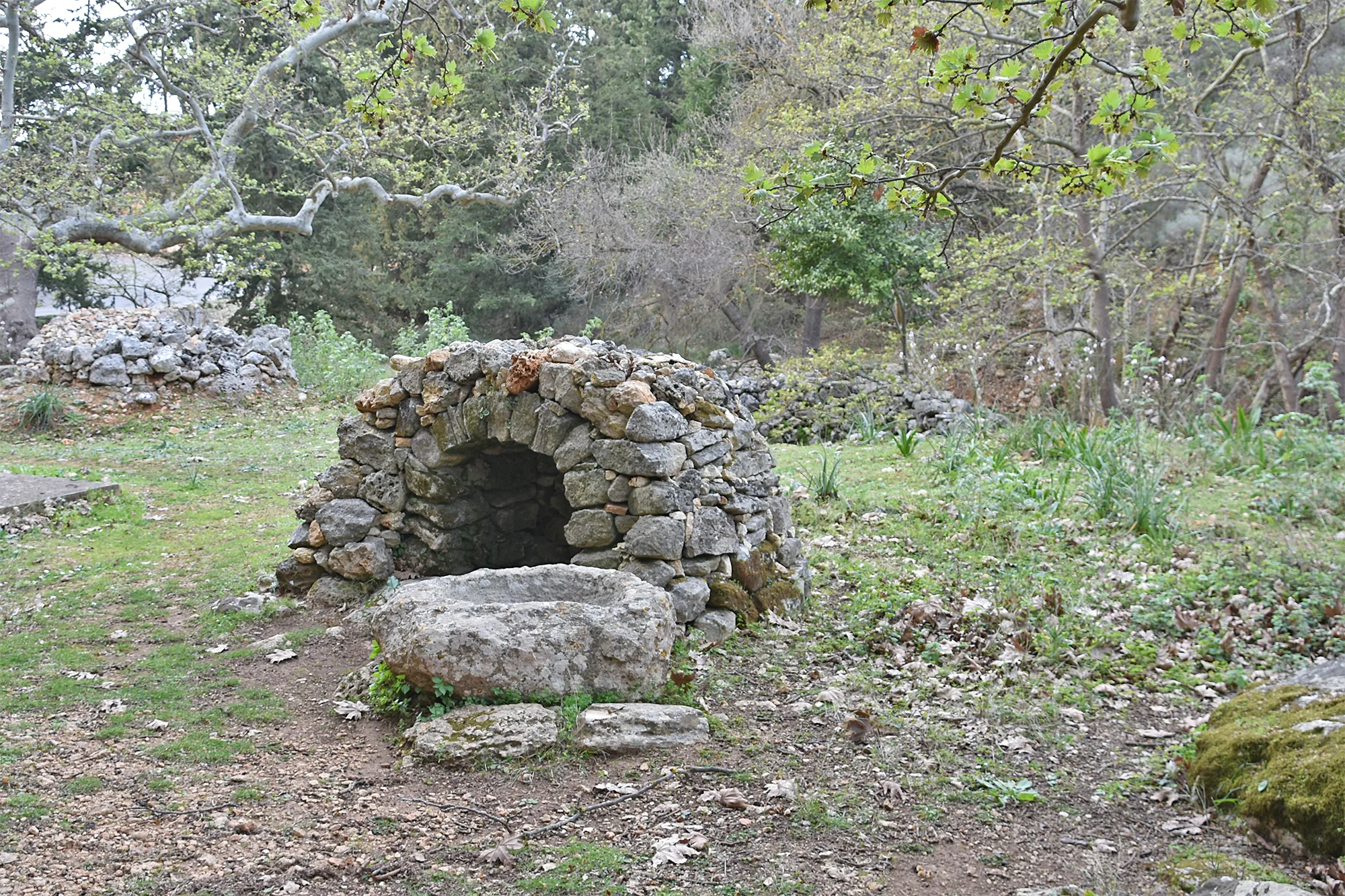
- Wells in Gavalochori. A stone water trough for animals is visible in front of the well (source: Marianna Aggelaki).
 Wells of the Venetian period in Gavalochori in the Route of Sustainability
 Wells of the Venetian period in Gavalochori in the Route of Rural Life
Gavalochori
Gavalochori is located at an altitude of 100 meters, in a rocky valley, 26 kilometers from Chania.