
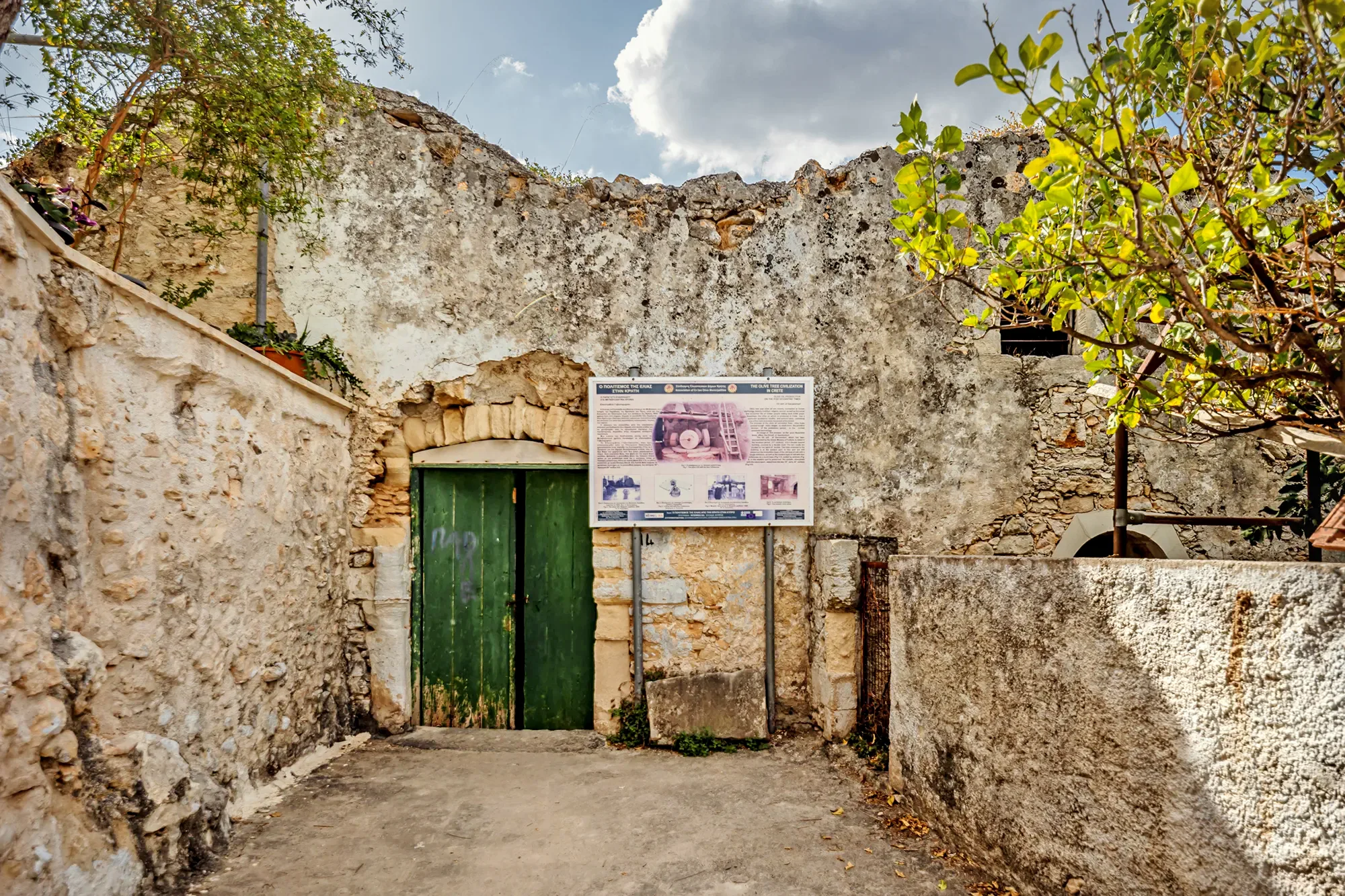
Pre-industrial Venetian olive mill in Gavalochori
The pre-industrial olive mill is located near the main square of Gavalochori. It dates from the 17th century, during the Late Venetian period, and is one of the most important examples of pre-industrial architecture associated with olive oil production in Crete.
The building consists of two long, vaulted rooms divided by a pair of lowered arches. On the long side walls are internal arched and rectangular niches of different sizes for various purposes (placing receptacles, lamps, etc.). In the east wall is the fireplace niche used for heating water.
Three types of olive press have been preserved in situ, representing all the mechanisms used for the production of olive oil on the island from medieval times to the early modern pre-industrial period.
In the east room is the monolithic base of the old type of press with one millstone, and the newer type with four millstones on a built base, turned by draught animals. They make the building a fascinating example of a monument of the pre-industrial period in Crete.
-
- Olive mill, Gavalochori. The main entrance (source: Sotiris Zapantiotis).
-
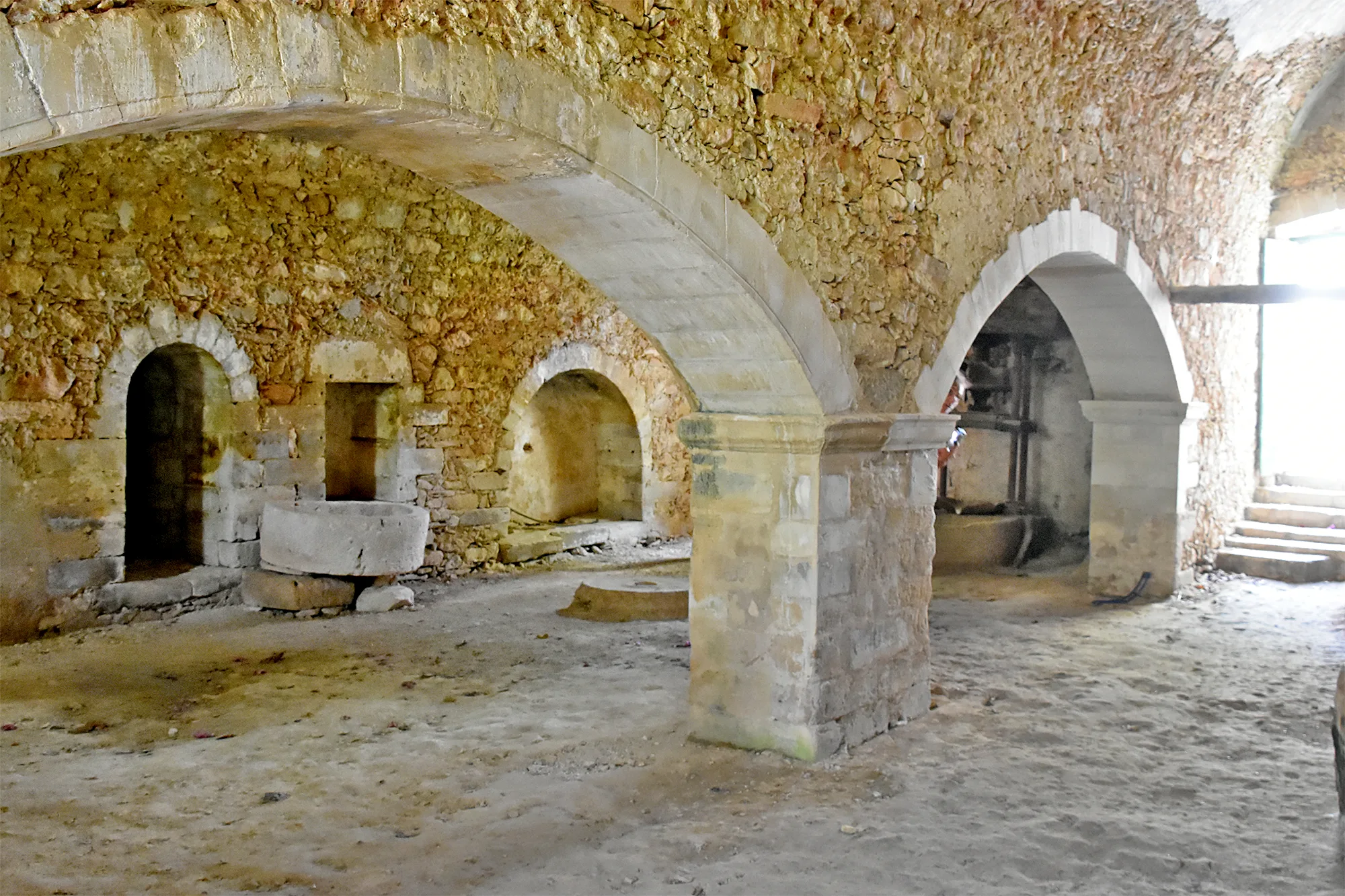
- Olive mill, Gavalochori. Spaces housing the grinding mechanisms (source: Marianna Aggelaki).
 Pre-industrial Venetian olive mill in Gavalochori in the Route of Timelessness
 Pre-industrial Venetian olive mill in Gavalochori in the Route of Rural Life
-
- Olive mill, Gavalochori. Spaces housing the grinding mechanisms (source: Marianna Aggelaki).
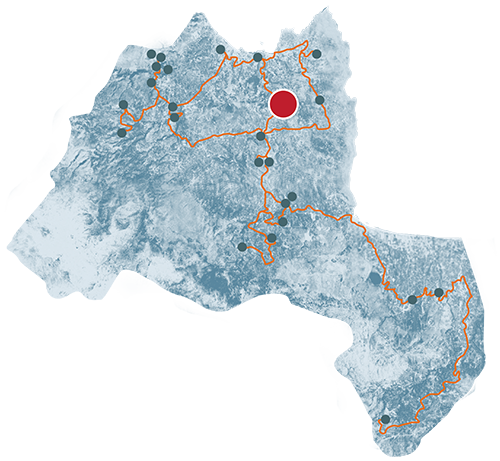
Gavalochori
Gavalochori is located at an altitude of 100 meters, in a rocky valley, 26 kilometers from Chania.