
Nazi Tunnels at Kokkino Chorio
Outside Kokkino Chorio, on the hill of Drapanokefala, is a tunnel complex constructed during the Second World War by the German army of occupation.
The bunker is a complex of tunnels, approximately 4 m wide and 4 m high, cut into the rock. They lead to rooms used by the troops (storerooms, living quarters, offices). They were built with forced labour by members of the local community.
The complex was associated with one of the nearby machine gun emplacements controlling Suda Bay and its entrance.
The complex is one of the works carried out in naturally fortified positions by the Germans during the occupation of Crete. In addition to tunnelling out the bedrock, the Germans reinforced the wings with walls of stones and reinforced concrete. The bunker is not visible from the outside but extends into the hill, essentially forming an artificial cave. It is laid out like a domed building, the tunnels forming a rough circle. The entrance is at the level of the tunnels, while there is a second opening in the top of the bunker, accessible via a metal staircase.
The architecture of the Nazi Tunnels was intended to create artificial living conditions, matching the new concepts and new means of warfare, when weapons “contaminated” all life. It was one of the projects carried out in accordance with the new techniques developed by the Organisation Todt, the central military engineering body of Hitler’s government.
-
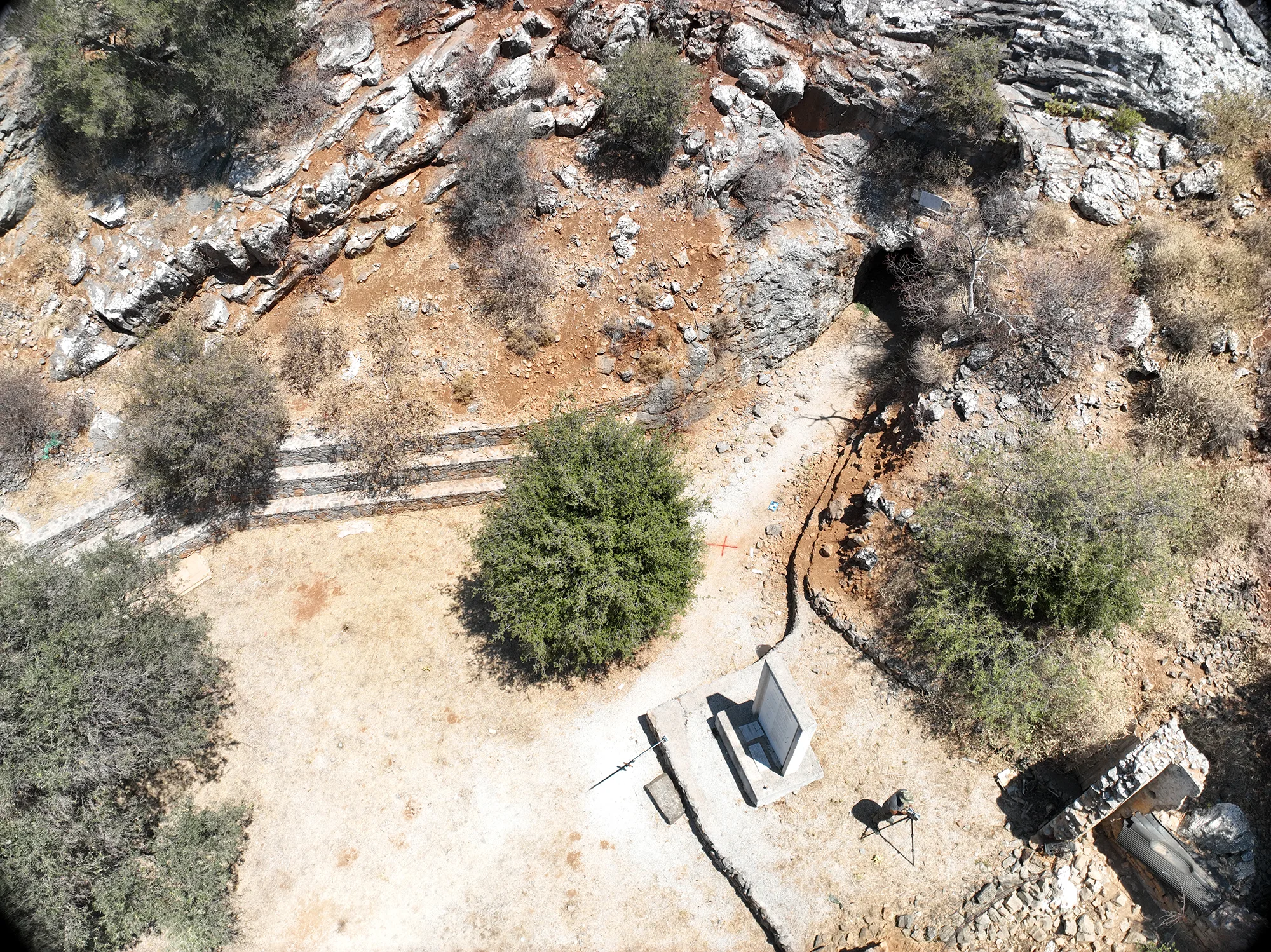
- Nazi Tunnels. Aerial photograph of the surrounding area with the entrance to the tunnels (source: Charalambos Akrivas).
-
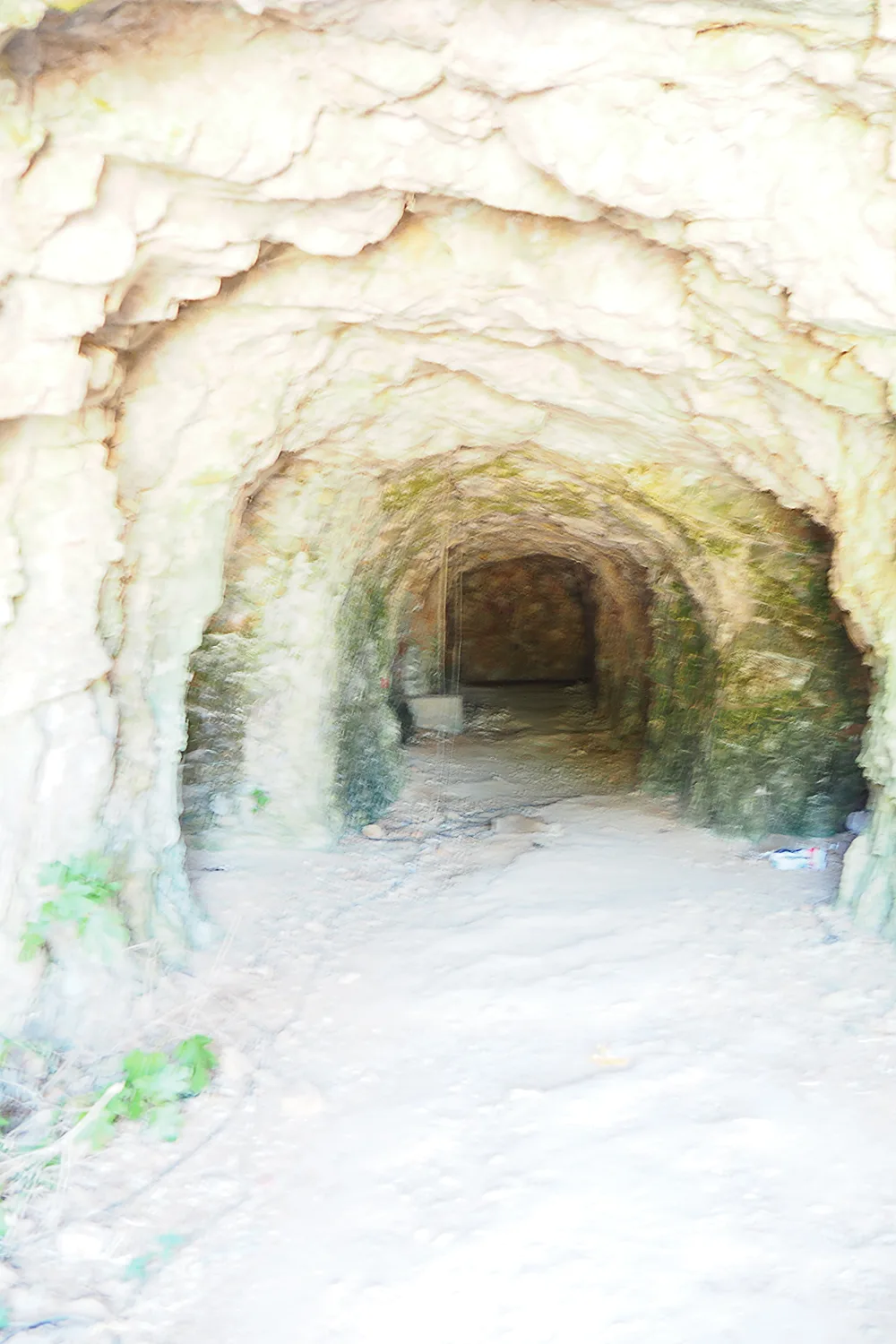
- Nazi Tunnels. The entrance to the tunnels (source: Maria Andrianaki).
 Nazi Tunnels at Kokkino Chorio in the Route of Timelessness
 Nazi Tunnels at Kokkino Chorio in the Route of Sustainability
 Nazi Tunnels at Kokkino Chorio in the Route of Life and Death
They were constructed by the local inhabitants by forced labour, a harsh ordeal. During the German Occupation (1941-1945), the adjacent church of St George was turned into an explosives magazine.
Kokkino Chorio
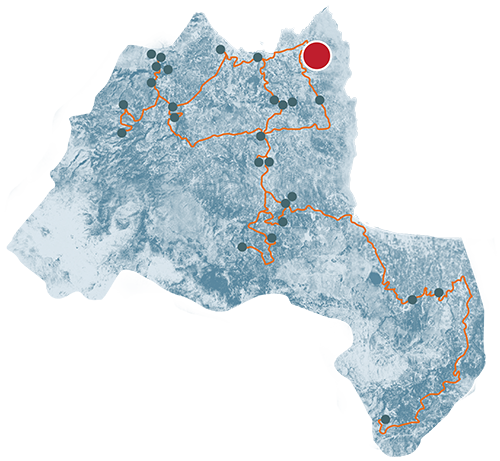
Kokkino Chorio is located at an altitude of 150 m above Plaka and is 27 km from Chania.
To the northwest of the village is Cape Drepano.