Early Christian basilica at Almyrida
The remains of two large 6th-century basilicas have been discovered in the coastal zone of the present-day village of Almyrida. Basilica A has been excavated, providing important information on the ecclesiastical architecture of the island.
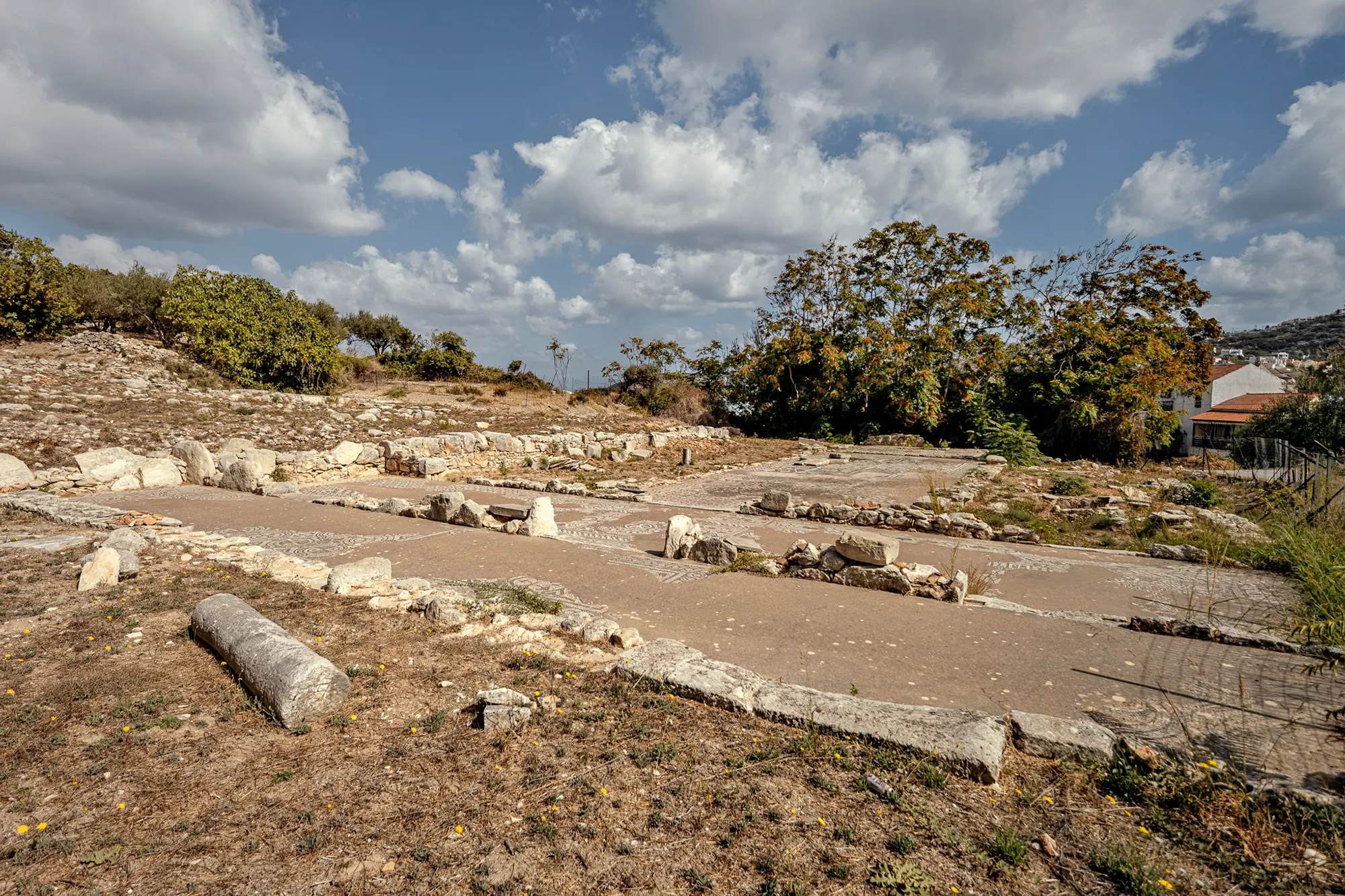
Basilica A was a three-aisled, timber-roofed basilica with a transept forming a T-shaped floor plan. The base of the altar in the sanctuary and the base of an octagonal pulpit in the nave are preserved. The basilica had a narthex and exonarthex on the west side. Exquisite mosaic decoration covers the floors of the sanctuary, the nave, the narthex and the exonarthex. Architectural sculptures of local limestone are preserved in situ.
The basilica was a cemetery church. It was built in the first half of the 6th century and abandoned in the 7th century.
Excavation finds from the south nave and the area east of the basilica indicate that it was a cemetery church.
The two basilicas, the cemetery of Basilica A and the uncovered remains of what was probably a bathhouse are evidence of the existence of an important settlement on the site.
The basilica was in use until the 7th century, when it was abandoned. The end of its life coincides with the period when the thriving coastal settlements of the island were deserted due to Arab raids.
-
- Early Christian basilica, Almyrida. View from the SW (source: Sotiris Zapantiotis).
-
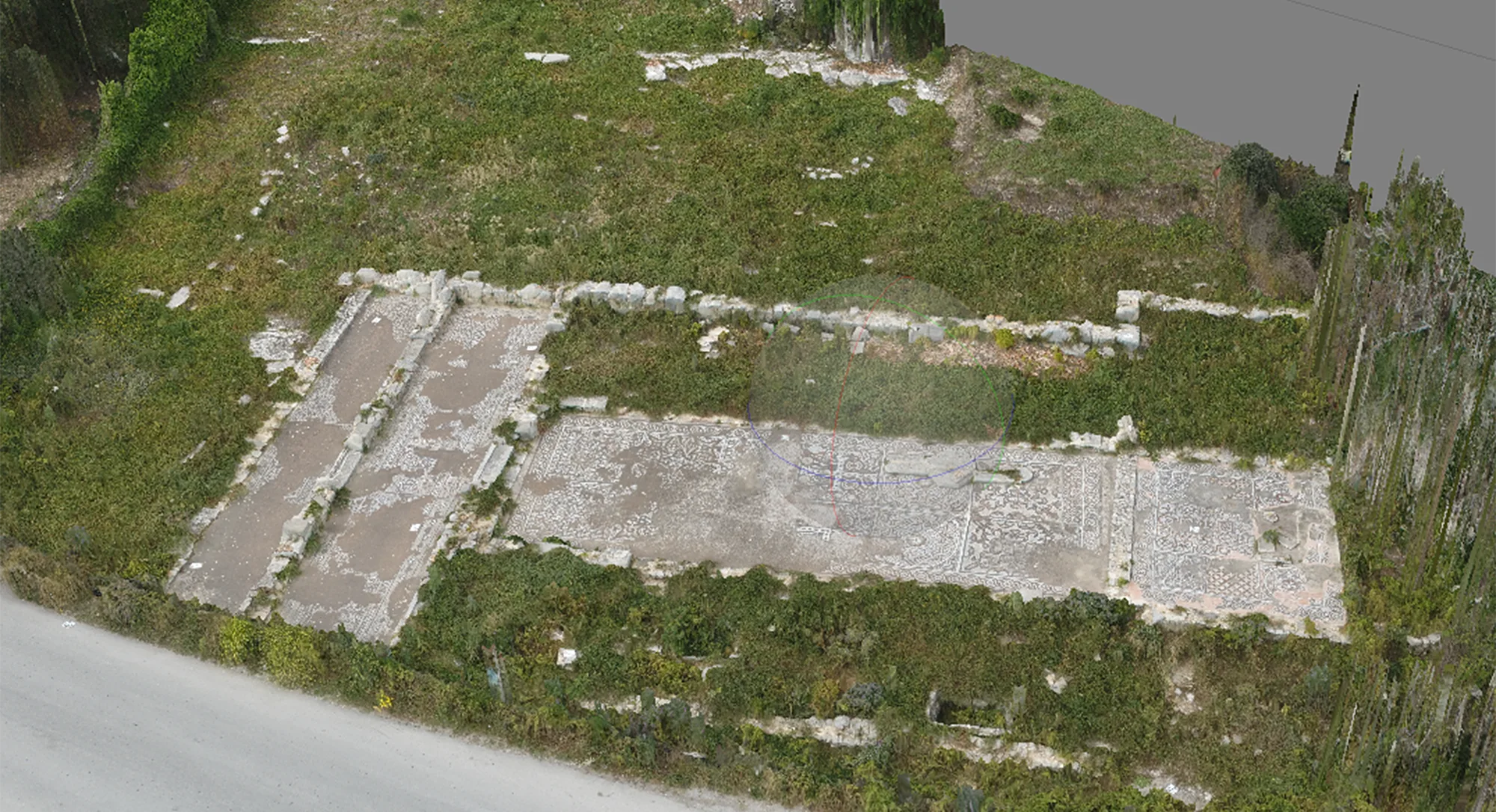
- Early Christian basilica, Almyrida. View from the SE. Photogrammetric image (source: Panagiotis Partsinevelos).
 Early Christian basilica at Almyrida in the Route of Timelessness
 Early Christian basilica at Almyrida in the Route of Water
Its proximity to the sea determined not only the rate of development of the settlement but also the end of its life. The coastal settlements of Crete shrank from the 7th century onwards due to Arab raids, as the dangers were now greater than the benefits provided by sites on the island’s shores.
-
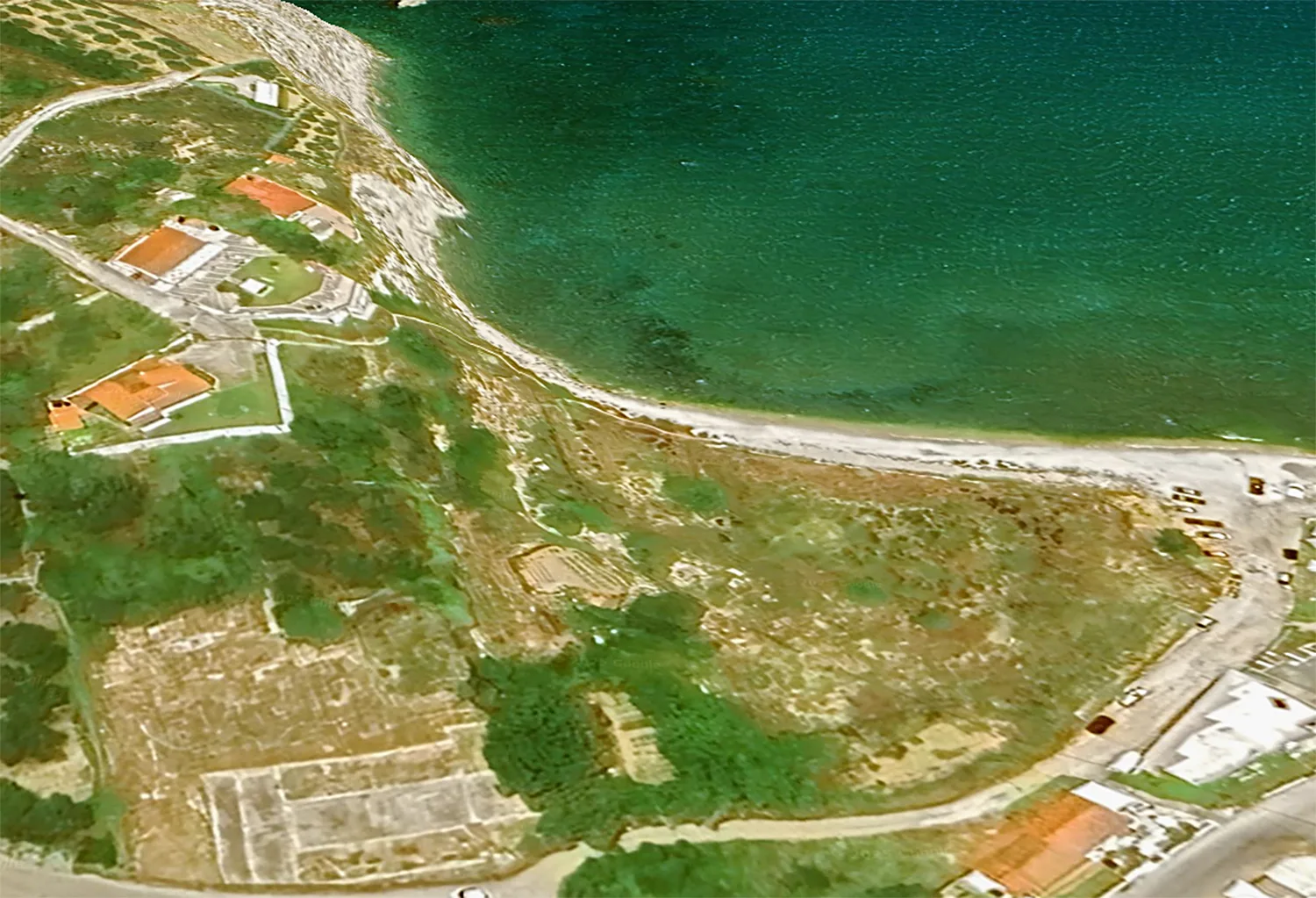
- The basilica at Almyrida, showing the location of the church relative to the sea to the north (source: Google Earth).
 Early Christian basilica at Almyrida in the Route of Rural Life
 Early Christian basilica at Almyrida in the Route of Life and Death
 Early Christian basilica at Almyrida in the Route of Byzantine Art
The sanctuary, the central aisle and the exonarthex are laid with mosaic floors featuring a rich variety of geometric and floral patterns. The floors are divided into panels decorated with fish, crosses, intersecting circles and semicircles, peacock feathers and whorls, intersecting and interlinking geometric shapes connected by knots, rosettes and crosses, crescent-shaped designs in a cruciform arrangement, etc. Interlocking roundels surround the panel frames. A gemmed cross stands out, its upper end curving into a capital letter P, illustrating the Chi-Rho Christogram, while from the arms of the cross are suspended the letters testifying to the Revelation, A and Ω (Alpha and Omega).
The mosaic floors are of excellent quality and are associated with the workshops of Athens and Argos.
-
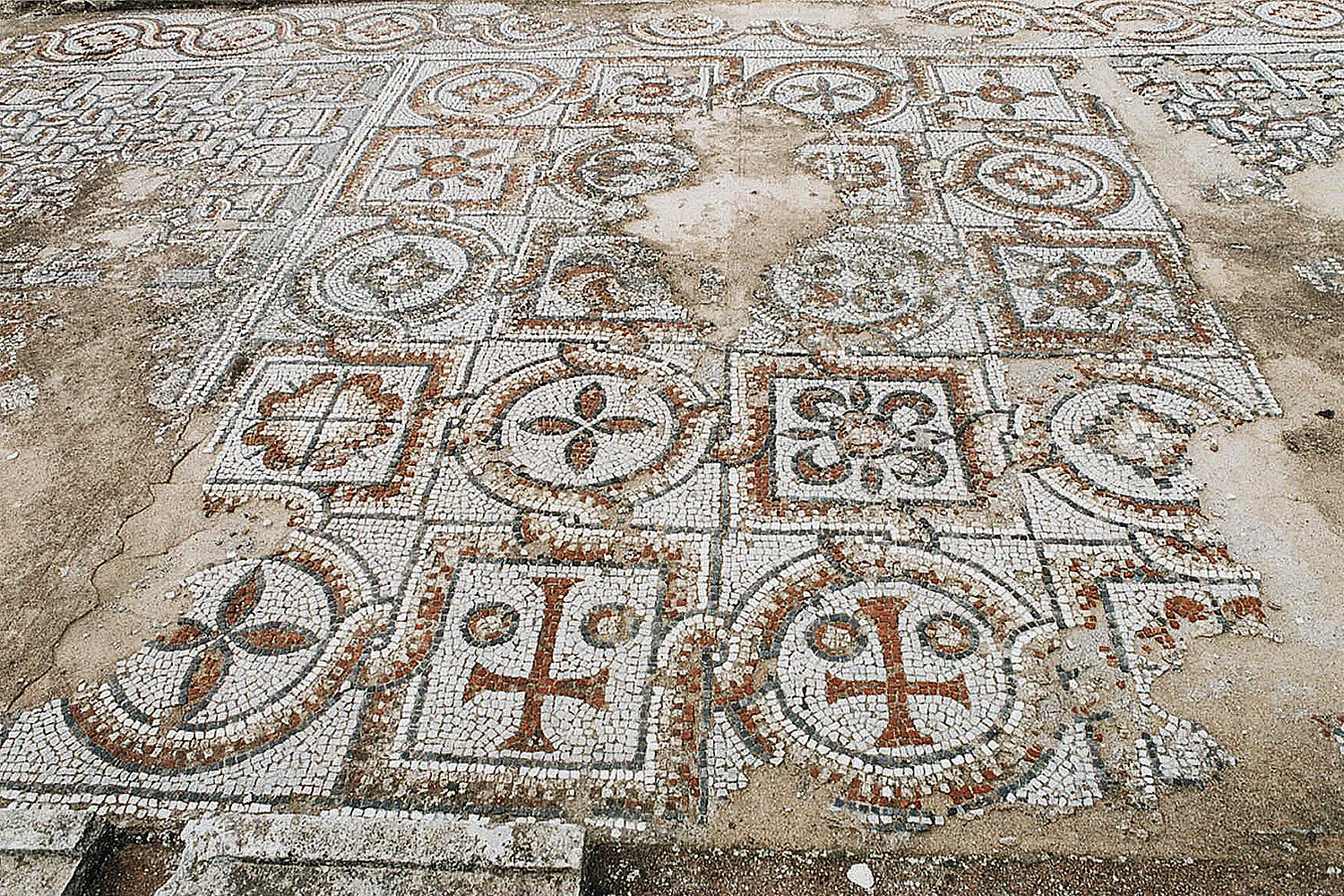
- Basilica at Almyrida. Detail of the mosaic floor. (source: Michalis Andrianakis Archive)
-
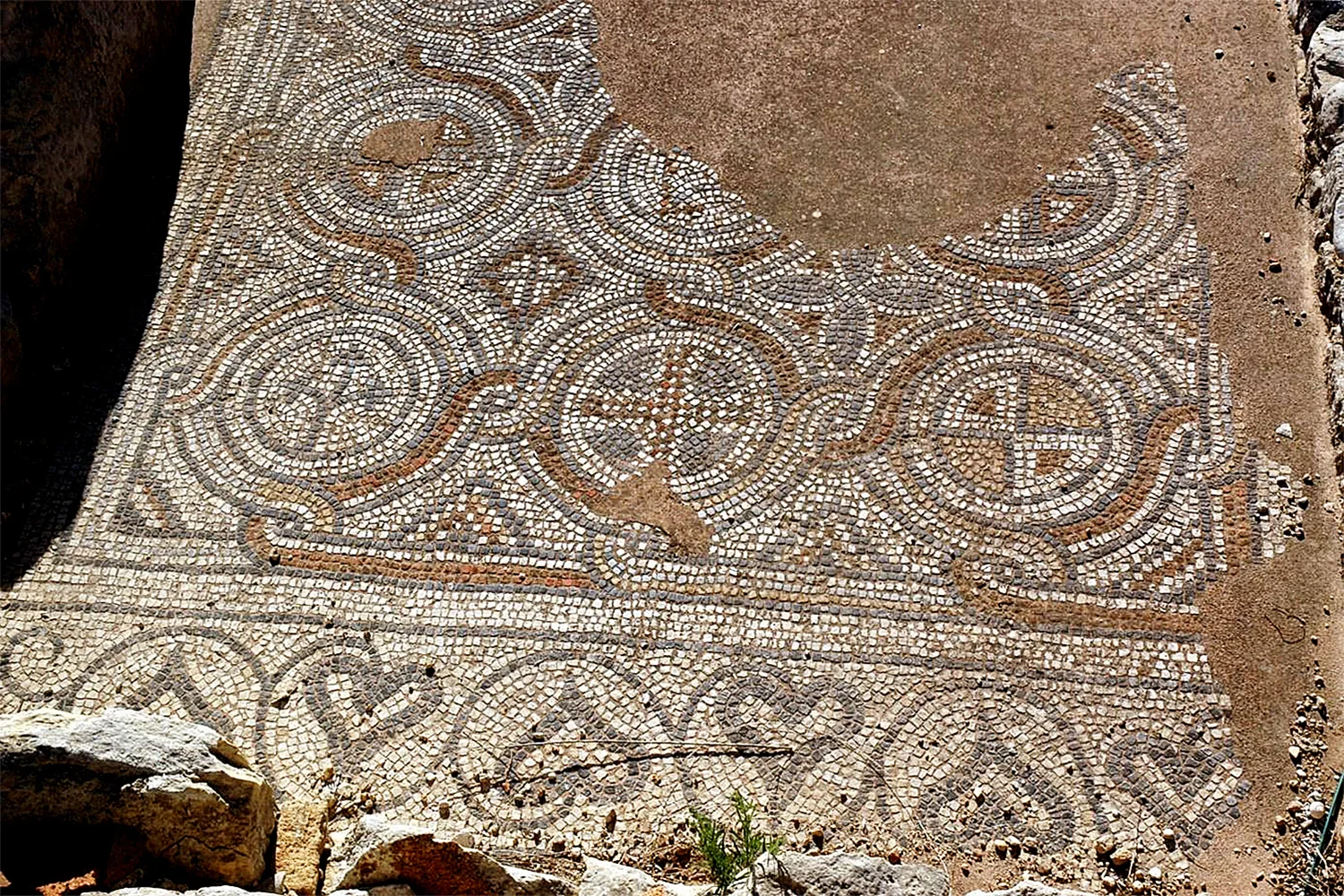
- Basilica at Almyrida. Detail of the mosaic floor. (source: Michalis Andrianakis Archive)
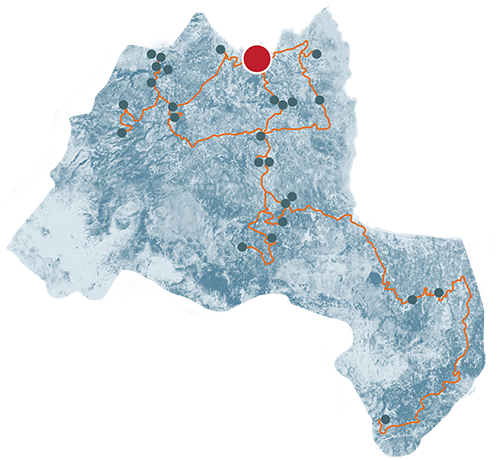
Almyrida
Almyrida is a coastal settlement at the exit of the bay of Souda, between the villages of Plaka and Kalyves, 30 km from Chania.