Church of Panagia (the Virgin Mary) Zerviotissa
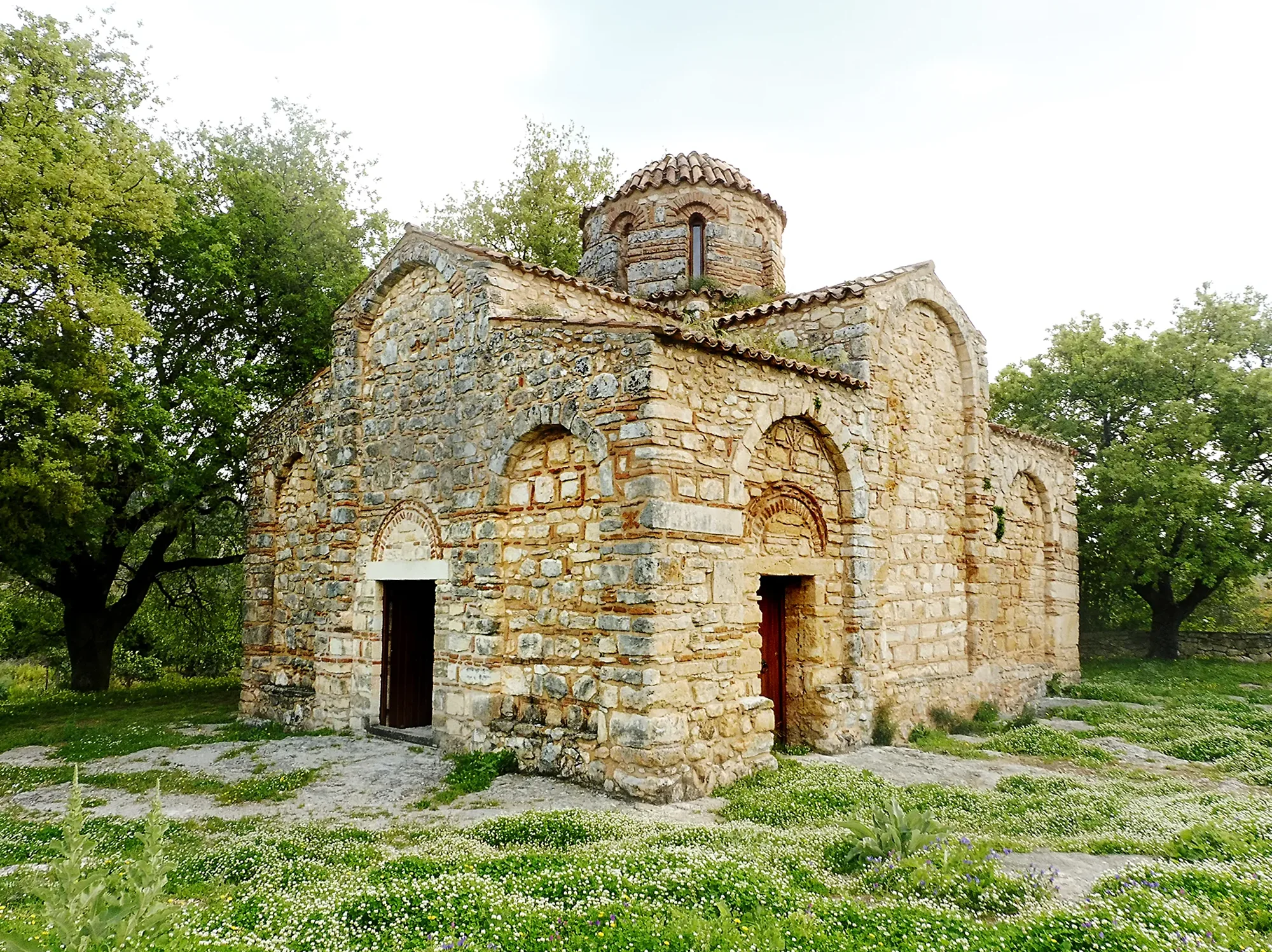
The church of Panagia Zerviotissa or Monastira is one of the most characteristic examples of the island’s Middle Byzantine architectural heritage.
It is a cross-in-square church with a dome, resembling a three-aisled basilica in plan. It dates from the 11th/12th century. The church is associated with the activity of the Monastery of St John the Divine of Patmos, which was located in the Stylos area.
The name of the church, “Zerviotissa”, means “holding in the left arm”, indicating the existence of an image of the Virgin Mary holding the Infant Jesus in this way. The word “Monastira”, attested in the oral tradition, was used to describe a large church.
The dome has an octagonal lower part and a cylindrical upper part. The church is illuminated by a corresponding number of single-light windows formed of brick double arches. Three semi-cylindrical apses form the exterior of the sanctuary.
The exterior walls of the church are adorned with blind arches. The entrance is on the west side, consisting of a rectangular doorway in the north arch, with a relieving arch featuring decorative brickwork. Double-light openings illuminate the central apse and the drums of the cross arms. There are single-light windows in the lateral apses.
The church is built of roughly dressed stones in pseudo-cloisonné masonry, with some decorative brickwork including geometric patterns and letters.
It includes elements of both the Constantinopolitan tradition, such as the blind arches in the walls, and the Helladic School, with its transitional plan and pseudo-cloisonné masonry.
Internally, the dome is supported on four tall piers, the pendentives roofed with semi-circular barrel vaults.
There are traces of fresco decoration in a very poor state of preservation.
-
- Panagia Zerviotissa, Stylos. View from the SW (source: Sotiris Zapantiotis).
-
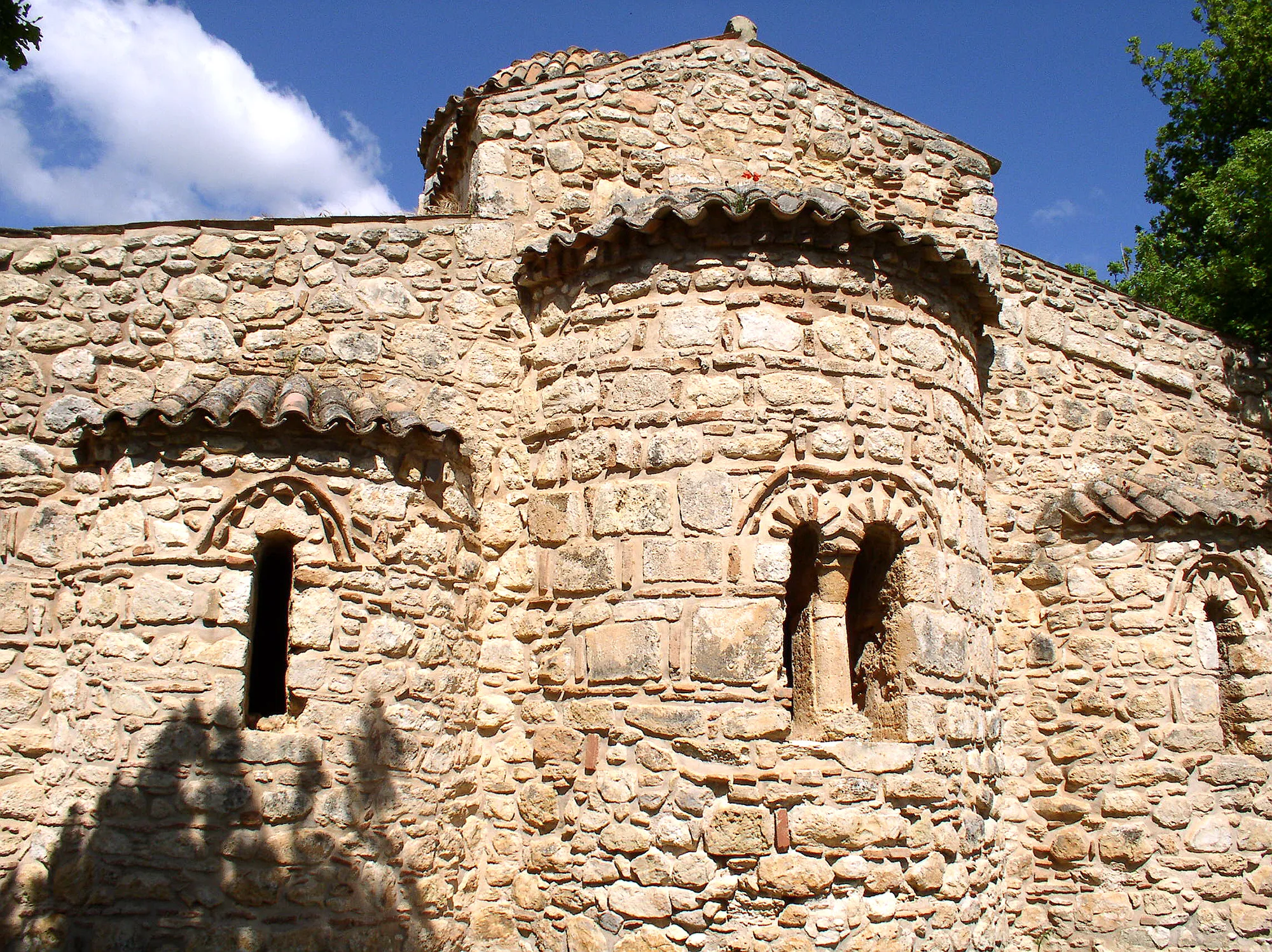
- Panagia Zerviotissa, Stylos. The sanctuary apses. View from the E (source: Michalis Andrianakis Archive).
-
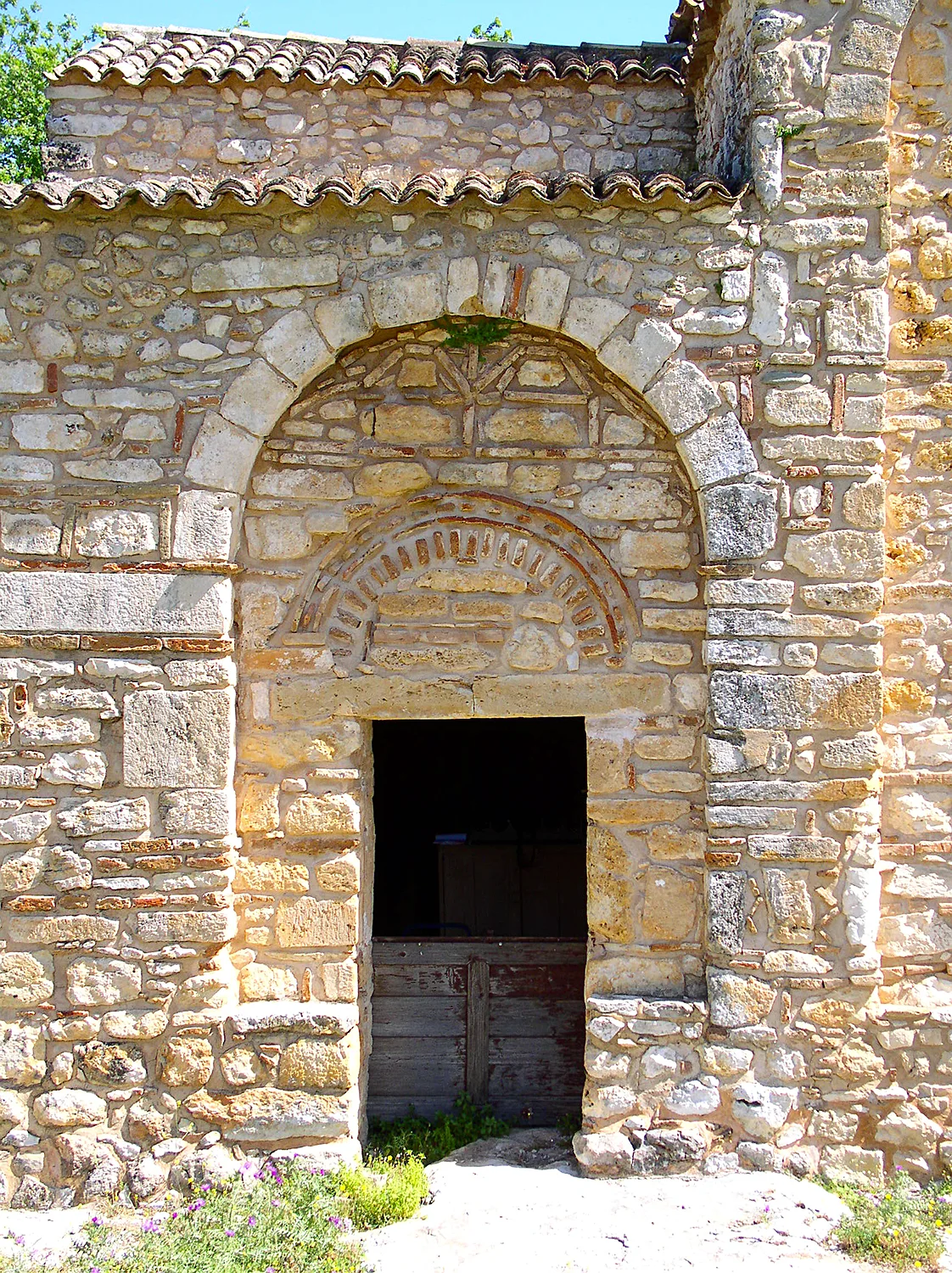
- Panagia Zerviotissa, Stylos. The south entrance with decorative brickwork (source: Michalis Andrianakis Archive).
 The Church of Panagia Zerviotissa in the Route of Timelessness
 The Church of Panagia Zerviotissa in the Route of Rural Life
The concession was made by Alexios II Komnenos and estates in the wider area of Aptera were exploited by its monks.
-
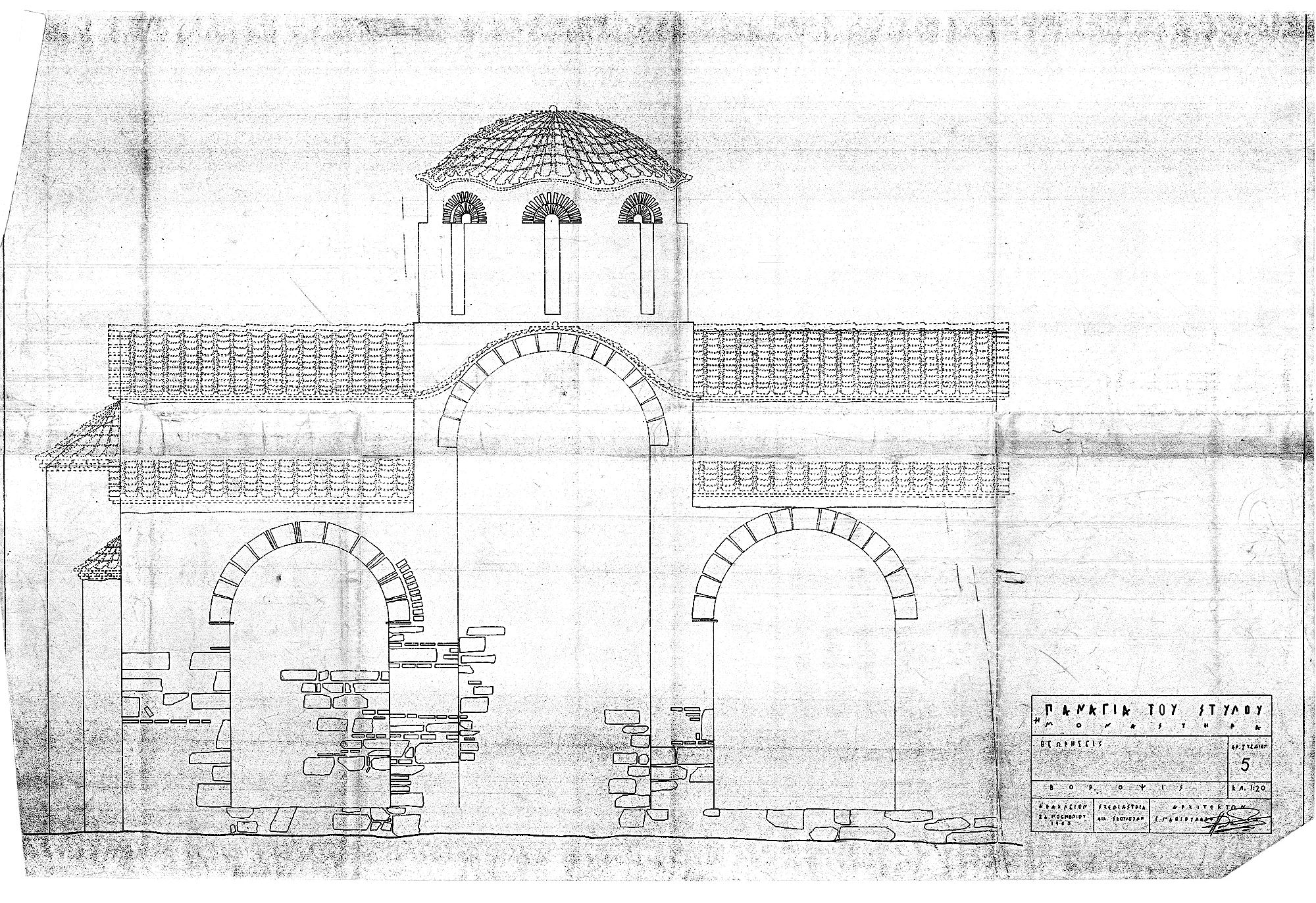
- Panagia Zerviotissa Stylos. North view. Restoration study. Ephorate of Byzantine Antiquities of Crete (source: ΥP.PO., ΕF.A.CHA.).
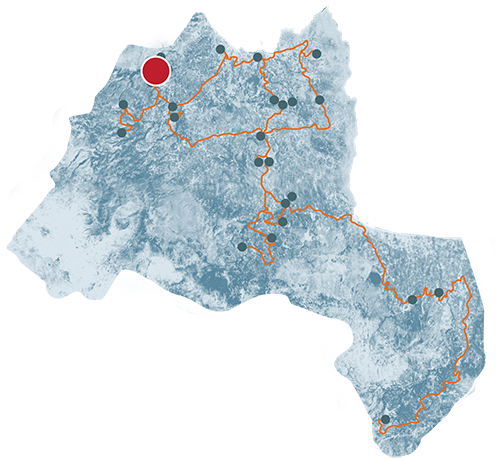
Stylos
Stylos is located at an altitude of 40 meters, on the banks of the river Koiliaris, and has abundant springs.
It is 18 kilometres from Chania.