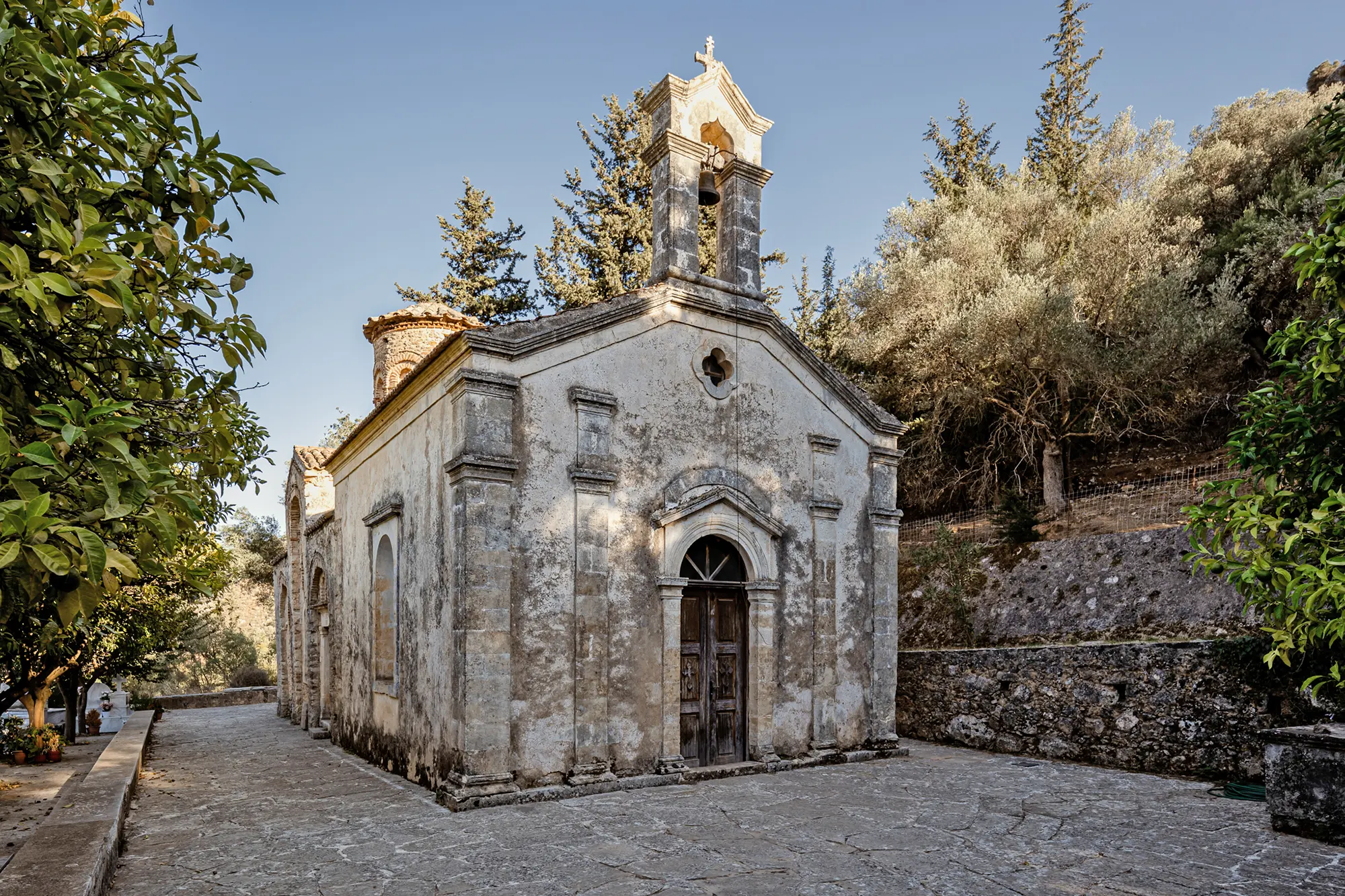
Church of Agios Nikolaos (St Nicholas) in Kyriakoselia
The church of St Nicholas is located between the villages of Samonas and Kyriakoselia, in a valley surrounded by low hills at the foot of the White Mountains. Externally it is a cross-in-square church, while internally it is a simple single-nave church with a dome. Its present form is the result of four building phases. The church, which has been restored, contains excellent frescoes dated to c. 1230.
The renovation of the church and its frescoes have been linked to the Rising of the Two Syvritoi that broke out in the area. The local aristocrats used the fortress on the hill above as the seat of their rebellion against the Venetians. The Emperor of Nicaea, John III Doukas Vatatzes (1193-1254), sent forces to assist the rising. The renovation of the church is associated with the presence of the Nicene fleet in Crete and is a representative example of the art of the Empire of Nicaea.
-
- Church of Agios Nikolaos (St Nicholas) in Kyriakoselia. (source: Sotiris Zapantiotis).
-
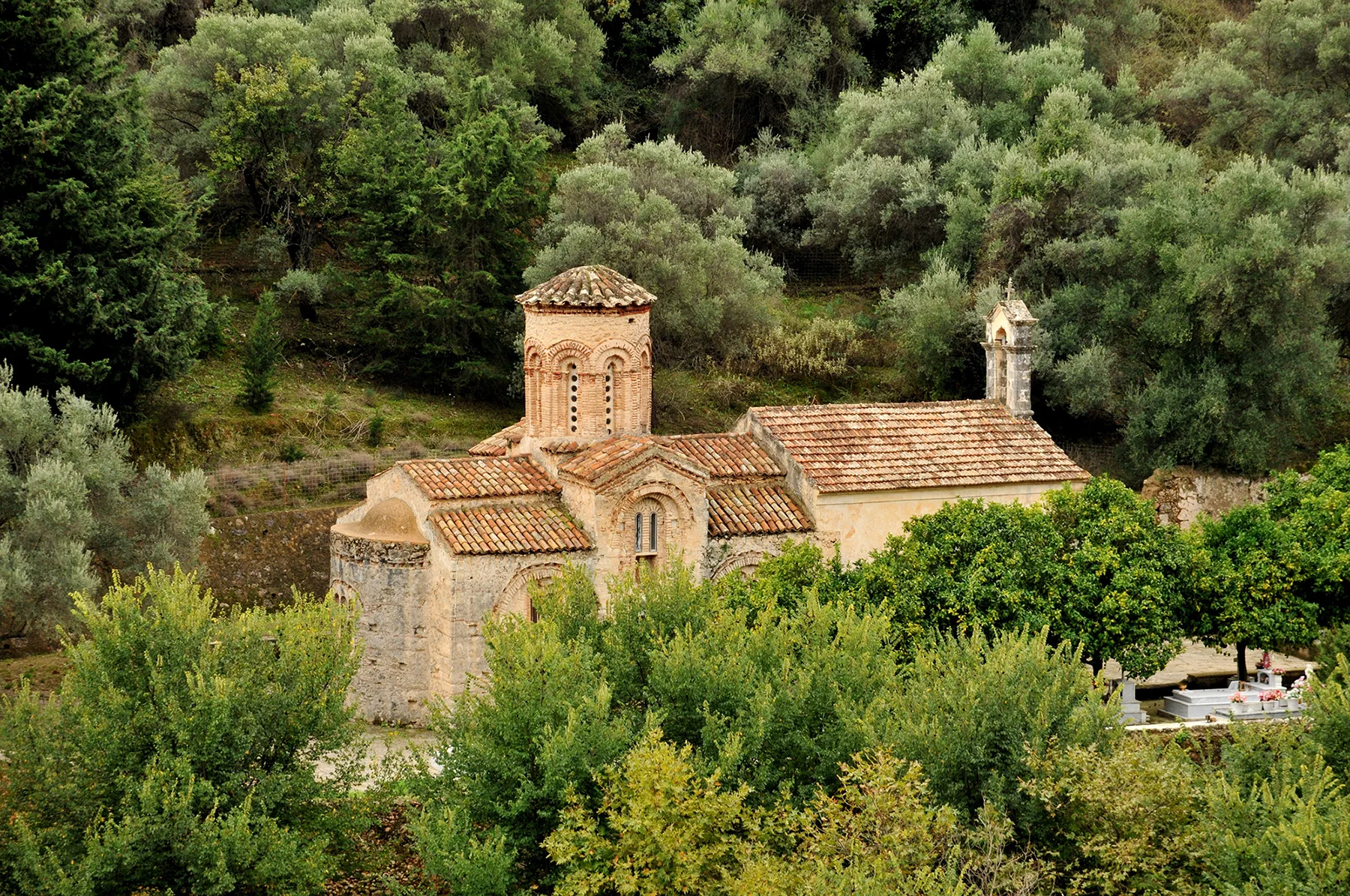
- St Nicholas, Kyriakoselia. The church. View from the NE (source: Ministry of Culture, Ephorate of Antiquities of Chania).
-
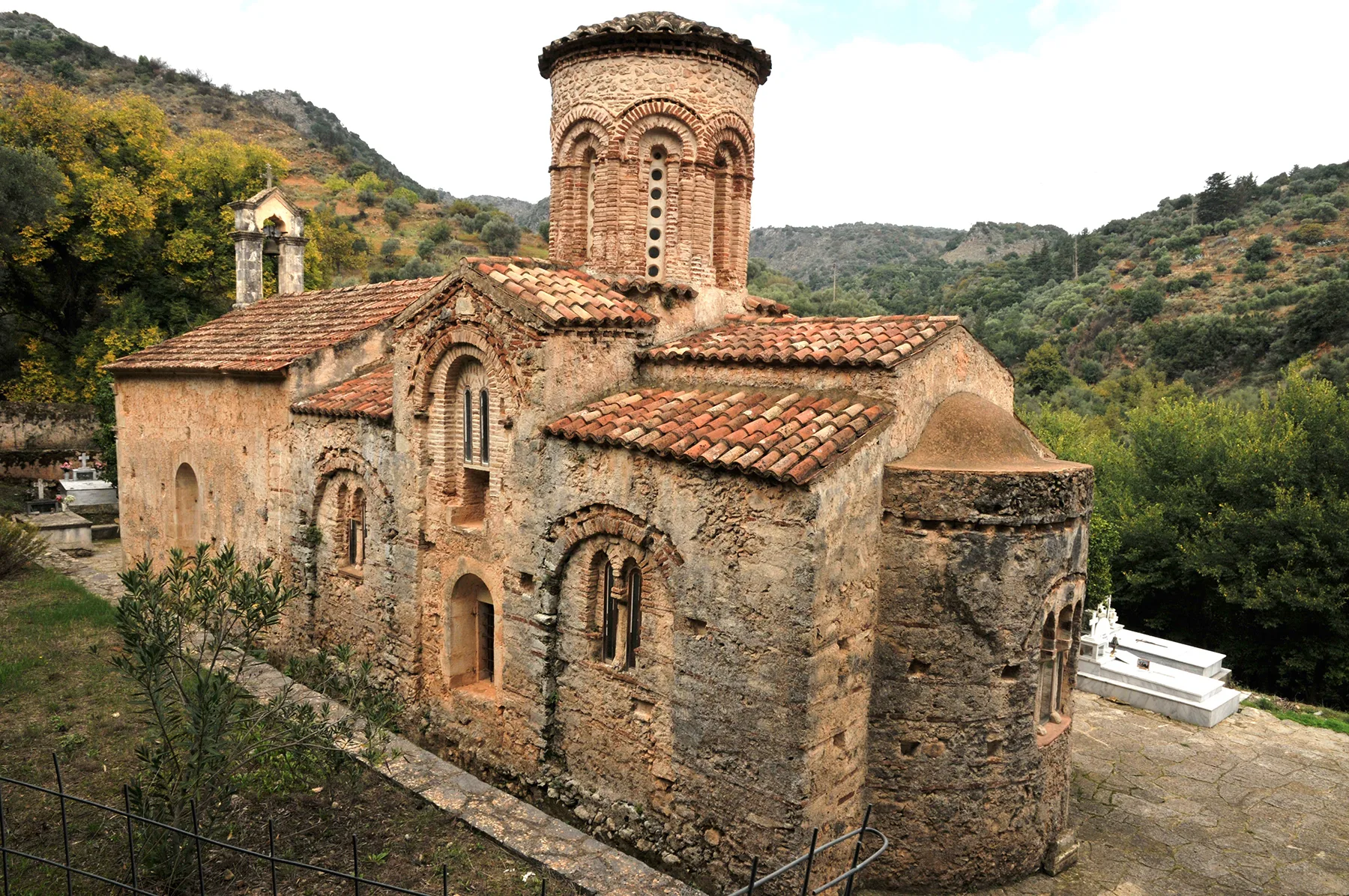
- St Nicholas, Kyriakoselia. The church. View from the SE with the central apse (source: Ministry of Culture, Ephorate of Antiquities of Chania).
-
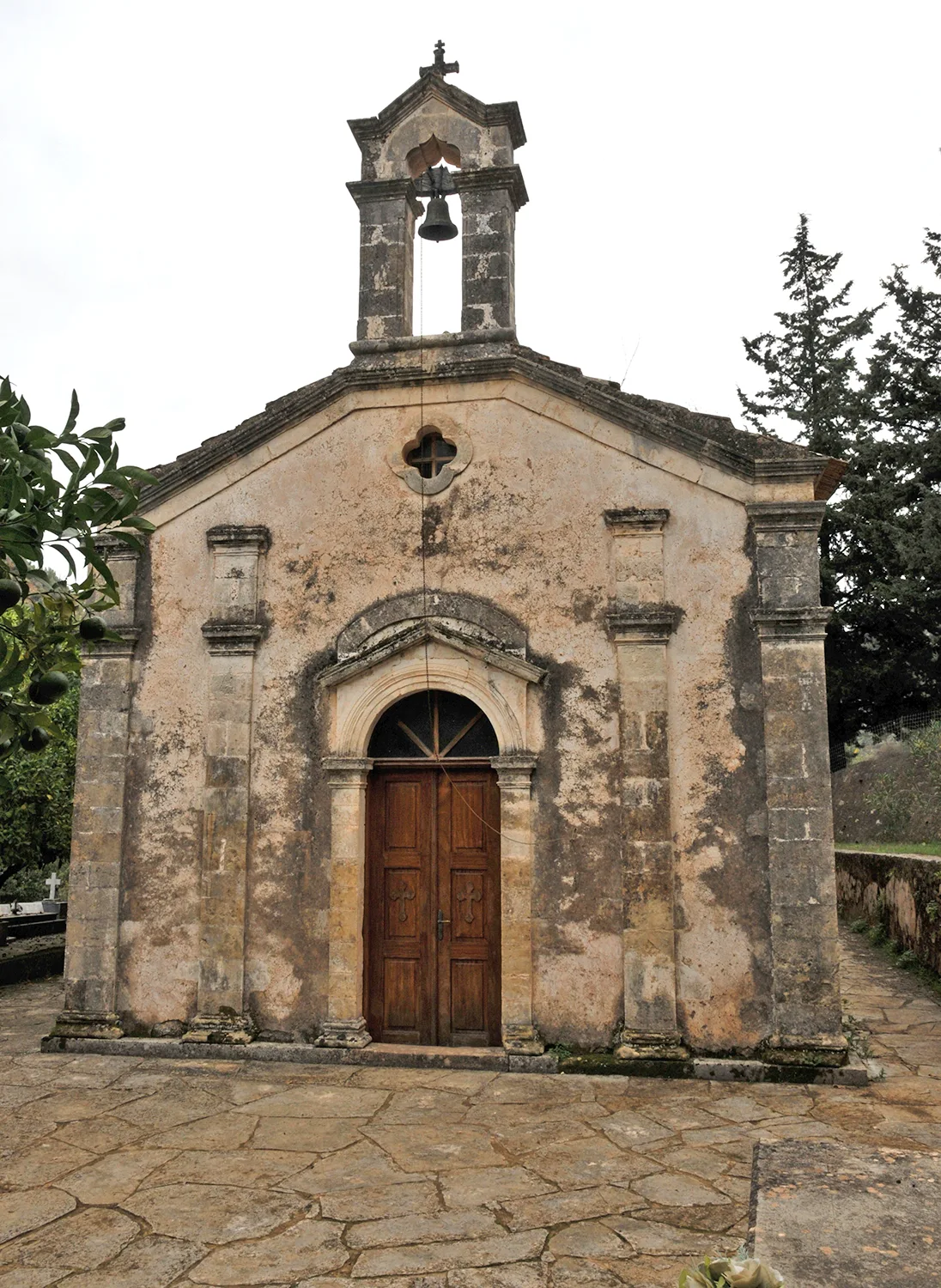
- St Nicholas, Kyriakoselia. Narthex, west front. (source: Ministry of Culture, Ephorate of Antiquities of Chania).
-
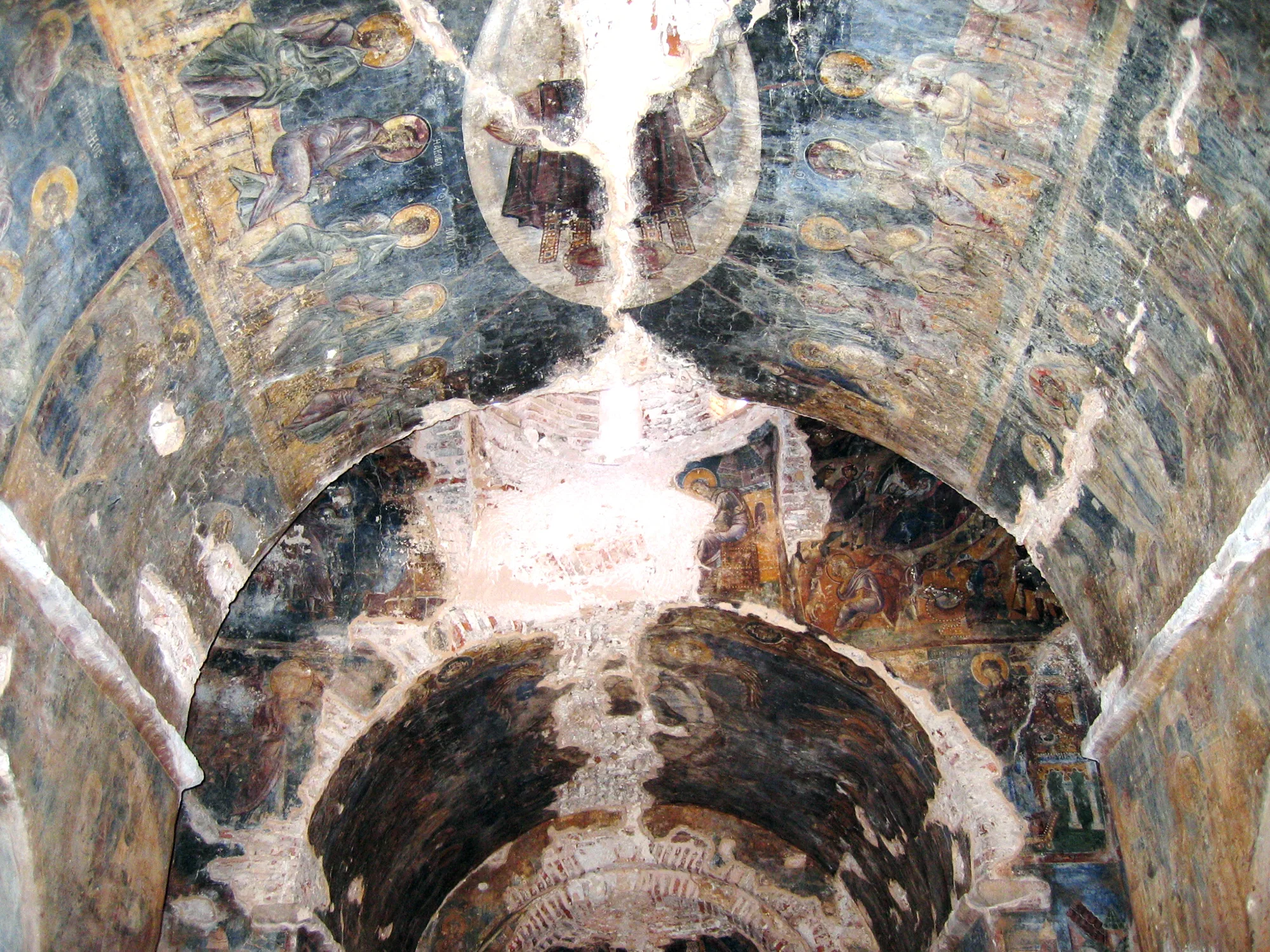
- St Nicholas, Kyriakoselia. Part of the fresco decoration. View from the W (source: Ministry of Culture, Ephorate of Antiquities of Chania).
The original building dates from the 10th or 11th century. It was originally a single-nave church with a dome or a raised central bay in a transverse barrel vault. During the renovation that took place around 1230, the nave was rebuilt to the present floor plan. The north door and the windows in the side walls belong to a phase in the Ottoman period. The narthex was added on the east in the early 20th century.
Four complete iconographic cycles are preserved in the church: the Liturgical cycle adorning the sanctuary, the cycle of the Life of the Virgin on the upper walls of the sanctuary, the cycle of the Life of Christ on the upper walls of the nave, and the cycle of the Life of St Nicholas occupying the middle fresco zone. Monks are depicted on the lower walls. Many of them are holding open scrolls with exhortations about the virtues a monk should display in his life.
The iconographic programme of the church reflects the ideology of the ruling class of the period.
 Church of Agios Nikolaos in Kyriakoselia in the Route of Timelessness
 Church of Agios Nikolaos in Kyriakoselia in the Route of Water
The complete iconographic cycles of the church, rarely preserved in full, date from the 13th century, in a building of the 10th-11th centuries.
-
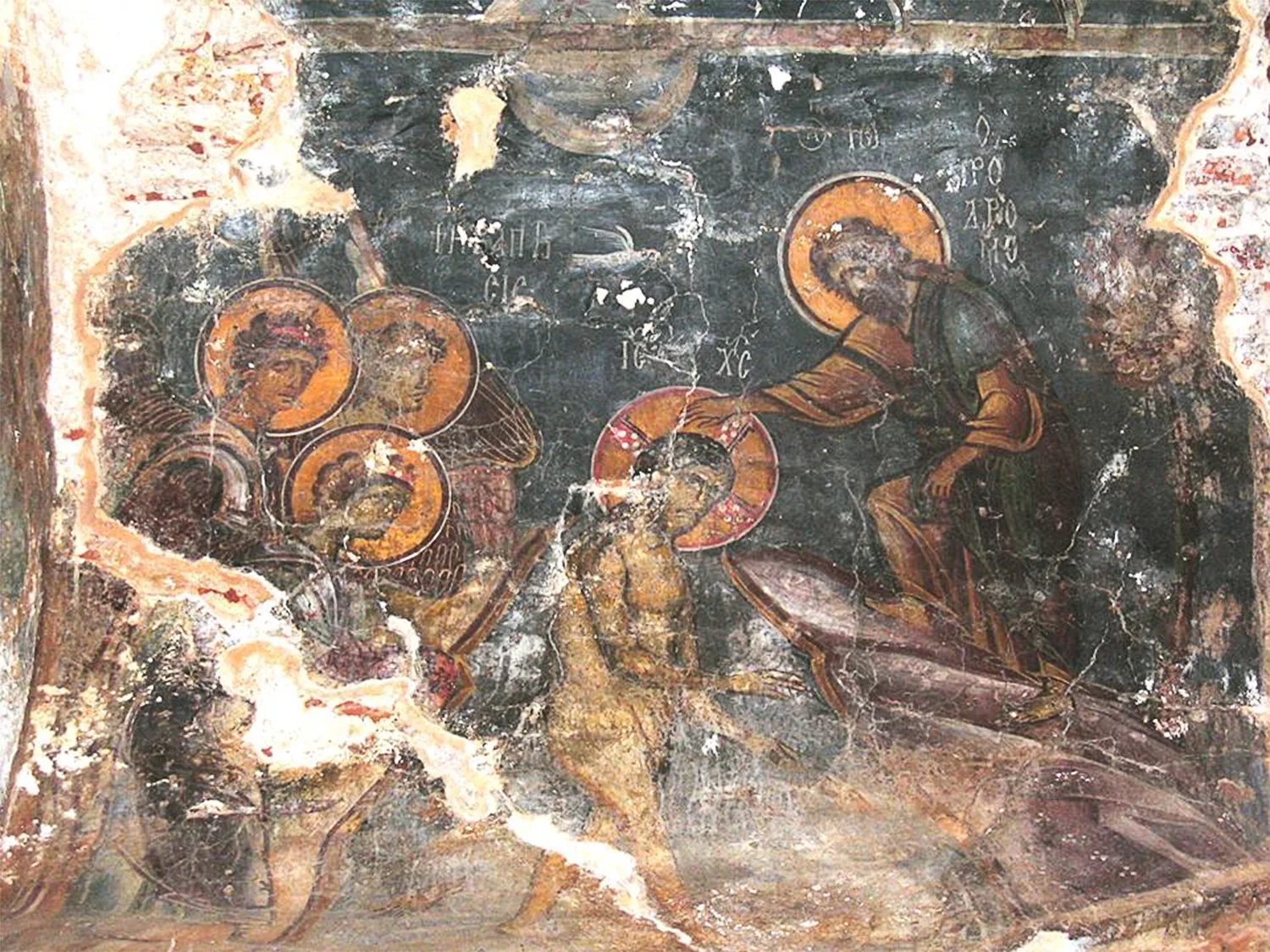
- St Nicholas, Kyriakoselia. The Baptism of Christ (source: Ministry of Culture, Ephorate of Antiquities of Chania).
-
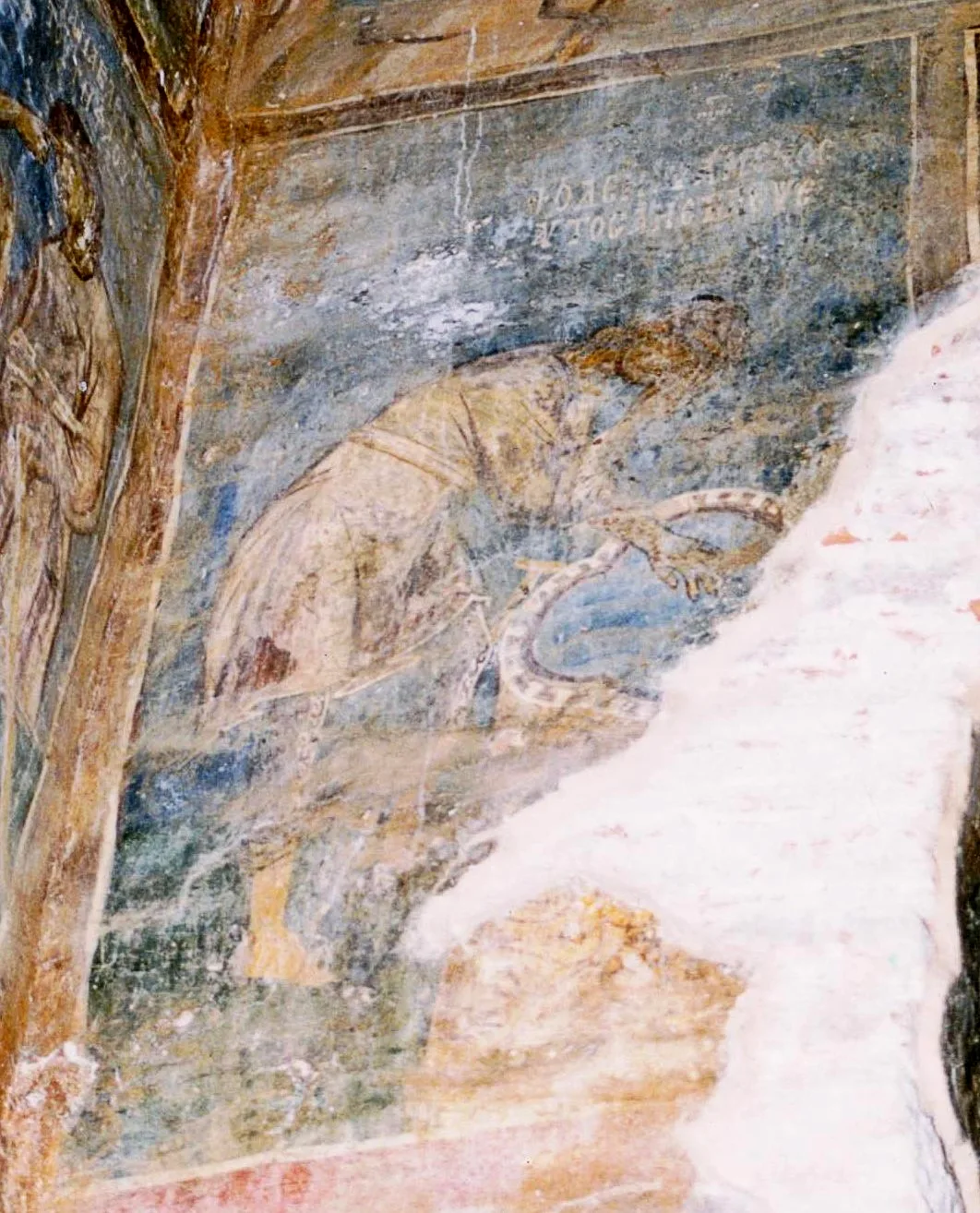
- St Nicholas, Kyriakoselia. The Healing of the Blind Man. The blind youth is seen washing his eyes after being healed by Christ (source: Maria Andrianaki).
 Church of Agios Nikolaos in Kyriakoselia in the Route of Life and Death
The cycle of life begins with the conception, the joyful announcement of Mary’s pregnancy depicted in the scene of the Annunciation. In the foreground is a vase of flowers indicating Spring, the blossoming of nature, at the beginning of which the Annunciation of the Virgin Mary is celebrated (25 March). Images of life follow on the south wall: the Birth and Baptism of Christ, the Birth of St Nicholas and his visit to the teacher. At the same time, other prominent scenes depict death, most notably the Lamentation, in which Mary mourns over the lifeless body of her Son, and the Dormition of St Nicholas, with a mourner stooping over the bishop’s body. However, the images conveying the central idea of the Christian faith are the five scenes of the Resurrection. These are the Descent into Hell, with Christ breaking the gates of Hell and raising notable souls; the scene of the Rock, in which Mary and her companions visit the tomb of her Son; the Greeting of the Myrrh-bearers, when the women meet the Risen Christ on the road; the Touching of Thomas, where Thomas feels Christ’s wounds to ascertain the Resurrection; and the rare depiction of Peter’s visit to his Teacher’s empty tomb. The Resurrection scenes capture the Christian understanding of the cyclicity of nature through the victory of life over death.
-
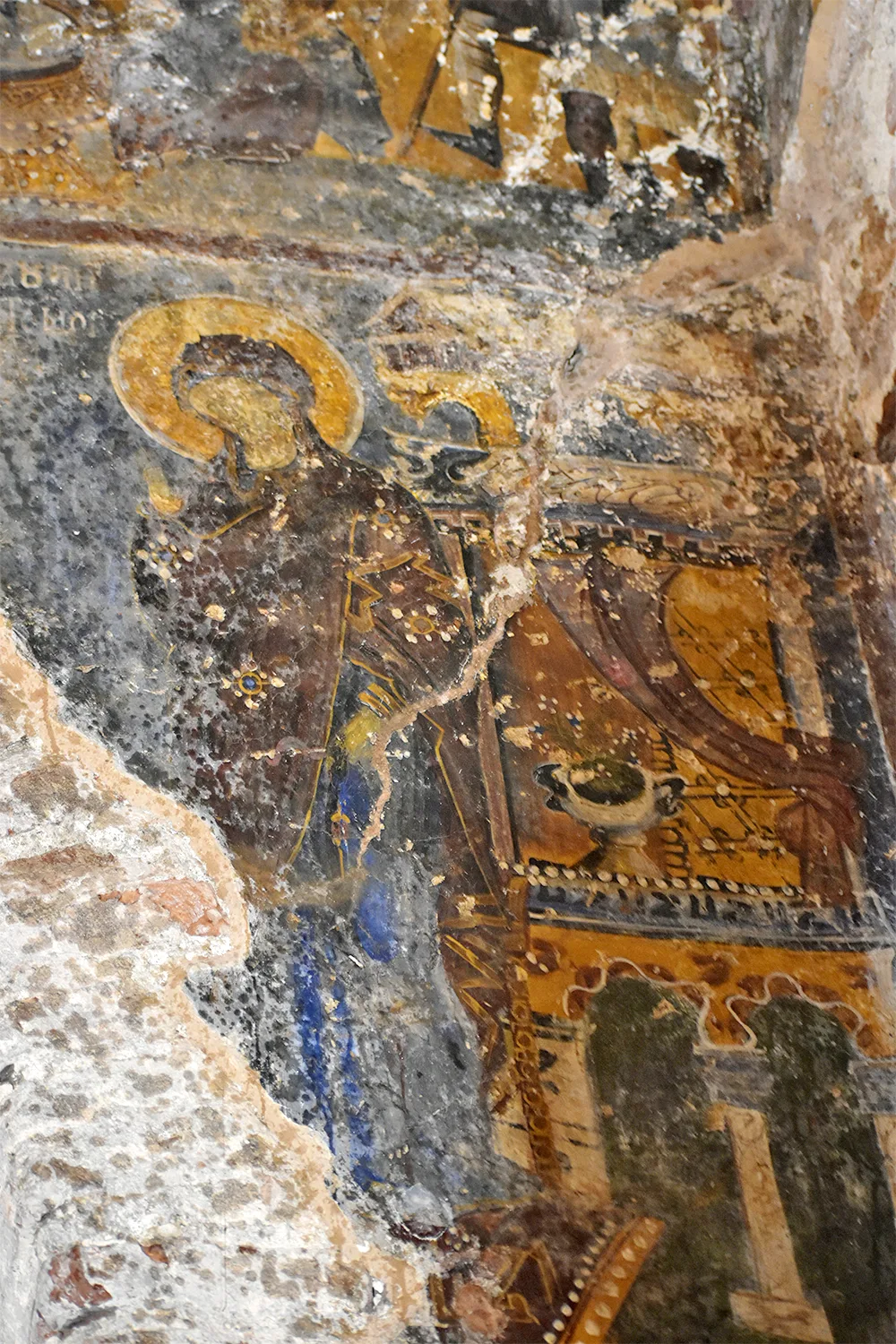
- St Nicholas, Kyriakoselia. The Virgin of the Annunciation (source: Maria Andrianaki).
-
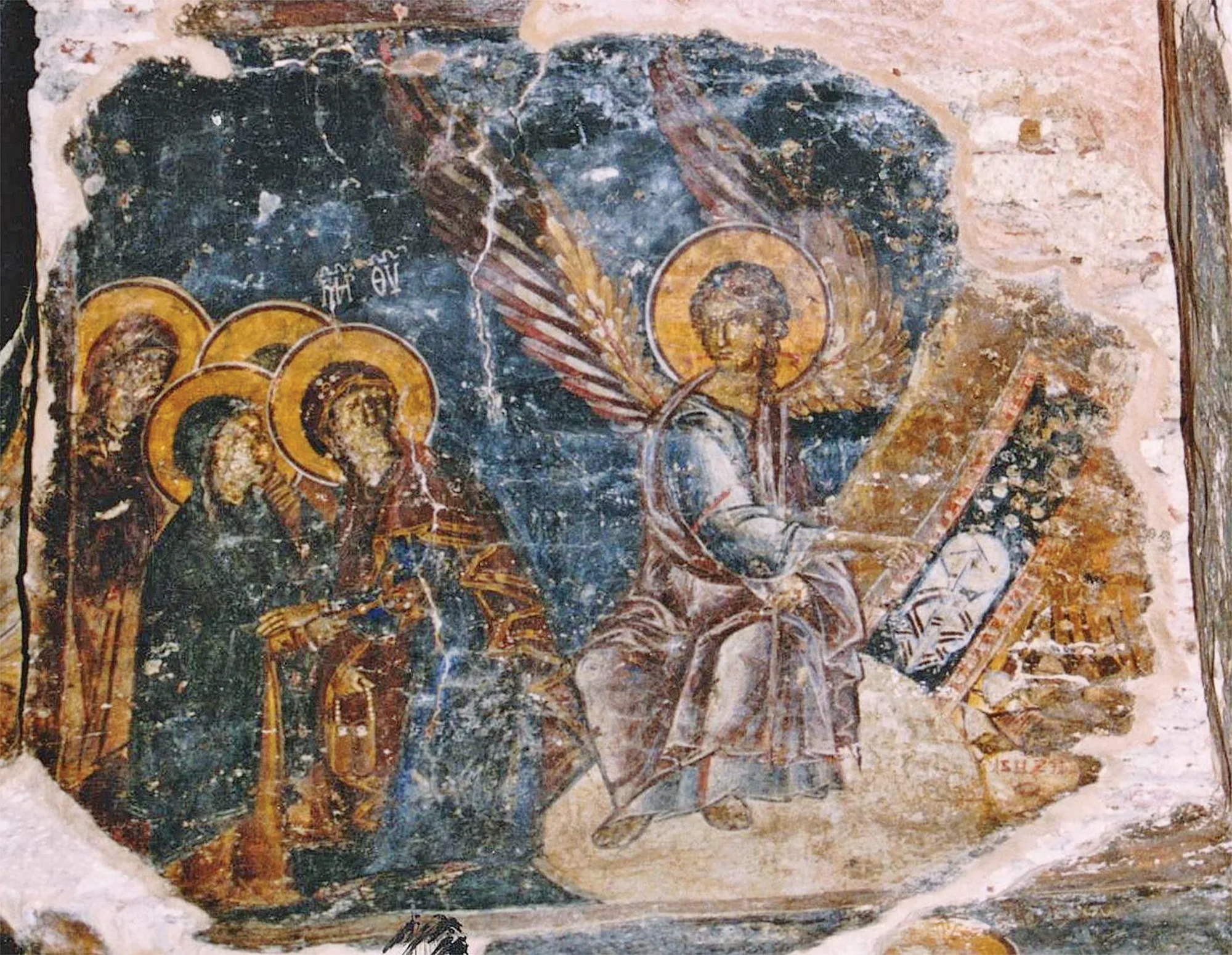
- St Nicholas, Kyriakoselia. The Rock (the Resurrection). The angel shows the Myrrh-bearers the empty tomb with the funerary accoutrements (source: Ministry of Culture, Ephorate of Antiquities of Chania).
 Church of Agios Nikolaos in Kyriakoselia in the Route of Byzantine Art
Most of the fresco decoration has survived, making this one of the most fully preserved iconographic programmes on the island.
The scene of the Ascension that adorns the eastern barrel vault stands out vividly. It is a multi-figured scene, with the figures comfortably arranged in space, their intense movements indicated by their flowing garments. The otherworldly environment of the theophany, the manifestation of the divine, is indicated by the movement of the olive trees, shaken as if by a windstorm, and by the strongly twisted postures of the figures, reflecting their inner turmoil. The figures are turned towards the ascending Christ, who is illuminated within a mandorla borne by angels.
Another figure that stands out is that of Nicholas the Studite, who is depicted on the west face of the northeast pier of the dome. Nicholas was the abbot of the historic Stoudion Monastery in Constantinople during the Iconoclasm. A fanatical iconolater, he fought for the veneration of religious images. Nicholas, originally from neighbouring Kydonia (Chania), lived during the period of the Arab conquest of Crete. The inclusion of his figure at a time when the local community had risen up against the Venetian newcomers is a telling reference to the struggles of prominent ecclesiastical figures from Crete in support of the Orthodox doctrine and the Orthodox Church, which was then being persecuted by the Catholic Church.
Two scenes are also distinguished by their rarity. They are those of the School of Christ, depicted in the second fresco zone above the north window of the church. The young Christ is being dragged towards the enthroned teacher by his mother. Interestingly, the inscription reads: “Go, thou who hast made heaven and earth, to the teacher.” The paradoxical inscription and the unusual portrayal, almost a caricature, of the rebellious young Christ lend a humorous note to the scene. The boldness of the scene, its humorous elements and its content, effectively exalting teaching above even the Creator of heaven and earth, capture the ideology of the upper class and reveal the air of renewal that prevailed in the intellectual sphere after the Fourth Crusade.
-
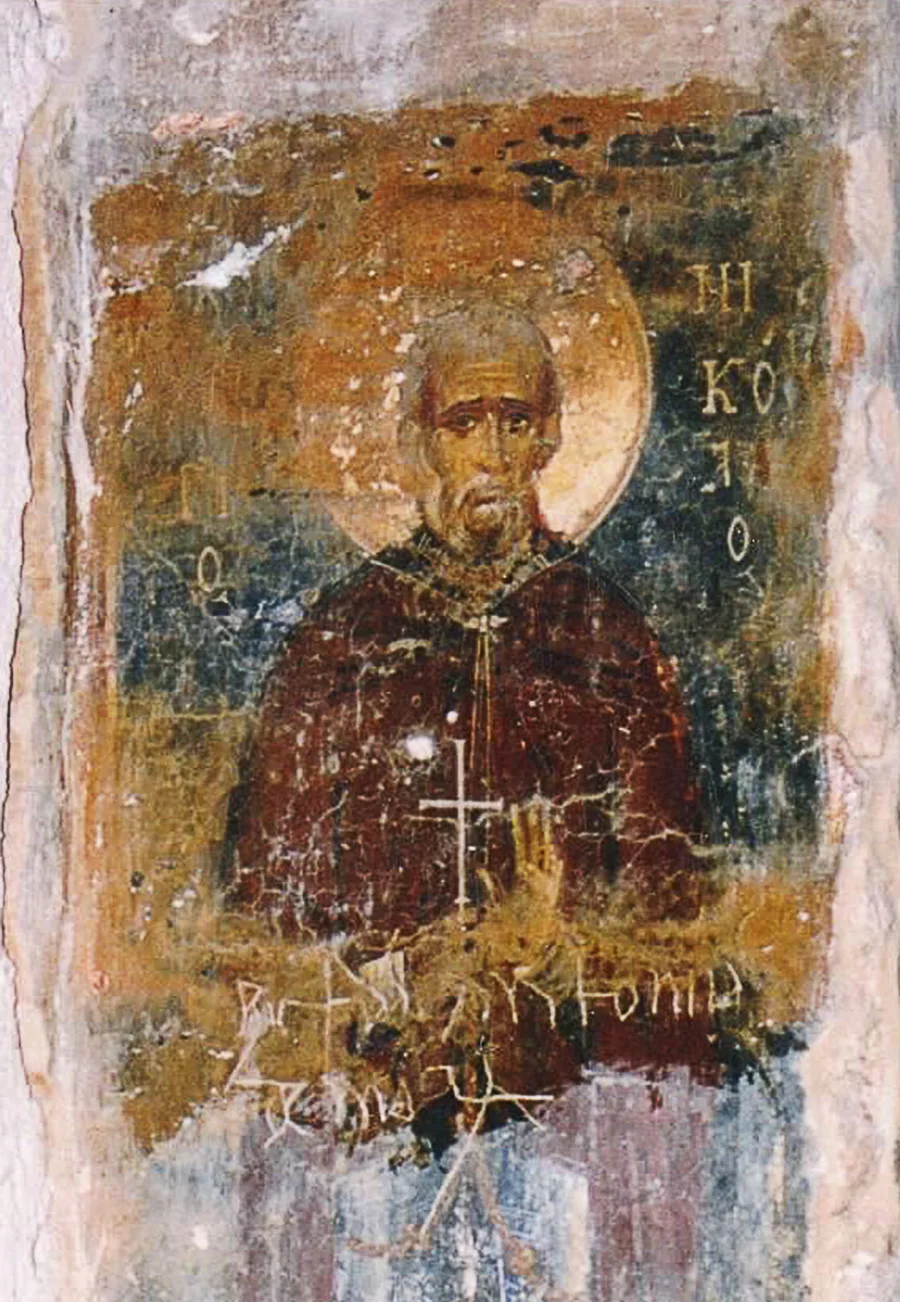
- Nicholas the Studite, on the west face of the northeast pier of the dome.
-
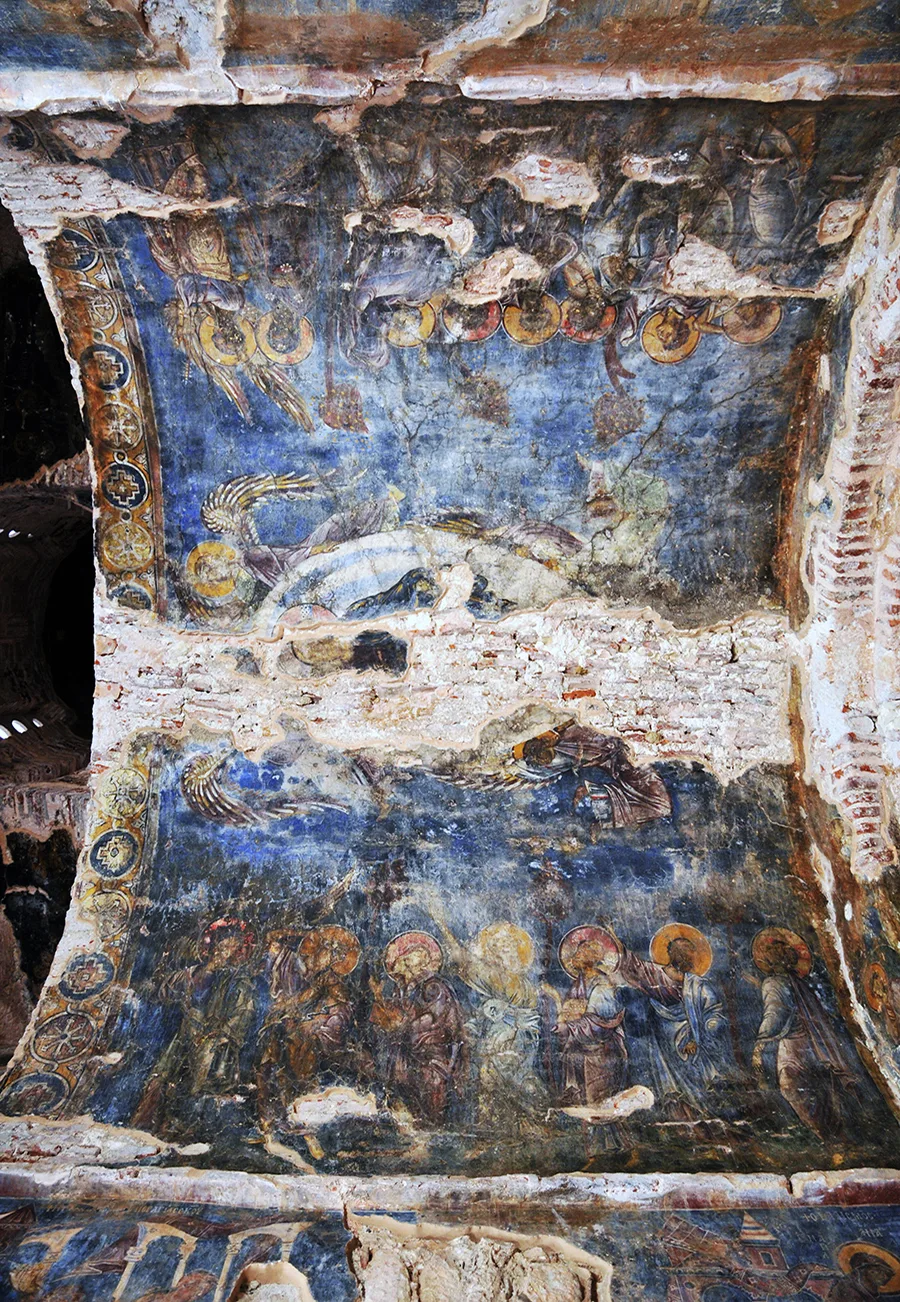
- The Ascension. East arch.
-
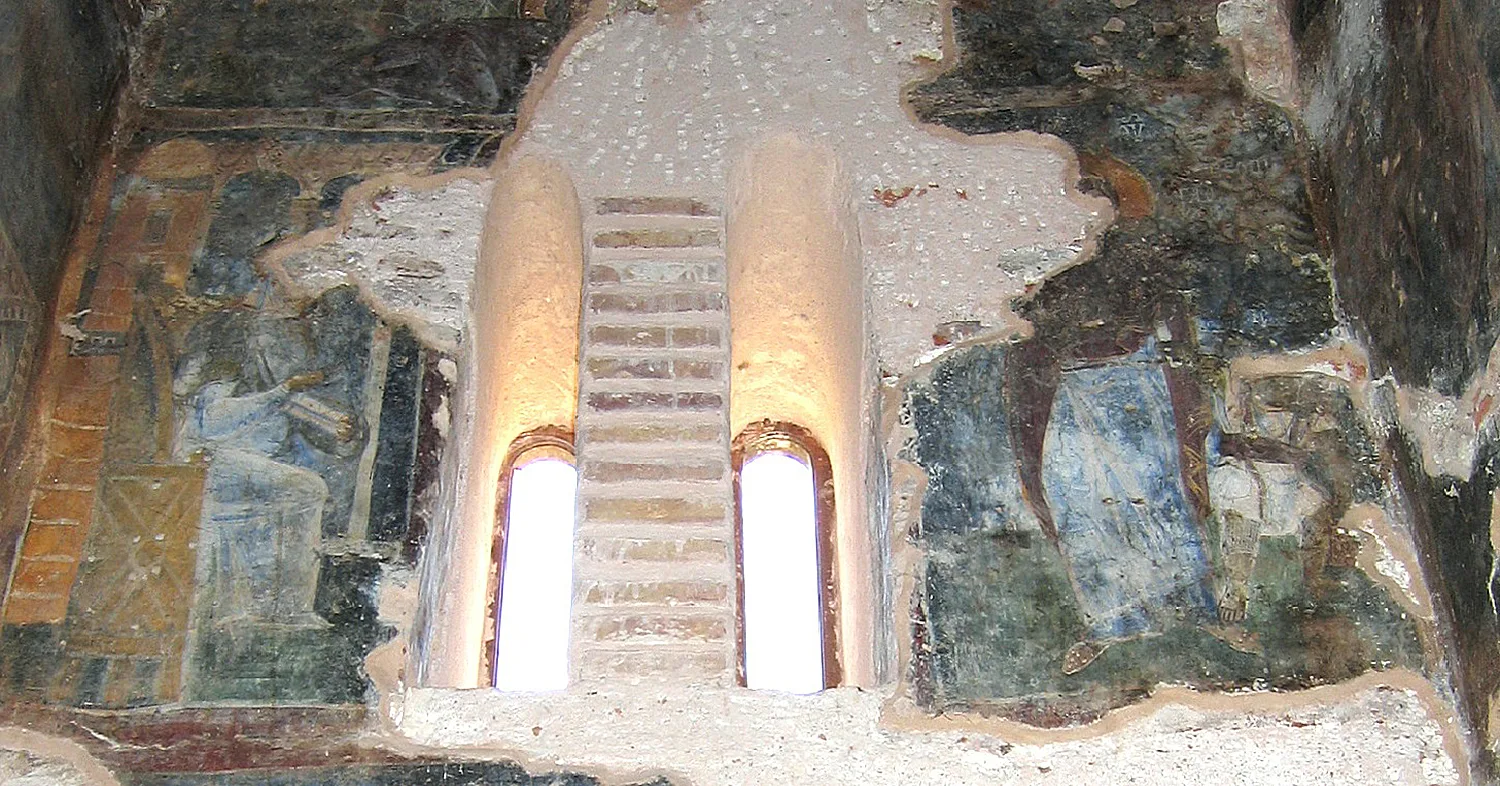
- The School of Christ, south front, in the second fresco zone.
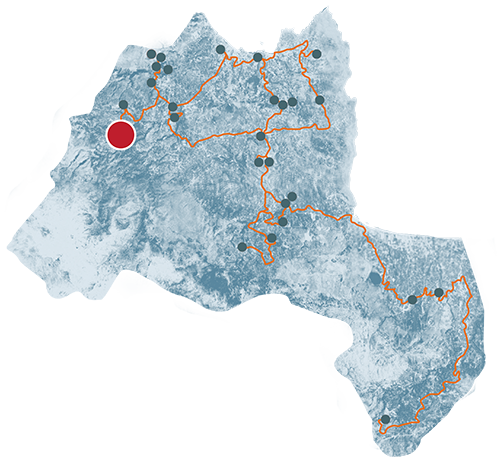
Kyriakoselia
Kyriakoselia is 31 kilometers from Chania and is built at an altitude of 360 meters.