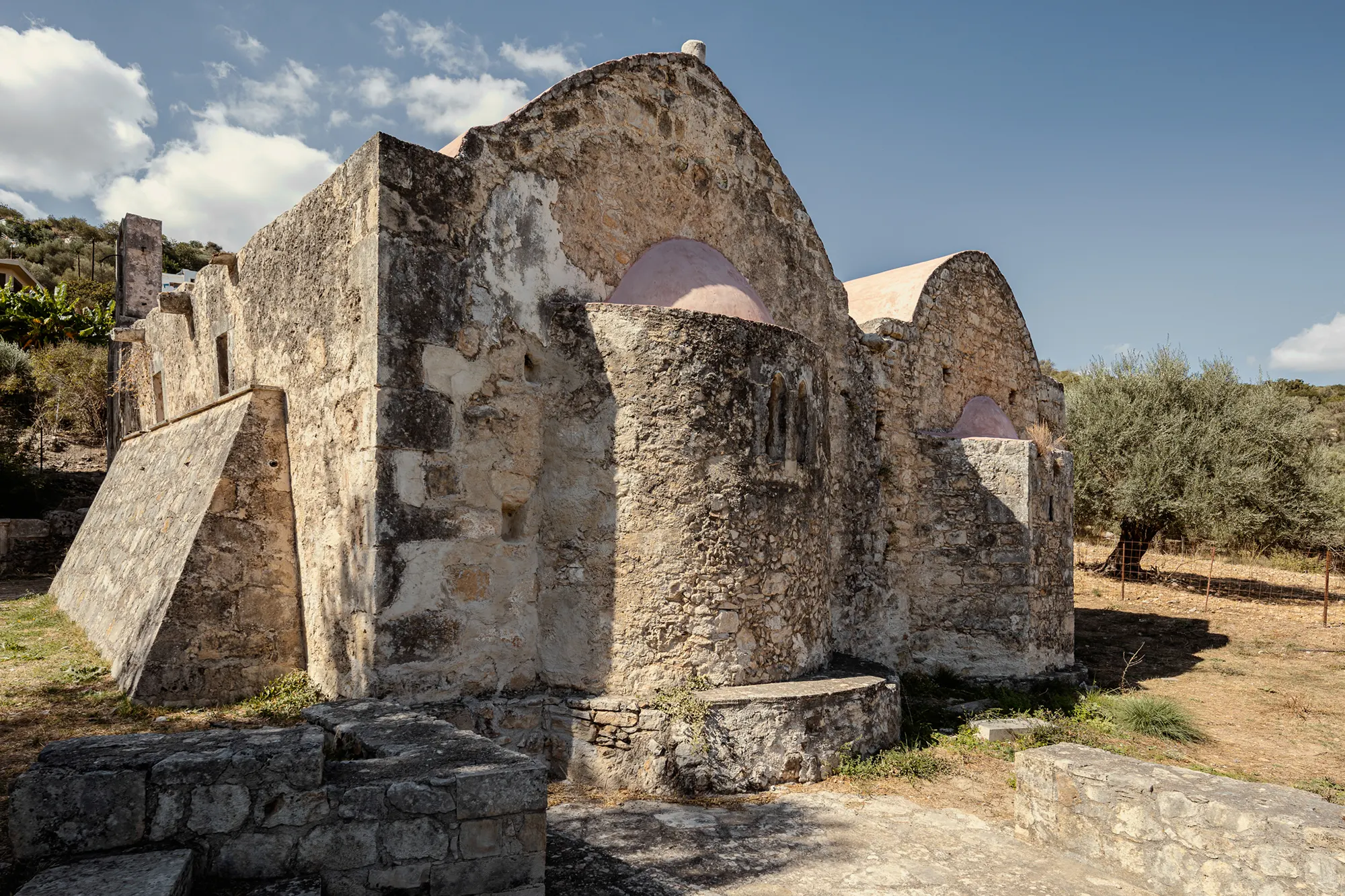
Church of Agios Ioannis Theologos (St John the Divine) in Stylos
In the centre of the village of Stylos is preserved the two-nave church dedicated to St John the Divine and St Nicholas. The complex belonged to the dependency of the Monastery of St John the Divine of Patmos.
The north chapel, dedicated to St John the Divine, dates from the 13th century and bears fragments of frescoes of the same period. In the 15th century a nave dedicated to St Nicholas was added on the south. It contains fresco decoration, dedicated according to an inscription by the monk Nicodemus. The cross-vaulted narthex was probably built and adorned with frescoes by the mother monastery between 1271 and 1280. On its north wall, the name of the nun Euphrosyne Drakonto(poulou) is preserved in an inscription.
Excavations inside and outside the church have revealed the existence of two smaller earlier churches in the north chapel. The oldest surviving part of the existing churches is the south wall of the north chapel, where the mid-13th-century frescoes are found. The vault, the north wall and the sanctuary apse are 15th-century reconstructions. The narthex was added later, and lastly the nave of St Nicholas.
The church has been rebuilt many times in the same place due to the instability of the soil and the way it is constantly covered with earth due to the sloping ground. Around and inside the church, about seven layers of graves from the cemetery of the settlement have been excavated, revealing finds that provide interesting information on life in the area during the Second Byzantine Period of Crete.
-
- SS John the Divine and Nicholas, Stylos. The apses of the two naves are visible. View from the SE (source: Sotiris Zapantiotis).
-
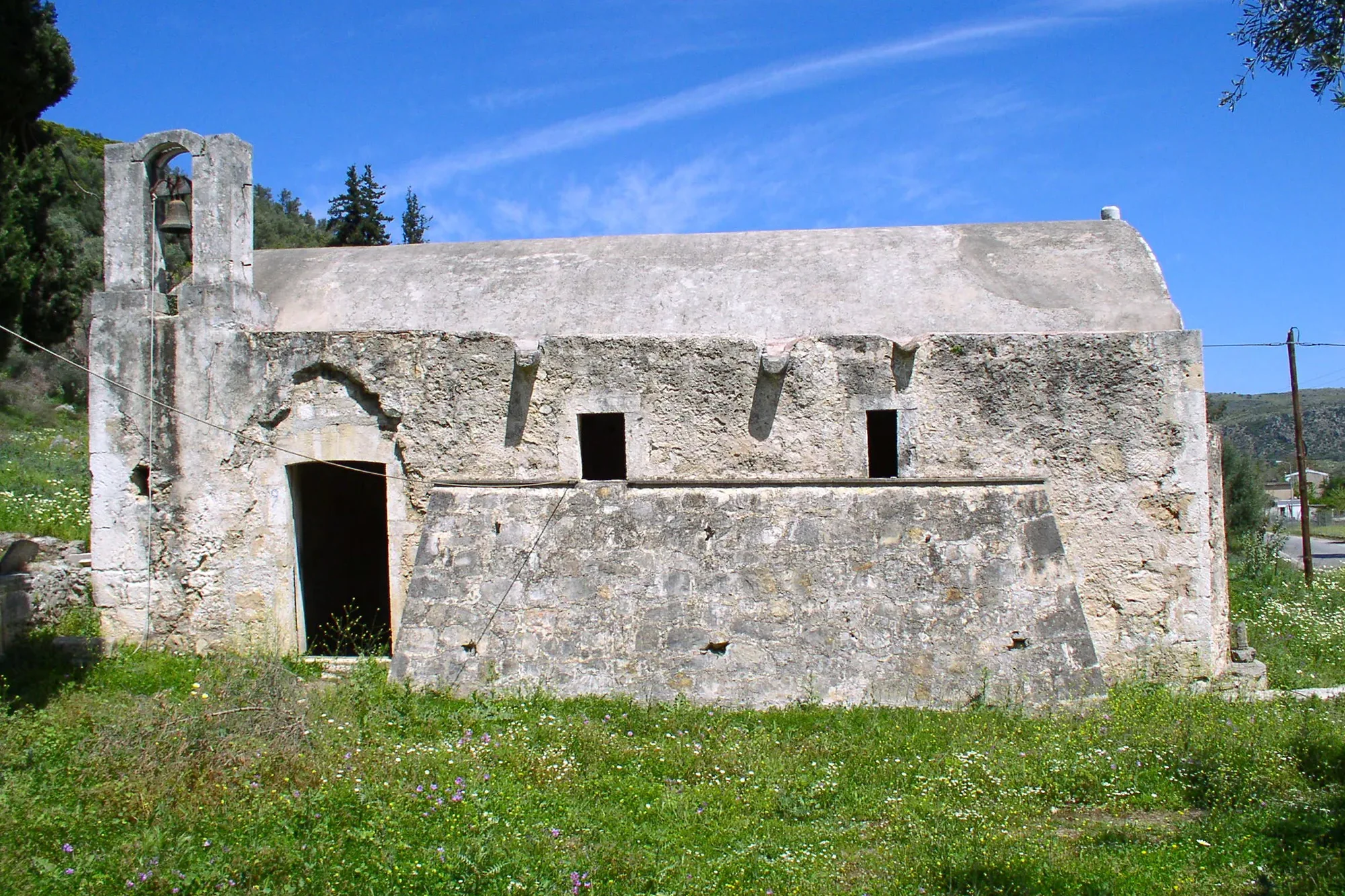
- SS John the Divine and Nicholas, Stylos. The south façade of the church with the entrance. View from the S (source: Michalis Andrianakis Archive).
-
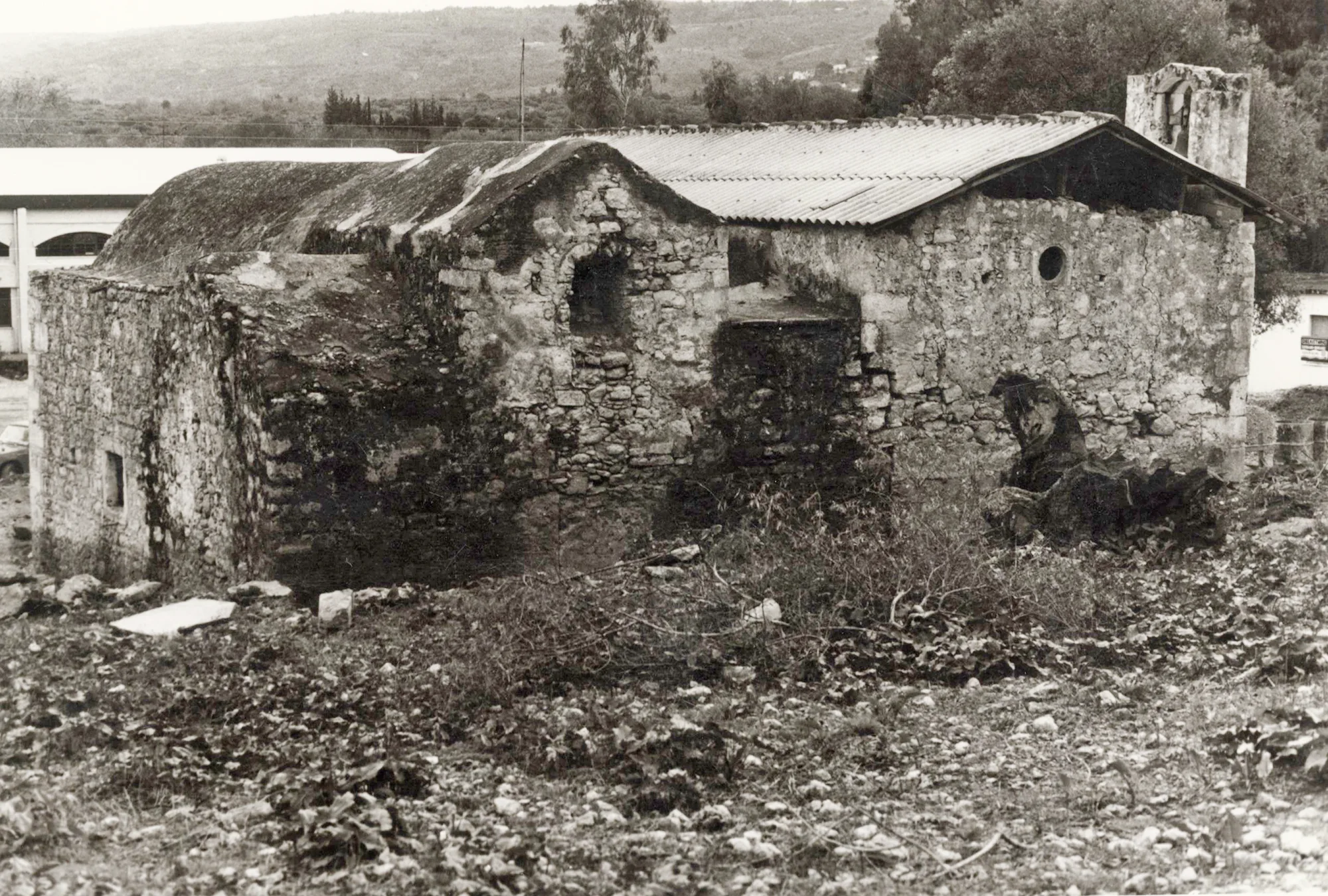
- SS John the Divine and Nicholas, Stylos. The church before its restoration. View from the NW (source: Michalis Andrianakis Archive).
-
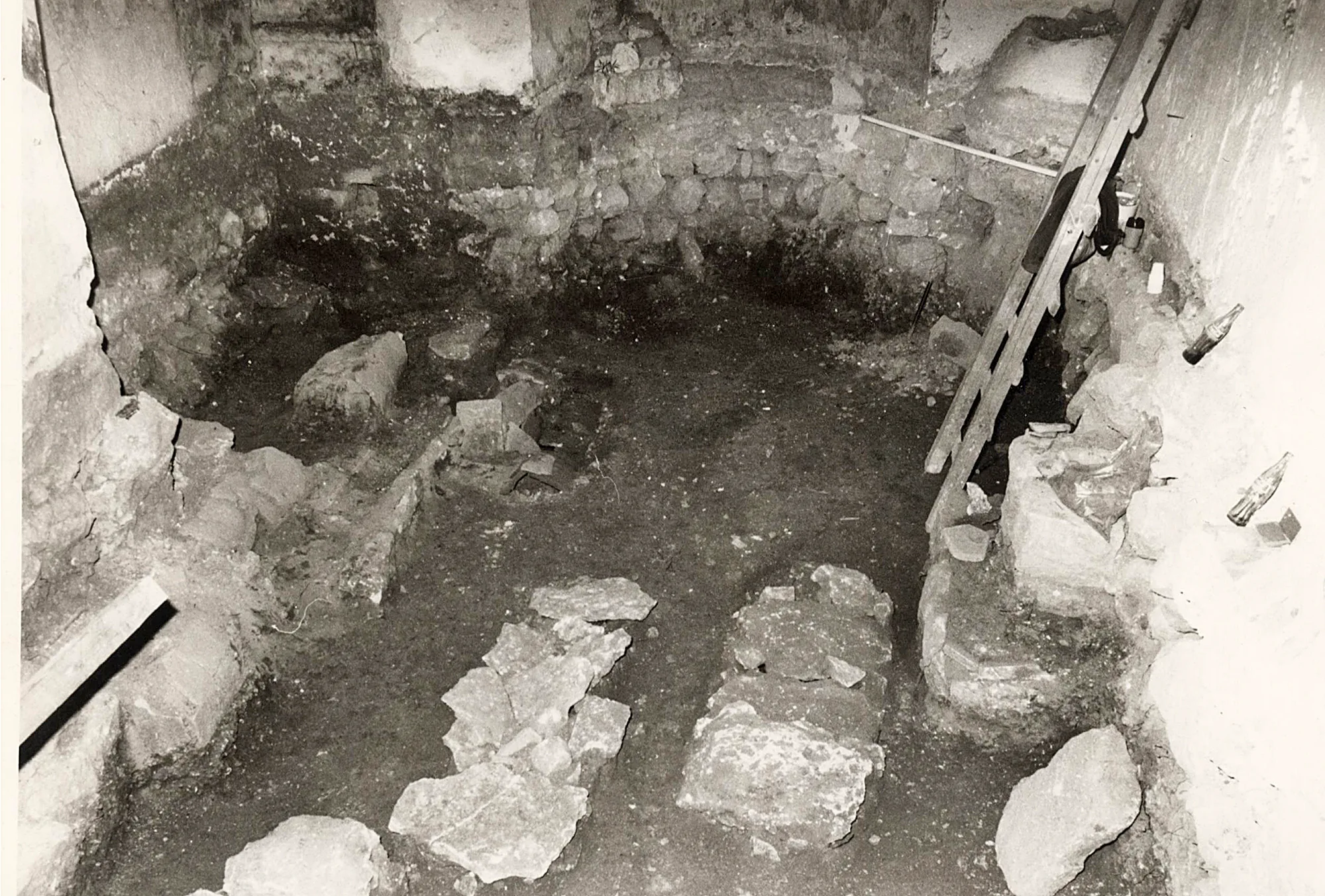
- SS John the Divine and Nicholas, Stylos. Excavation work in the north nave, with graves and walls of an earlier church. View from the SW (source: Michalis Andrianakis Archive).
-
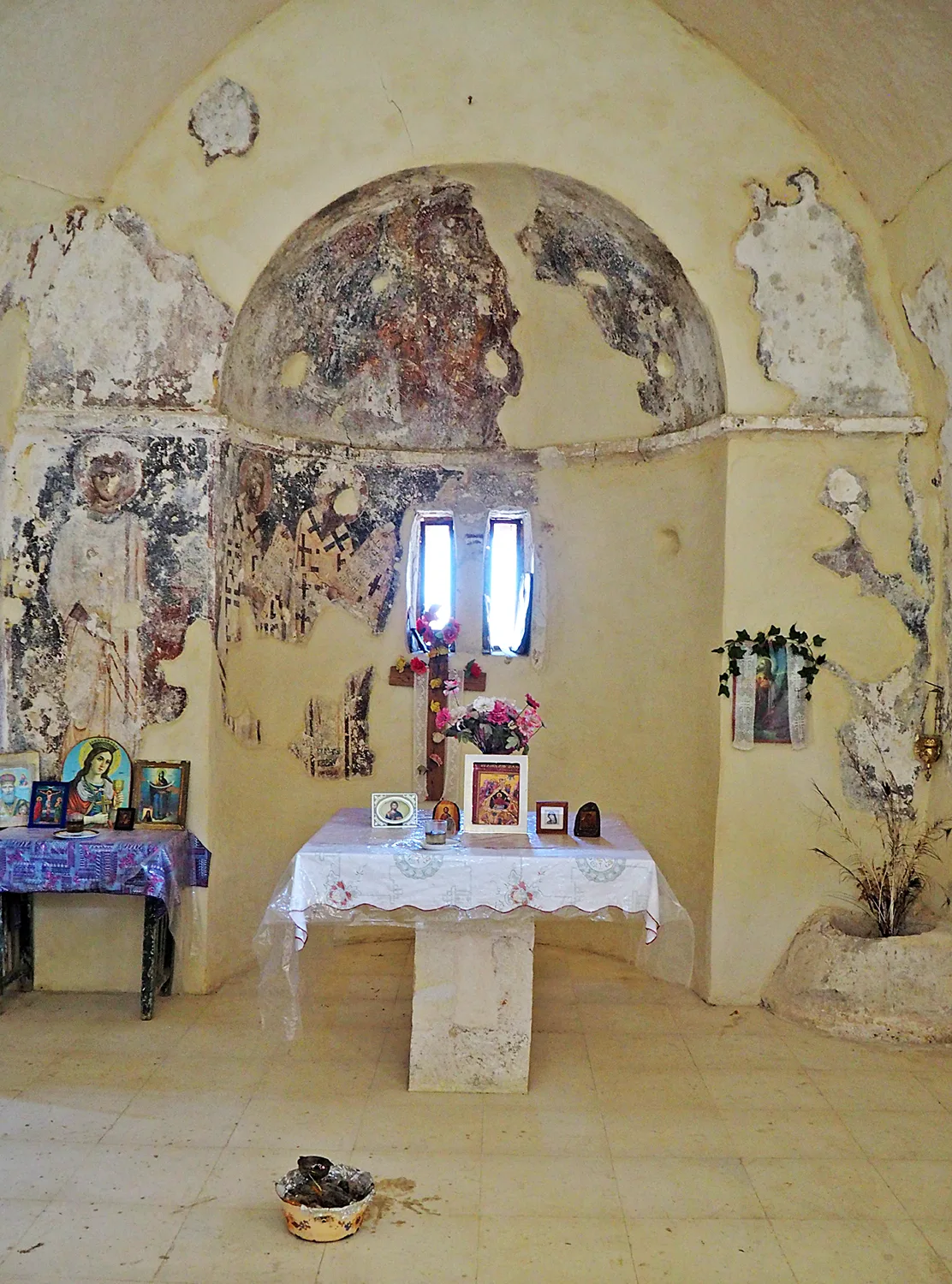
- SS John the Divine and Nicholas, Stylos. The apse of the south nave with early-15th-century frescoes (source: Michalis Andrianakis Archive).
 Church of Agios Ioannis Theologos in Stylos in the Route of Timelessness
 Church of Agios Ioannis Theologos in Stylos in the Route of Sustainability
They are all of the same architectural type, the simple single-nave church, while each is probably constructed from the stones of the previous one. The practice of reuse is clearly discernible in the wall in front of the main entrance, which contains spolia (reused building material) from an earlier building.
-
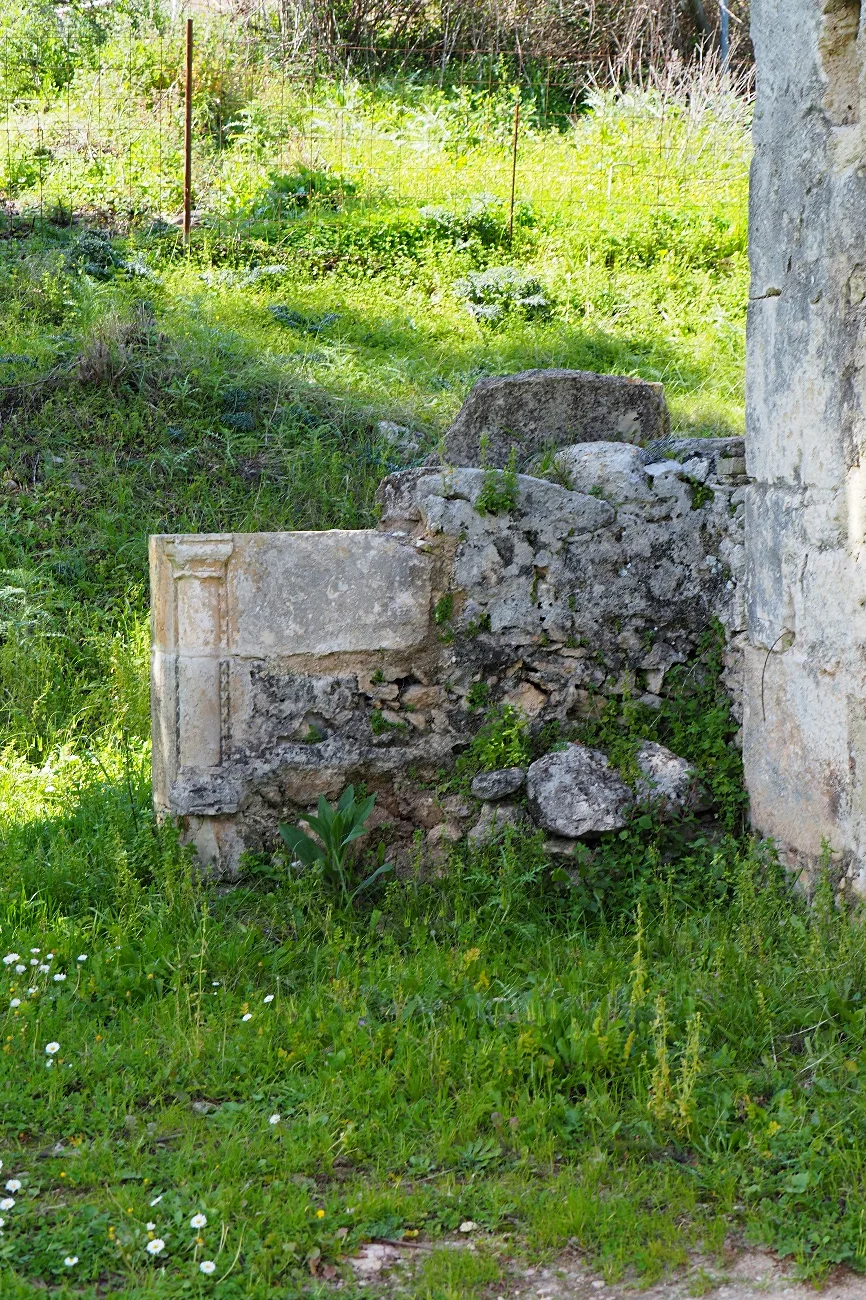
- Part of a mullion set into a wall. St John the Divine, Stylos (source: Maria Andrianaki).
 Church of Agios Ioannis Theologos in Stylos in the Route of Rural Life
The excavation has demonstrated that the fact that the two churches were successively constructed and collapsed at least twice reflects their importance in an area of intensive farming activity through the ages. The Monastery of Patmos was the main landowner in the region, playing a role similar to that of the lords. The villagers worked on the estates of the dependency, which effectively determined local living conditions.
-
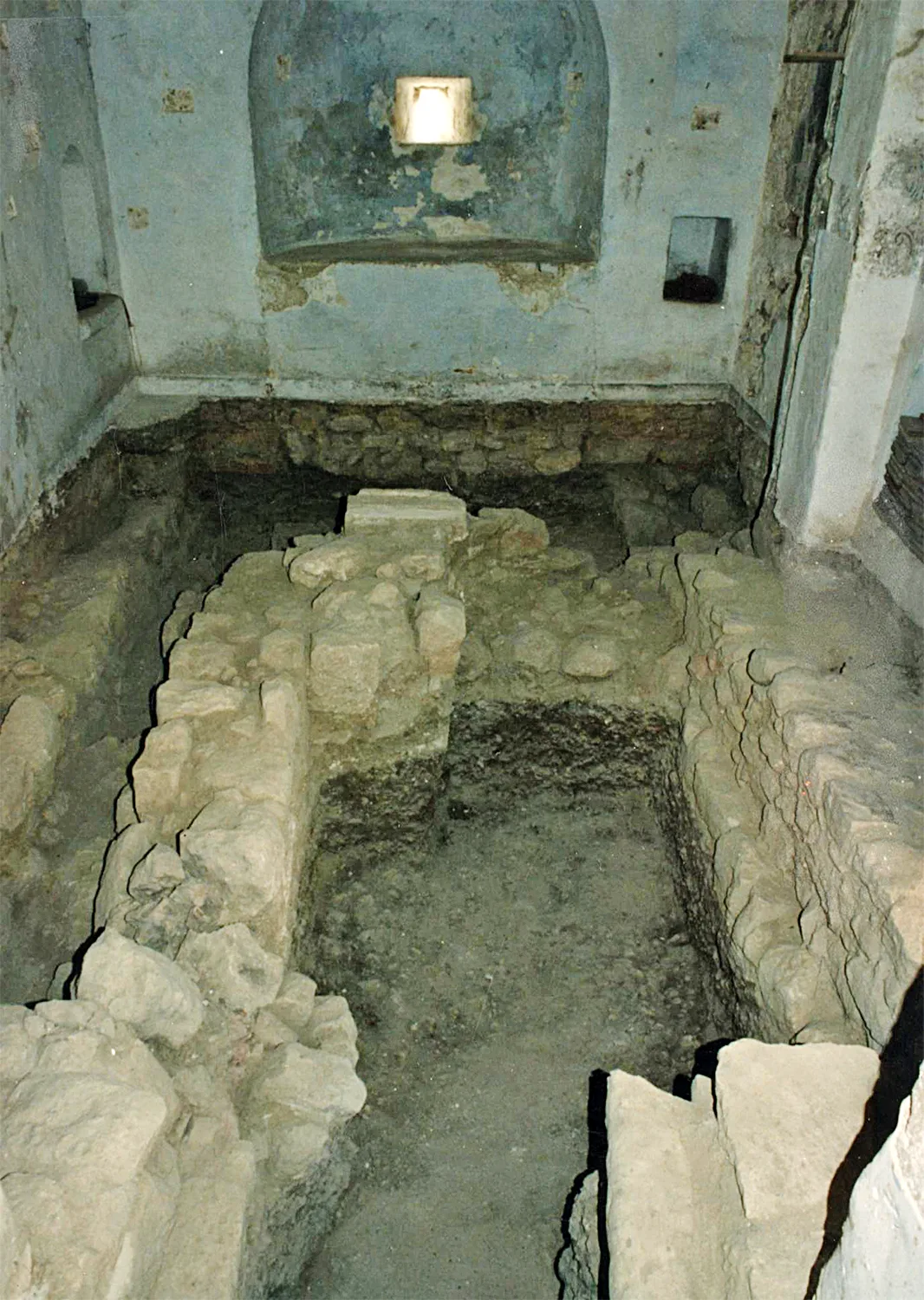
- SS John the Divine and Nicholas, Stylos. North aisle with the walls of an earlier church (source: Michalis Andrianakis Archive).
 Church of Agios Ioannis Theologos in Stylos in the Route of Life and Death
These tombs indicate the desire of Christians to be buried within the church precinct, as well as in the church itself.
-
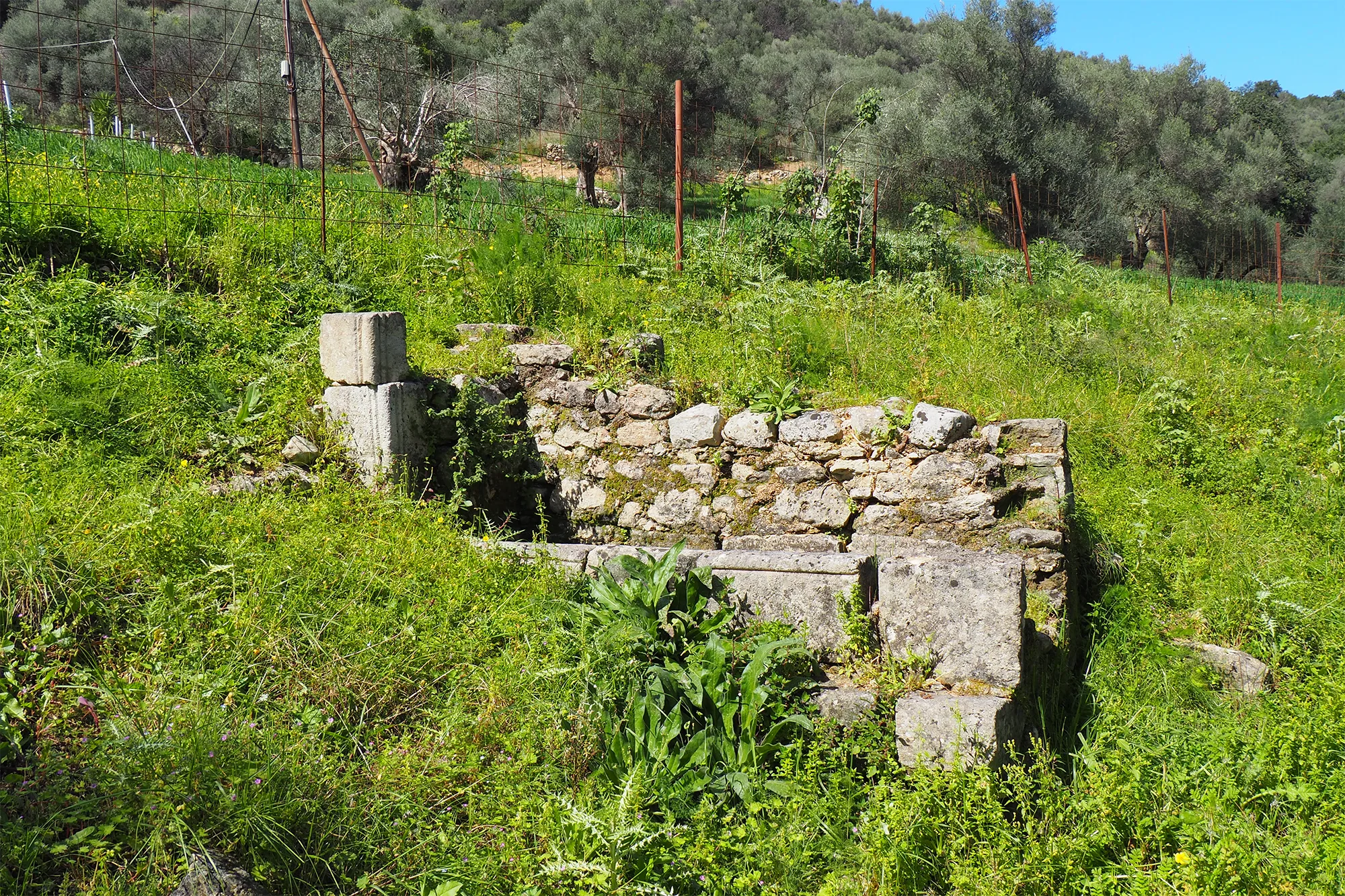
- St John the Divine, Stylos. Arcosolium in the church precinct (source: Maria Andrianaki).
-
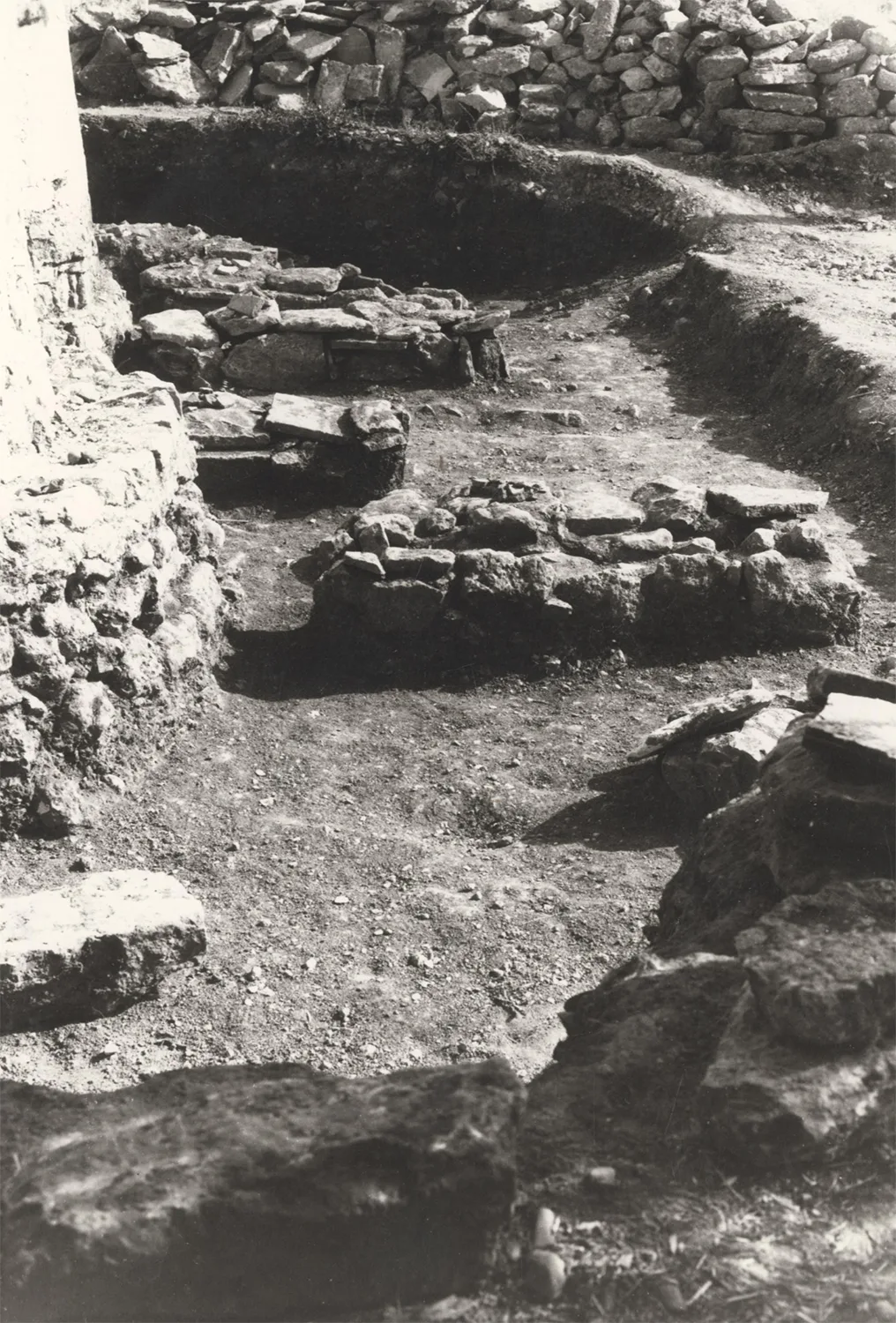
- St John the Divine, Stylos. Graves excavated outside the church (source: Michalis Andrianakis Archive).
 Church of Agios Ioannis Theologos in Stylos in the Route of Byzantine Art
Fragments of 13th-century frescoes are preserved in the north chapel, dedicated to St John the Divine. The colossal representation of St John with St Prochorus is visible in the blind arch of the south wall. The painting depicts the evangelist dictating his vision of the Revelation to his disciple. The hand of God over John’s head represents divine inspiration. The Baptism on the west wall is also discernible, as is a scene of a saint’s martyrdom. In the lower fresco zone are individual saints, such as St Anthony the monk. The paintings in the north chapel are the work of a skilled folk artist who followed the established trends of his time.
Fragments of frescoes also survive from the cross-vaulted narthex of the church.
The fresco decoration of the south nave, dedicated to St Nicholas, is preserved in better condition. The surviving figures of a deacon on the sanctuary wall and a hierarch on the south wall show that the artist was up to date with contemporary trends.
-
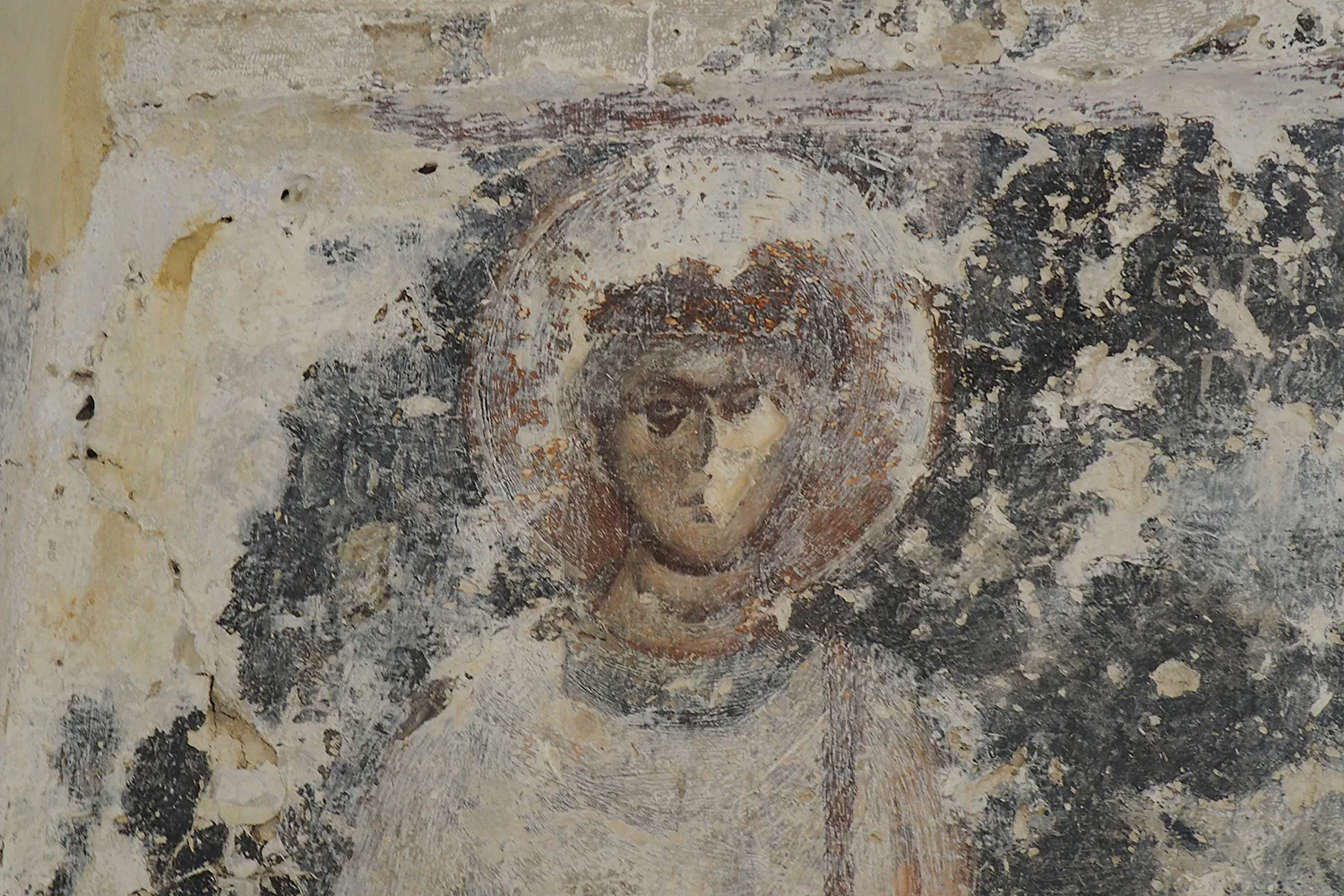
- SS John the Divine and Nicholas, Stylos. St Nicholas nave. The figure of a deacon on the sanctuary wall (source: Maria Andrianaki)
Stylos
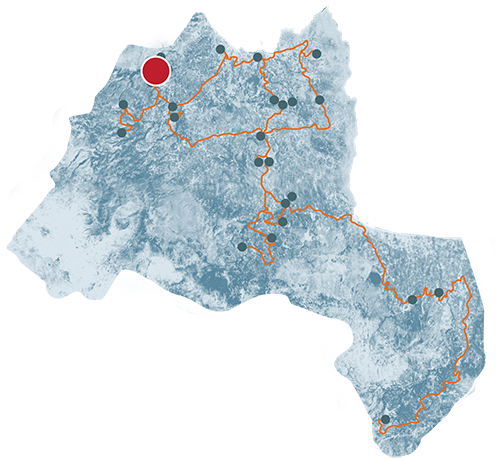
Stylos is located at an altitude of 40 meters, on the banks of the river Koiliaris, and has abundant springs.
It is 18 kilometres from Chania.