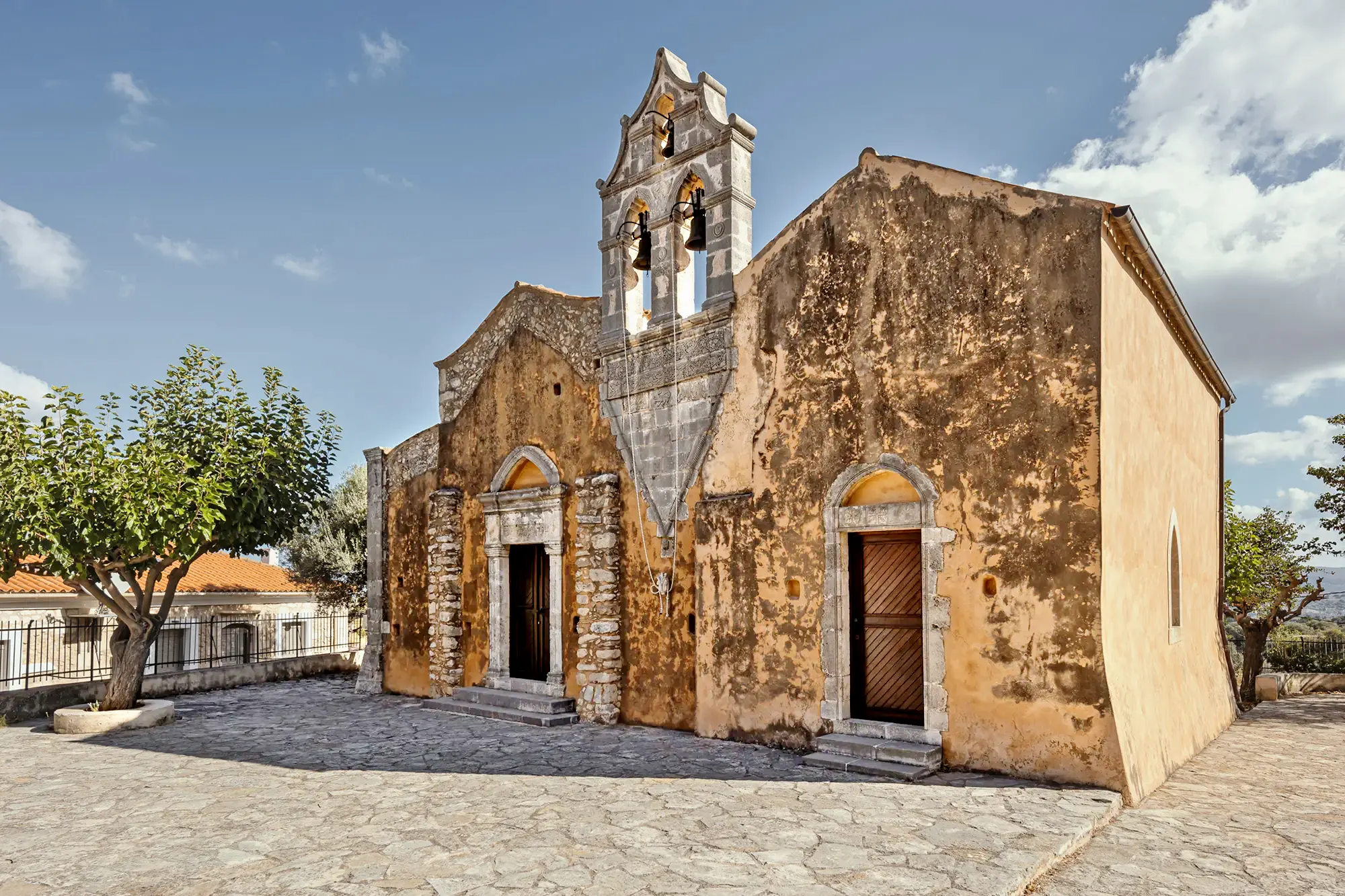
Church of Agios Georgios (St George) in Kournas
The church is located southwest of the village of Kournas. The complex of a three-aisled barrel-vaulted basilica and a single-nave barrel-vaulted church on the south is preserved. The original three-aisled basilica of the late 12th century was timber-roofed. It had a tripartite narthex which survived until the beginning of the 20th century. A single-nave timber-roofed church with an independent narthex was added on the south side in the first half of the 13th century, with a door in the original south wall communicating with the sanctuary.
The three-aisled basilica is dedicated to St George and the single-nave church to Christ the Saviour. This is one of the most important monuments of Middle Byzantine art in Crete.
The paintings of the church are an excellent example of Late Komnenian art, reflecting the activity of important artists and powerful bearers of authority in the provinces of the island. The Late Komnenian style was an artistic tradition that originated in Constantinople and spread to Russia, the Balkans, Sinai, Cyprus, Palestine and Sicily.
Fragments of the first fresco layer, mainly scenes of the Liturgical cycle, are found scattered in the nave. In the conch is depicted the Deesis and below it the Communion of the Apostles, while in the lower zone are placed the Co-officiating Bishops. They are the work of two artists, pioneers of their time. The frescoes of this layer date from the late 12th century. Frescoes of the second layer survive in the nave of Christ the Saviour. Various images are discernible in the sanctuary, such as the Deesis and the Co-officiating Bishops, as well as scenes from the Life of Christ including the Crucifixion, which survives in fairly good condition. This layer dates from the early 13th century, when the Venetians were attempting to establish their rule in Crete. Despite the warlike climate on the island at the time, the donors of the church were able to hire a very good artist to paint the frescoes. Two further layers survive in the church, dating from the late 13th – early 14th century.
-
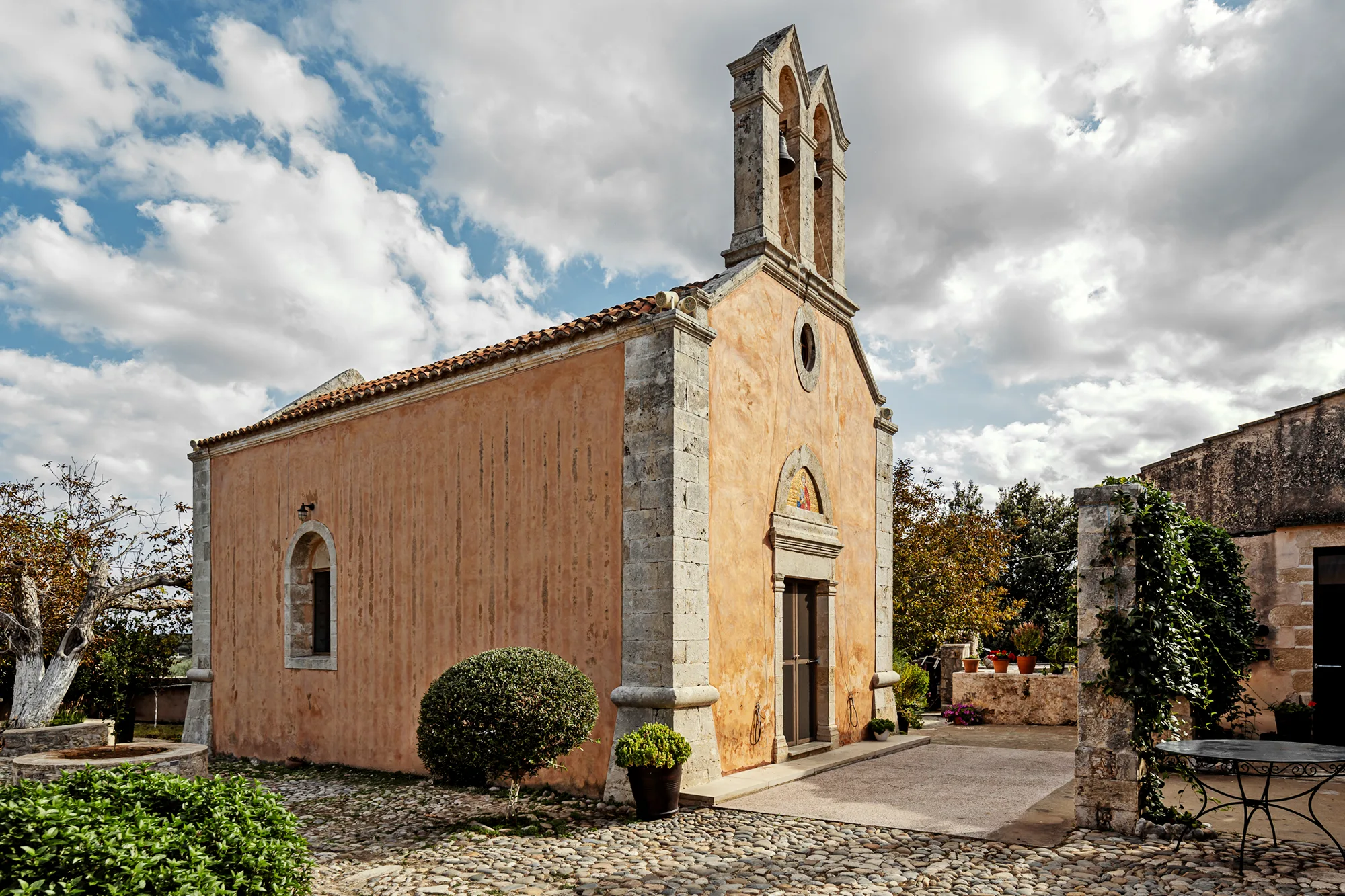
- Monastery of St George, Karydi. The catholicon. View from the NW (source: Sotiris Zerveniotis).
-
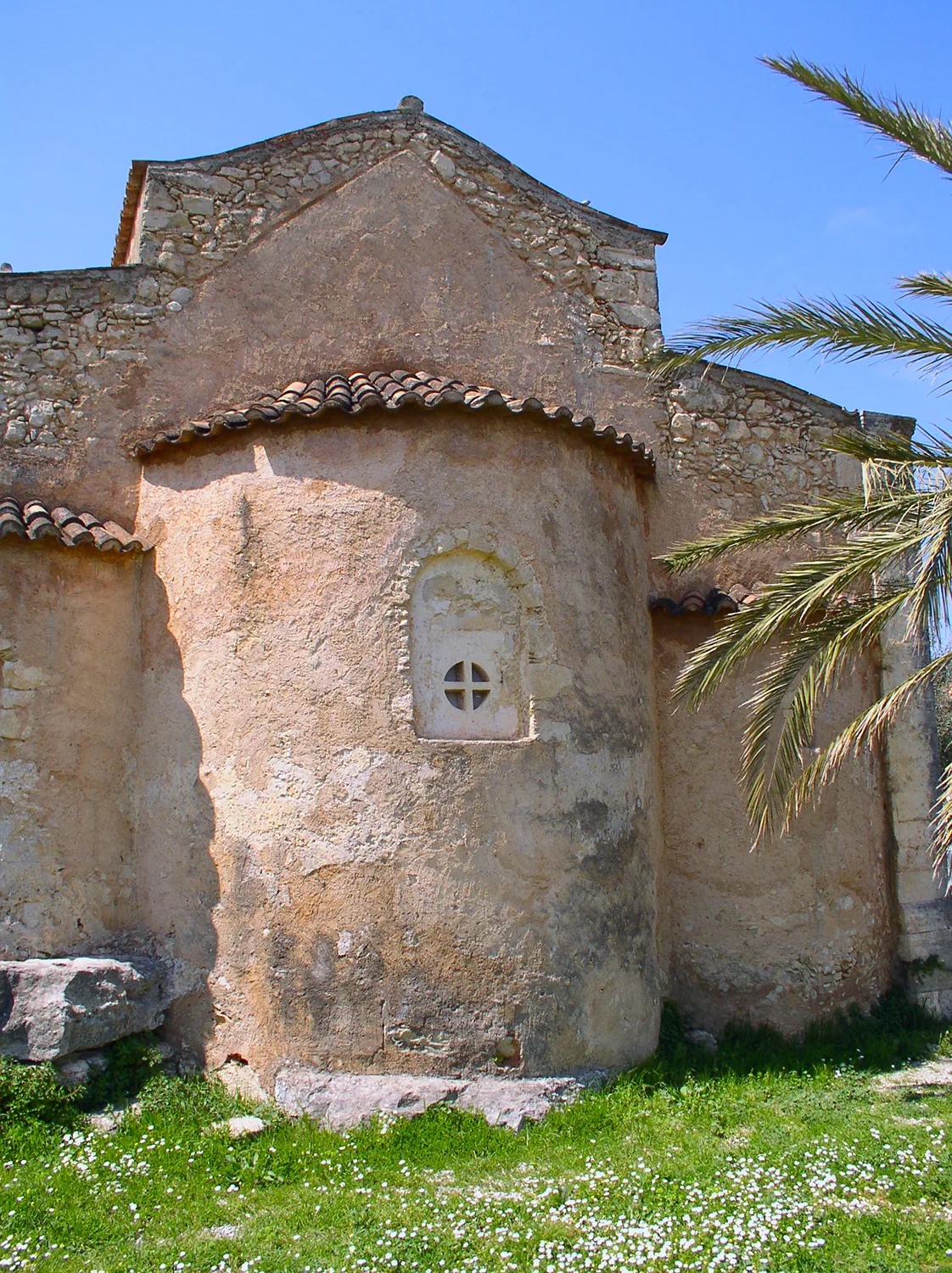
- St George, Kournas. The central apse. View from the SE (source: Michalis Andrianakis Archive).
-
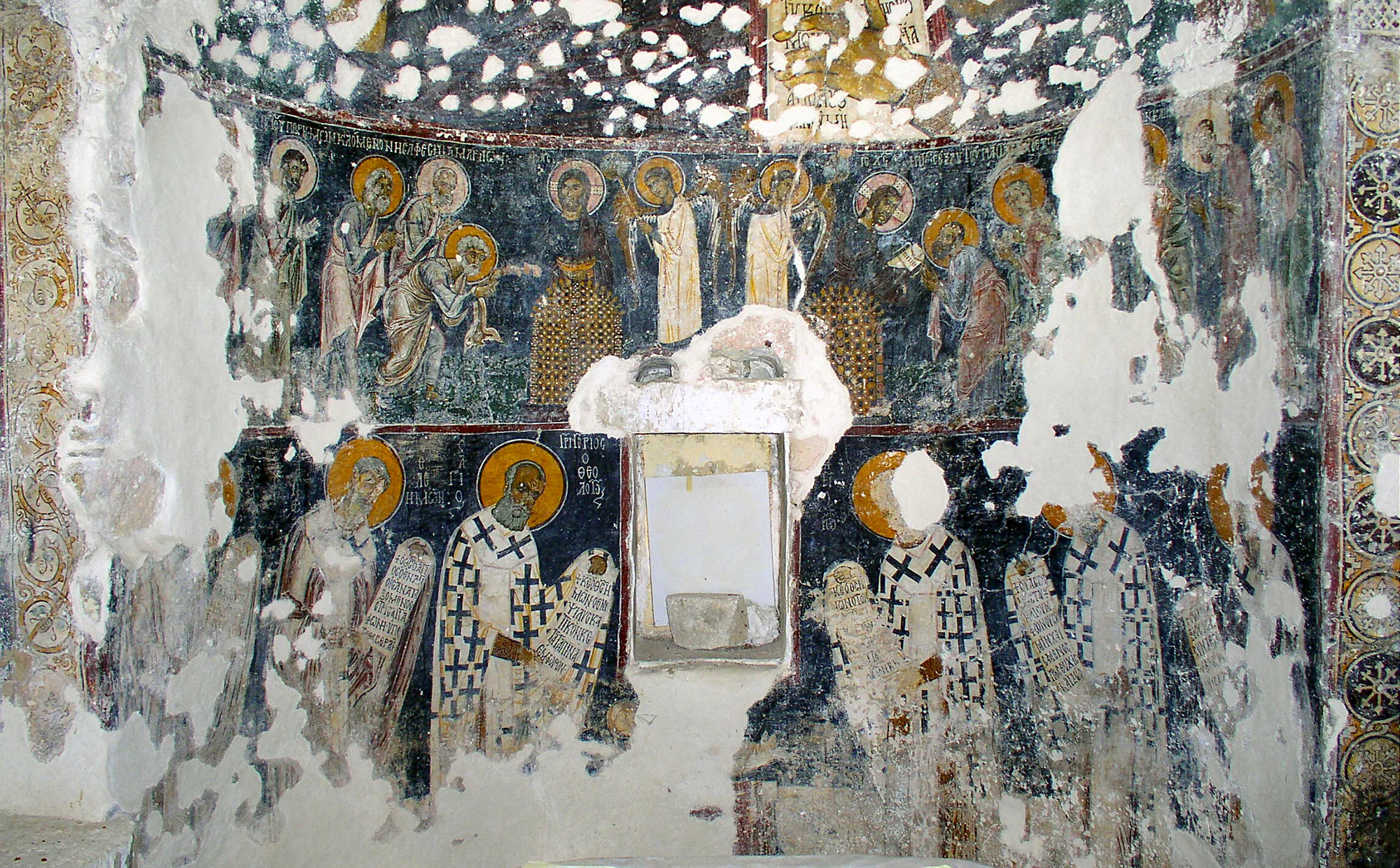
- St George, Kournas. The frescoes in the central apse. First fresco layer (source: Michalis Andrianakis Archive).
 Church of Agios Georgios in Kournas in the Route of Timelessness
 Church of Agios Georgios in Kournas in the Route of Rural Life
 Church of Agios Georgios) in Kournas in the Route of Life and Death
The scene depicts the martyrdom of the Son of God, who sacrificed Himself for humanity.
-
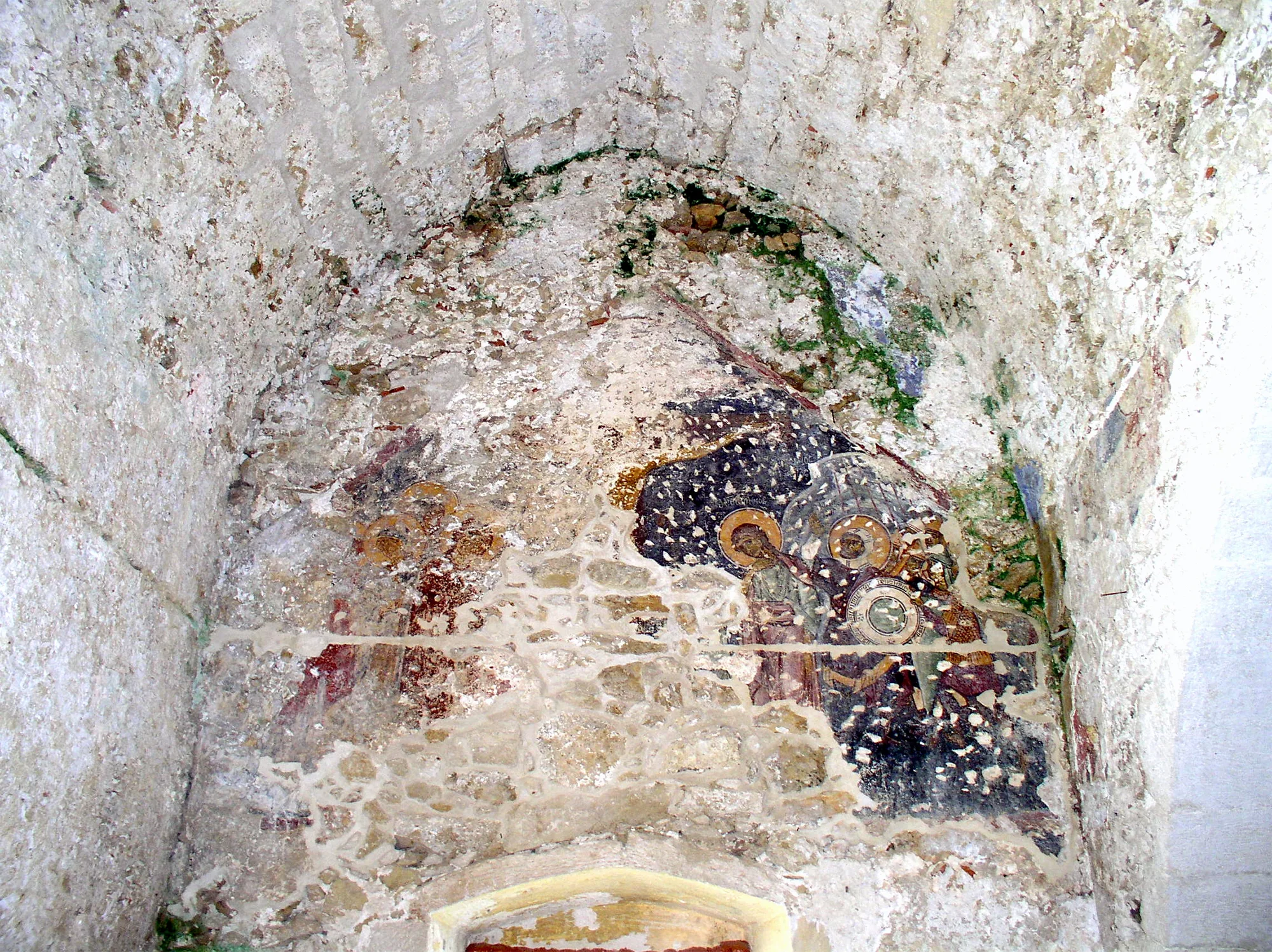
- St George, Kournas. The Crucifixion. In the centre is part of the figure of Christ, with John and the centurion Longinus accompanied by soldiers on His left. To the right of Christ is His mother and a group of women (source: Ministry of Culture, Ephorate of Antiquities of Chania).
 Church of Agios Georgios in Kournas in the Route of Byzantine Art
Of particular importance is the first layer of frescoes in the central sanctuary apse, dating from the late 12th century. The figures are in the Komnenian tradition, but there is an evident tendency to increase their volume compared to the works of the previous period. The movement towards increasingly naturalistic portrayal, moving away from the pursuit of transcendence through the depiction of figures of hieratic solemnity in the art of the Eastern Roman Empire, is one of the characteristic precursory trends that would eventually lead to the Italian Renaissance.
From the layer of the early 13th century, the Communion of the Apostles (photo) stands out. Christ gives Peter the leavened bread of Orthodox communion and Paul the wine, symbols of his body and blood, as the inscriptions tell us.
The church paintings are associated with the noble Melissinos family. The family belonged to the aristocracy of Constantinople, with powerful branches, mainly in Asia Minor. The Melissinoi, as wealthy patrons, were able to hire important painters to paint the frescoes in their churches. In Kournas, the painters of the first and second layers must have come from Constantinople to work in the service of the wealthy aristocrats.
The paintings of the church form a prestigious body of work that highlights the social status of its patrons within the community.
-
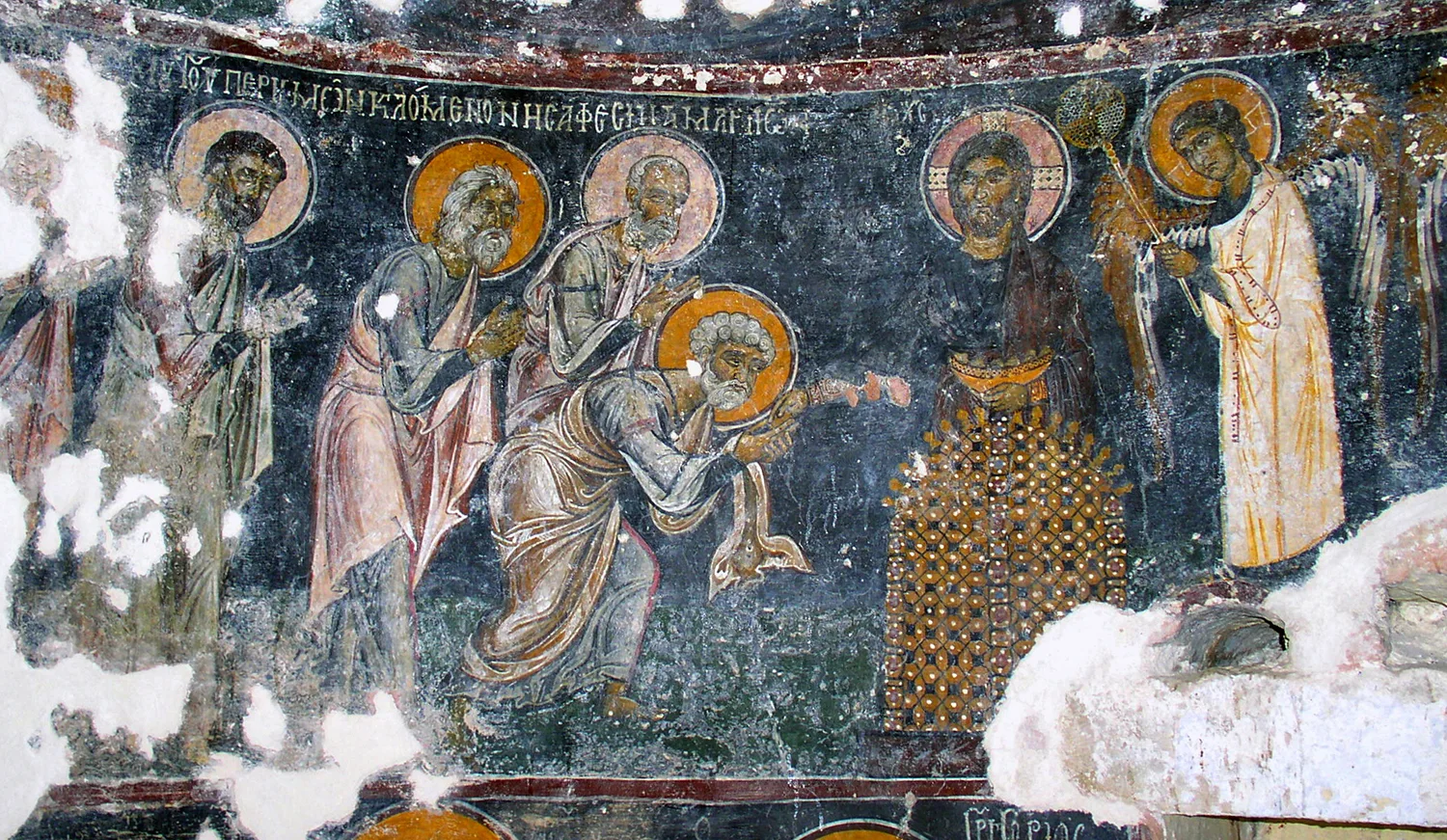
- St George, Kournas. The Communion of the Apostles. (source: Ministry of Culture, Ephorate of Antiquities of Chania).
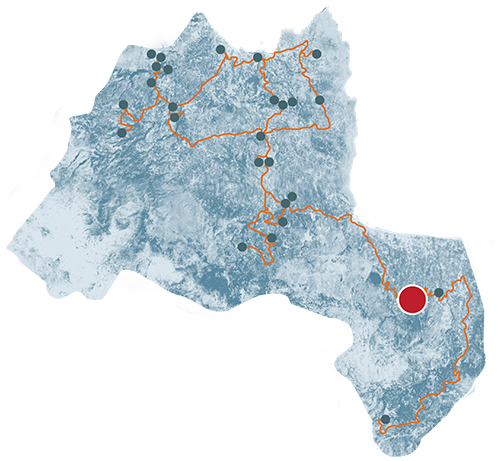
Kournas
Kournas is a semi-mountainous village located at an altitude of 200 m at the foot of Mount Dafnomadara. It is 47 km from Chania.