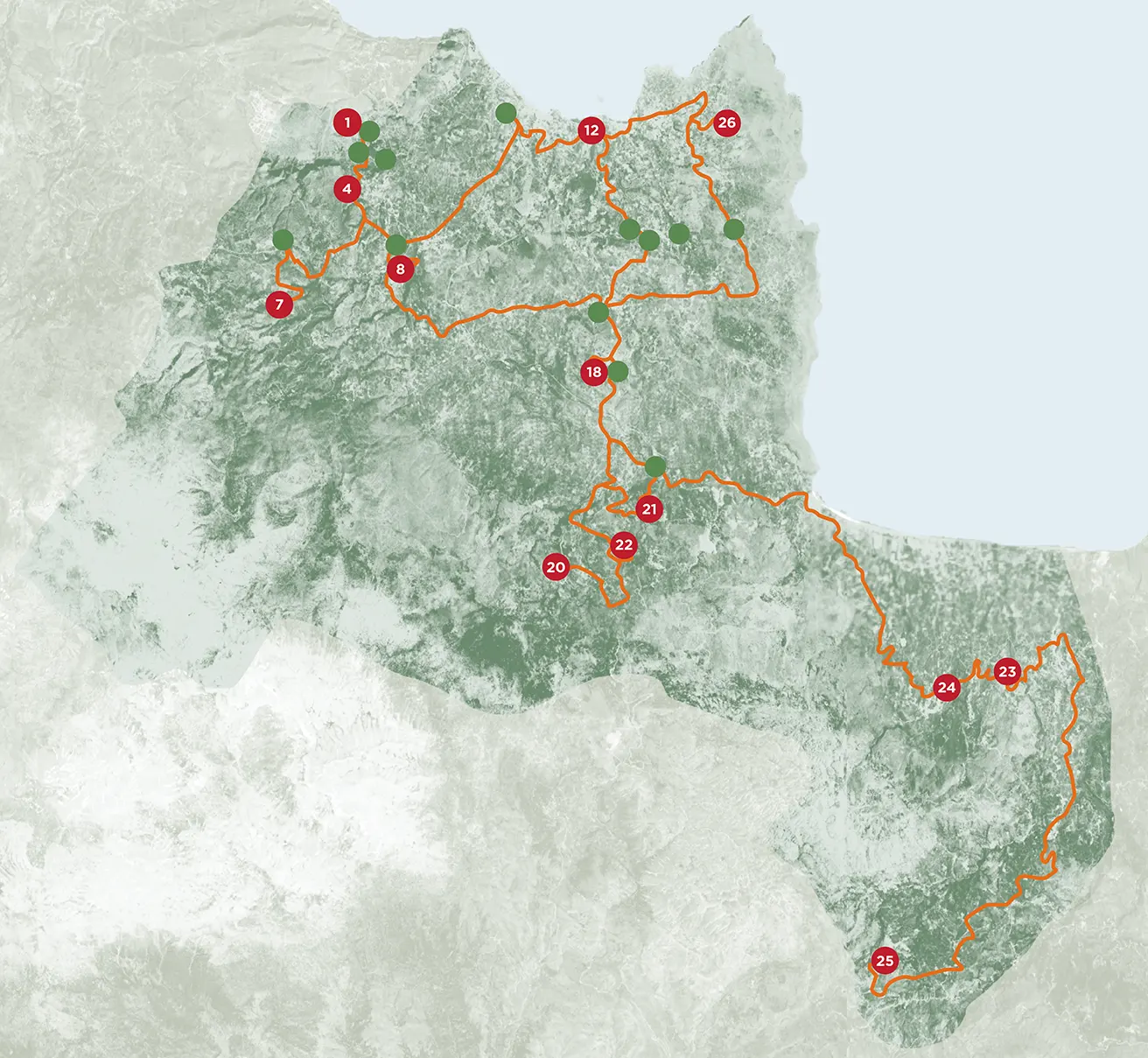
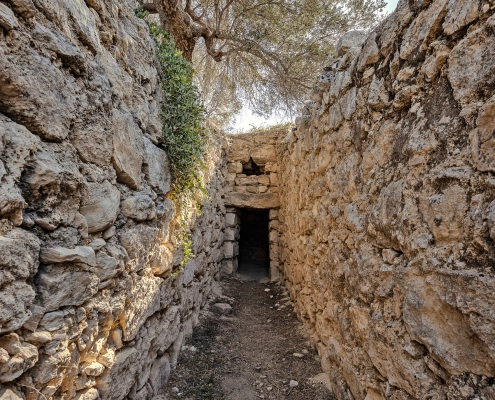
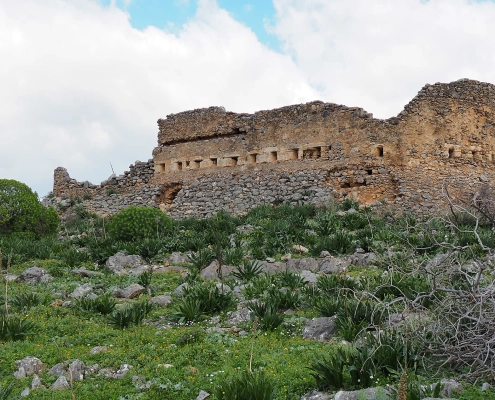
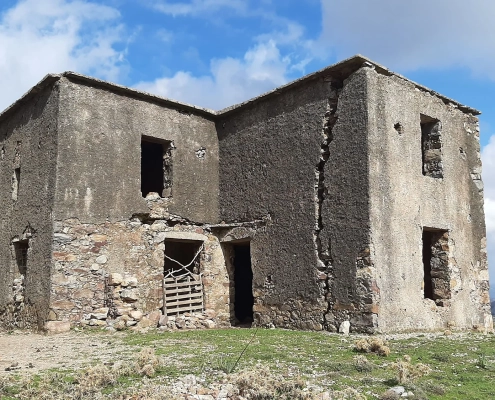
In the Late Ottoman period, the central administration carried out an extensive programme of fortress construction after the Cretan Rising of 1866, in an effort to contain and suppress the Cretan rebellions. The Turks’ solution was to build towers in key locations in order to monitor the provinces. The sites were carefully chosen: high hills, roads, ports and passes from which the movements of the rebels could be controlled. The strategic position of the province of Apokoronas, between West Crete and the rest of the island, meant that many fortresses were constructed here. The Ottoman fortress at Nio Chorio (link) overlooked the whole plain of Kambos, Stylos and Kalyves, the villages in the foothills of the White Mountains, and the road to Kerameia via Ramni and Samonas.
-
-
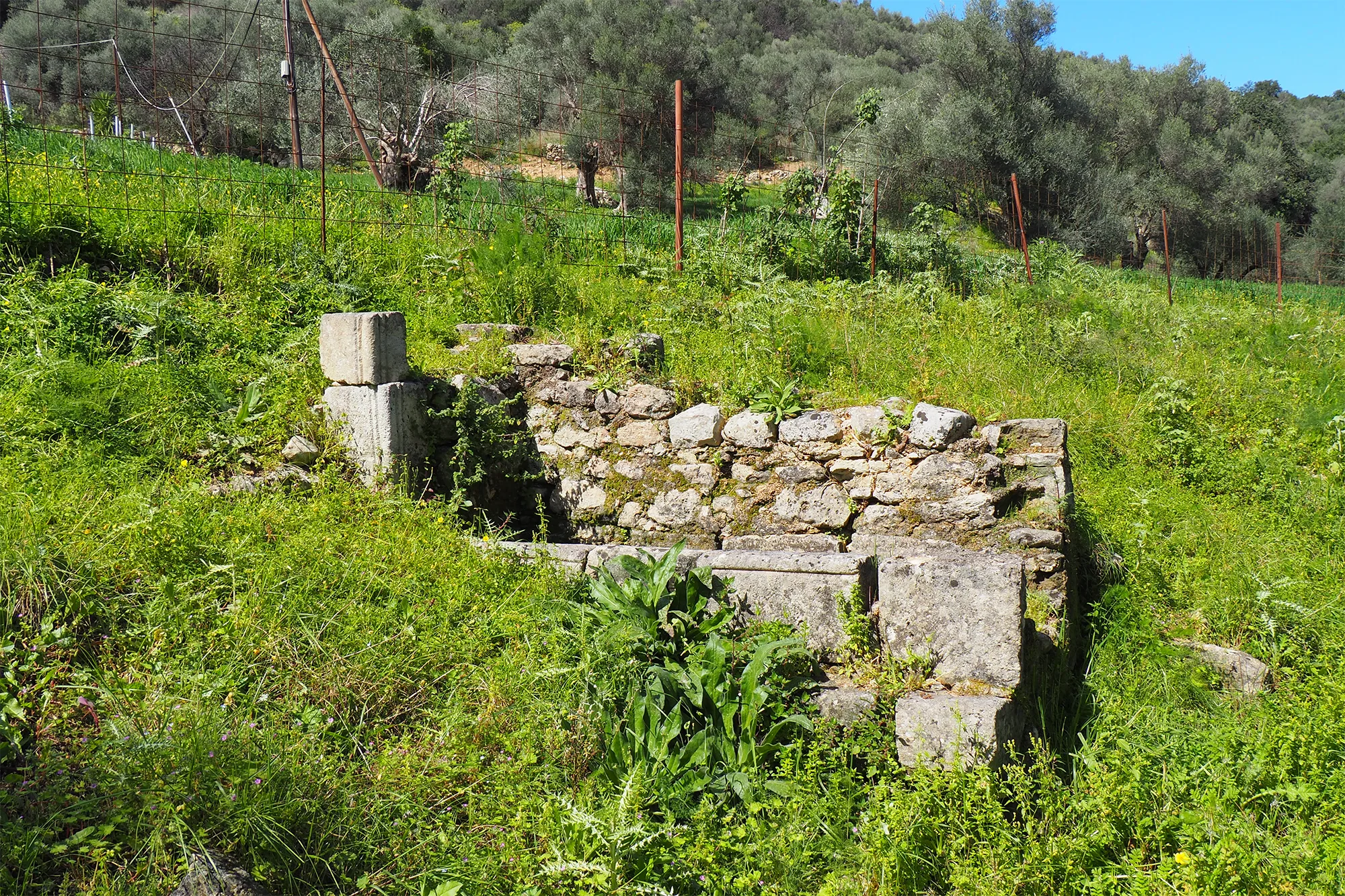
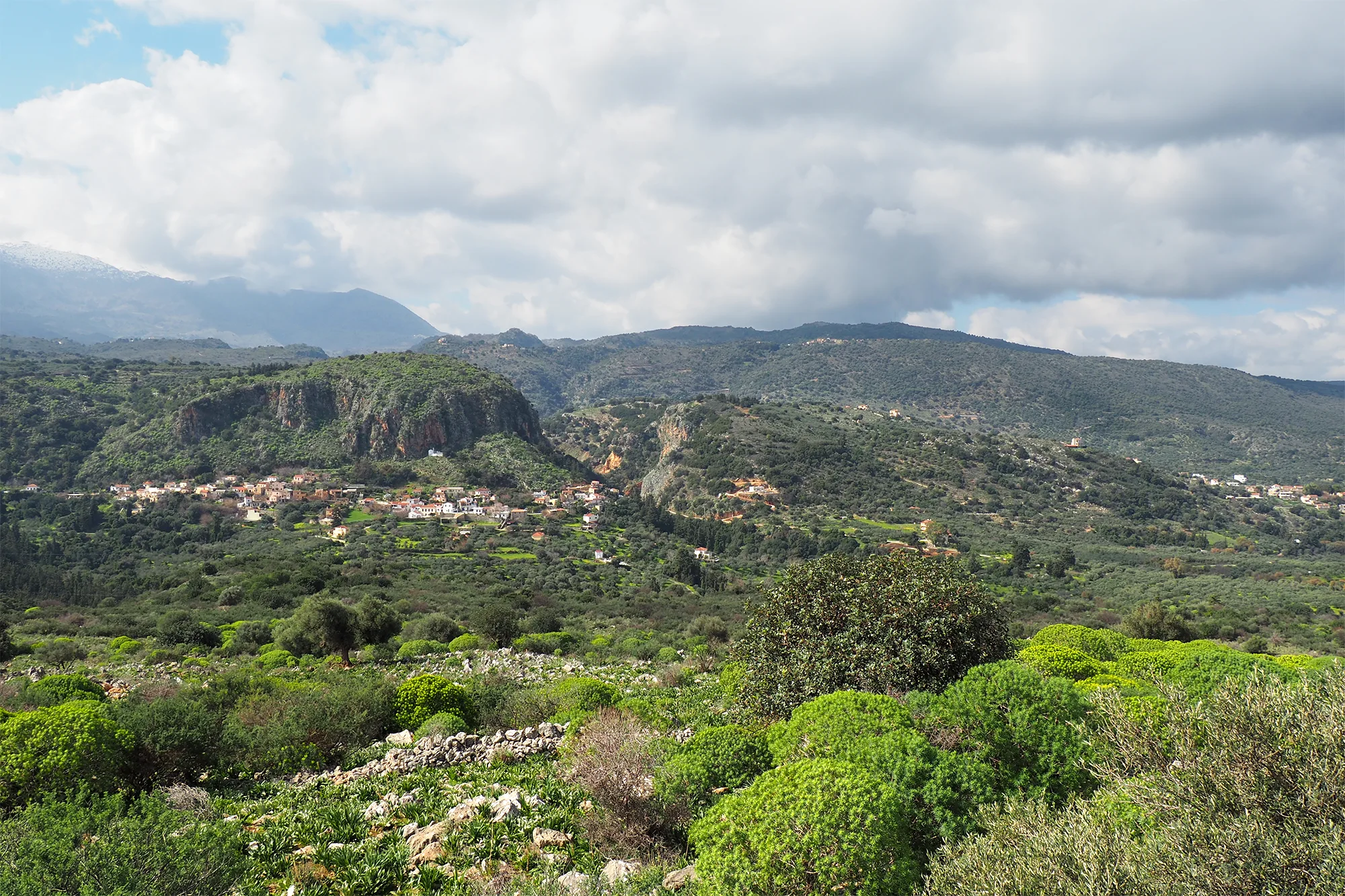
Fortress, Nio Chorio. Field of view to the SW (source: Maria Andrianaki).
In the southeast of Apokoronas, on the border with Rethymnon Prefecture, lies the village of Asi Gonia. An inaccessible stronghold, it was a rebel centre, mainly during the period of Turkish rule, as the folk song tells us:
“Mother, I tell you, I must go and fight the Turks.
Give me my rifle, my fine cartridge box,
I’ll go to Asi Gonia where the Turks do not set foot,
Where the people do not pay poll tax to the Sultan.”
Or, in another version:
“I told you, mother, to the Turks I cannot be a slave
So give me my rifle and my silver knife,
I’ll go to Asi Gonia, where they defy the Turks,
Where the people do not pay poll tax to the Sultan,
But make war on him…”
The inhabitants of the village were insubordinate rebels, protected the other villages and were the terror of the aghas, which is why the Turks called it Asi Gonia (from the Arabic asi, meaning renegade, guerilla, rebellious, defiant, insubordinate, and the Greek gonia, meaning corner: hence “Rebels’ Corner”). Asi Gonia was associated with the most brutal conquest the island has ever experienced, in 1941, when the Supreme Committee of the Cretan Struggle was founded in the house of a colonel from the village.