
Ottoman Tower of Alidakis in Embrosneros
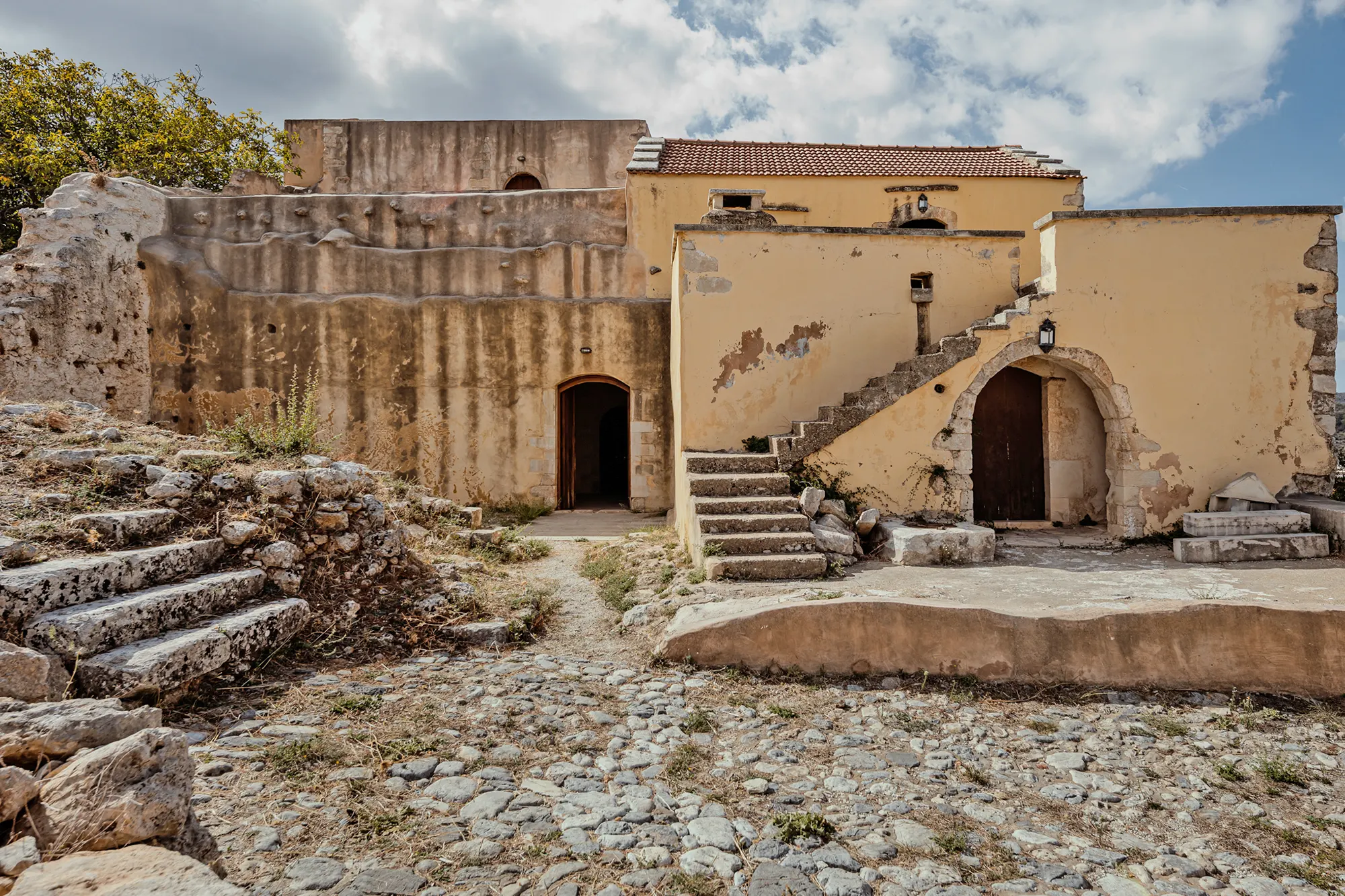
The Tower of Alidakis stands at the highest point of the village of Embrosneros, overlooking much of the north coast and the lowland interior, as far as the White Mountains. The complex is classified as a fortified residence. The main building is a two-storey rectangular tower. In the northwest corner was a guardroom of which the corbels survive. On the west side was a murder hole, a defensive feature to repel intruders. The complex dates from the mid-18th century.
The building is named after the Janissary Ibrahim Alidakis, who systematically plundered the surrounding area. Villagers from the Sfakia region besieged the tower and killed him. Alidakis was a Turkish Cretan, i.e. a Cretan who had converted to Islam.
Ibrahim Alidakis is one of several Janissaries of legendary ferocity during the Ottoman period. The events surrounding his death are commemorated in a song by an anonymous poet in fifteen-syllable rhyming couplets. It was first recorded by George Pateros and first published by Emmanuel Vardidis in his collection of Cretan Rhymes in 1888. The poem is 527 lines long and records the events from the perspective of the Orthodox Cretans.
“Listen if you wish to learn,
How they dealt with the treacherous Alidakis,
How the grimy men shut him in the Tower,
And for what cause they murdered him.”
The events are linked to the Daskalogiannis Rising (1770) during the Orlov Revolt. Daskalogiannis was imprisoned and interrogated in the Tower of Alidakis in Embrosneros before being put to death in Heraklion.
-
- Tower of Alidakis, Embrosneros. View of the courtyard (source: Sotiris Zapantiotis).
-
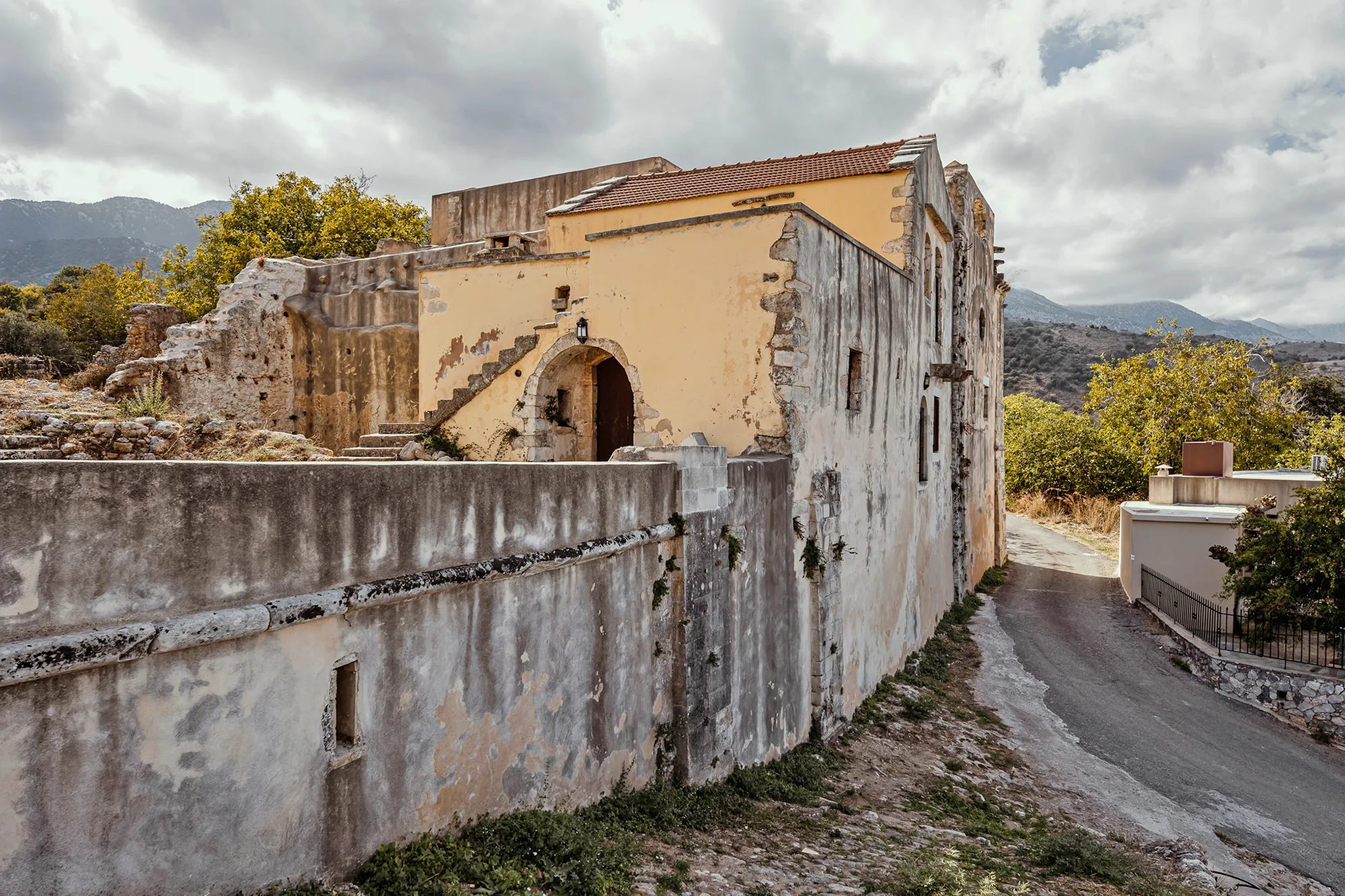
- Tower of Alidakis, Embrosneros. Exterior view of the complex (source: Sotiris Zapantiotis).
 Ottoman Tower of Alidakis in Embrosneros in the Route of Timelessness
 Ottoman Tower of Alidakis in Embrosneros in the Route of Life and Death
It was here that the famous Cretan revolutionary Daskalogiannis was imprisoned and interrogated before being put to death in Heraklion. Villagers from Sfakia besieged the tower and killed Alidakis. The events associated with the Muslim Cretan Janissary are recorded in a folk poem.
Embrosneros
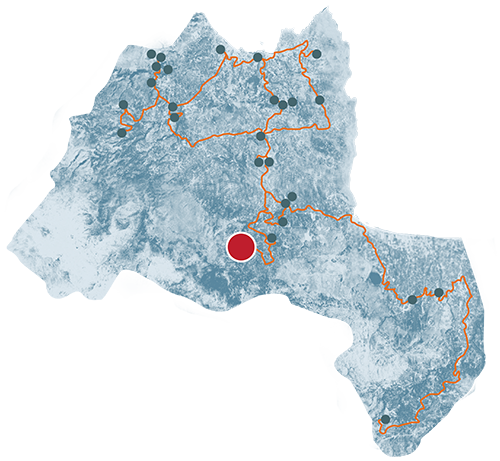
Emprosneros is located 38 km southeast of Chania at the foot of the White Mountains and at an altitude of 260 m.