Folklore Museum of Gavalochori
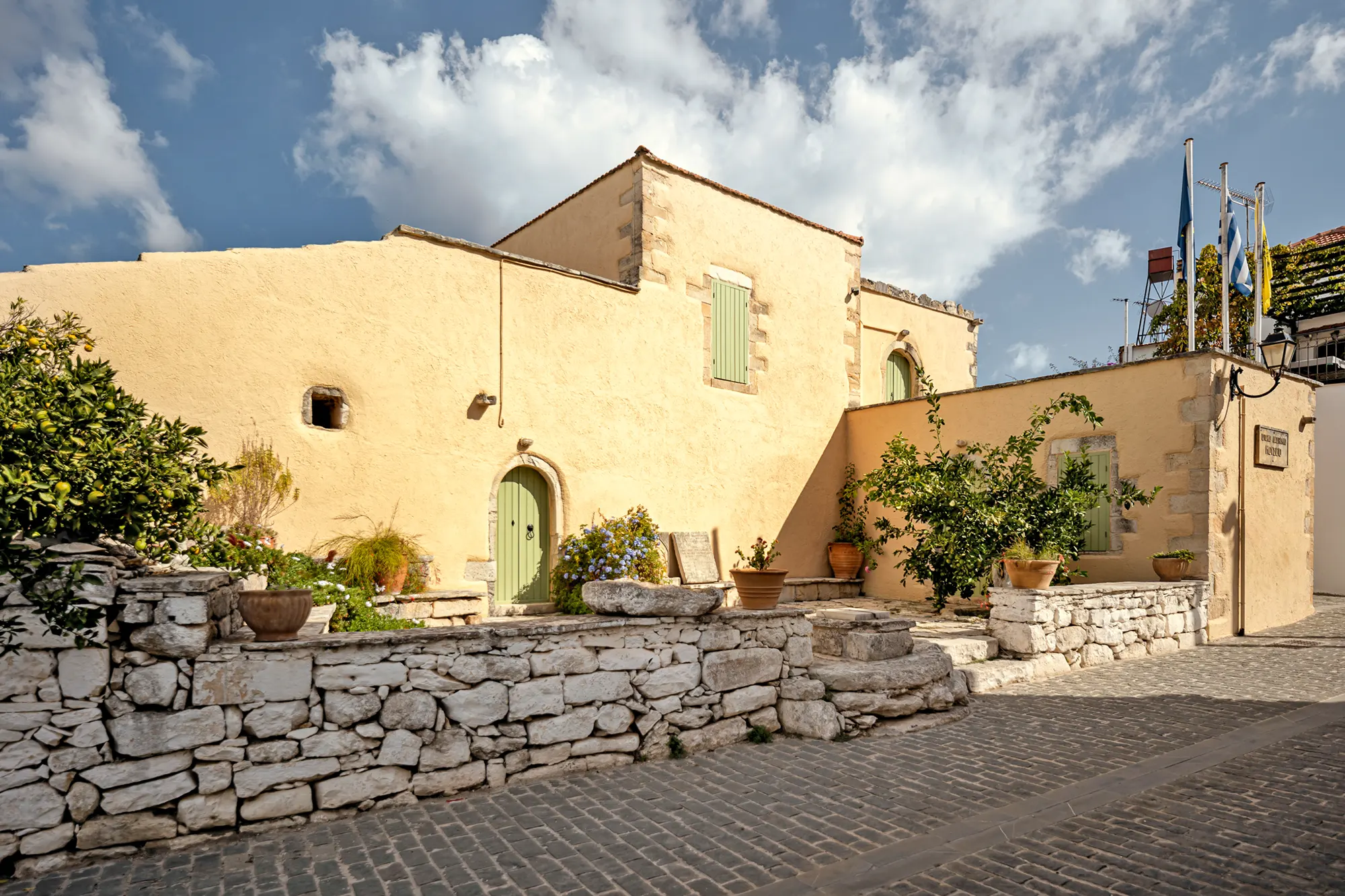
The Historical and Folklore Museum of Gavalochori is located in the centre of the village. It is a traditional two-storey “arch-house”, a typical example of local architecture. It has an inner courtyard, a balcony and ground-floor rooms for everyday activities and handicrafts, with an odas (bedroom) on the upper floor. It was built in two phases: the original part dates from the Venetian period while the upper was floor added in Ottoman times. It was used as a home until the late 20th century.
The museum is laid out in seven rooms housing the following sections: “Arch House”, “Silk”, “Pottery”, “Lacemaking”, “Stone Masons”, “Church, Woodcarving”.
The arch-house is the simplest and most common type of Cretan rural house. It is a rectangular space with a wide arch on the longitudinal axis, supporting the roof beams. There are different areas for various domestic activities. The central space under the arch is left free, forming a sitting and dining room. The four corners are used for the kitchen, the wine press with the grape must collection trough, the semi-underground storage areas, and small lofts used as bedrooms. When not in use, the wine press was covered with wooden boards and turned into a bed. Thus the limited space of the arch-house met all the needs of a family of the time.
The museum contains original furniture and objects used in a typical 19th-century Cretan household.
The house was donated to the village by its owners, Maria and George Stylianakis. The museum was set up with funding from the Ministry of Culture, while the president of Gavalochori, Vassilis Fronimakis, arranged for the donation of objects by the villagers.
-
- Folklore Museum of Gavalochori. The façade on the main street (source: Sotiris Zapantiotis).
-
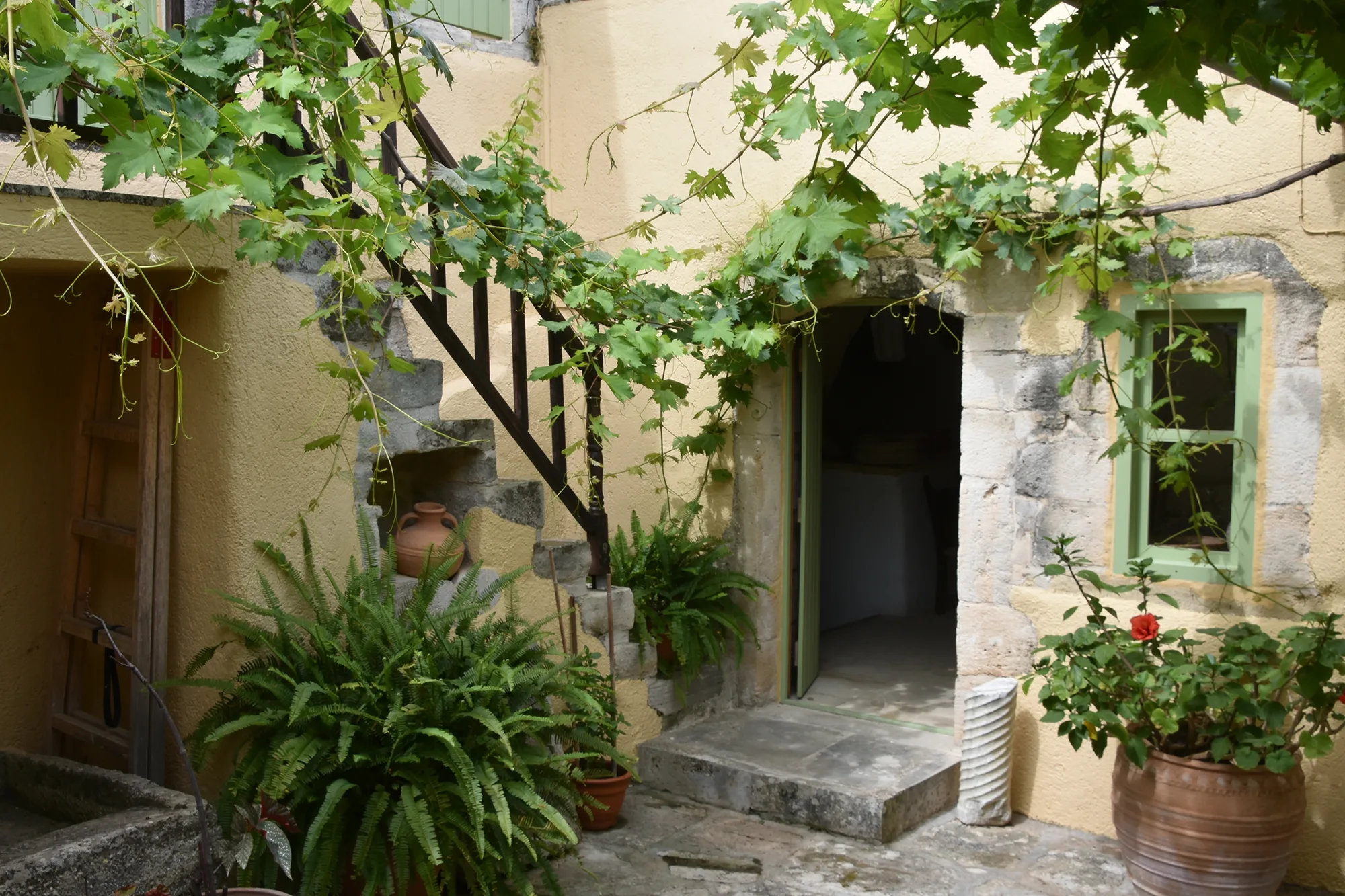
- Folklore Museum of Gavalochori. View of the inner courtyard. (source: Marianna Aggelaki).
 Folklore Museum of Gavalochori in the Route of Timelessness
 Folklore Museum of Gavalochori in the Route of Sustainability
The architecture of the traditional Cretan house reveals another principle of sustainability: the principle of sufficiency. The layout was designed to meet the family’s daily living needs while providing for the artisanal activities intended to make the household self-sufficient, such as weaving and winemaking, as well as storage.
Food was seasonal, meaning that each house required considerable storage space to preserve food that was abundant at one time of year but scarce at another. The architectural design also provided for the preservation of agricultural produce, as each house had to have cool, dry spaces for storing goods.
The few windows and the balconies only allowed limited sunlight to enter, ensuring that such spaces were available. This design also served to reduce energy waste as much as possible. The few openings and the small residential space meant that relatively little heating was necessary to keep the house warm during the winter months.
-
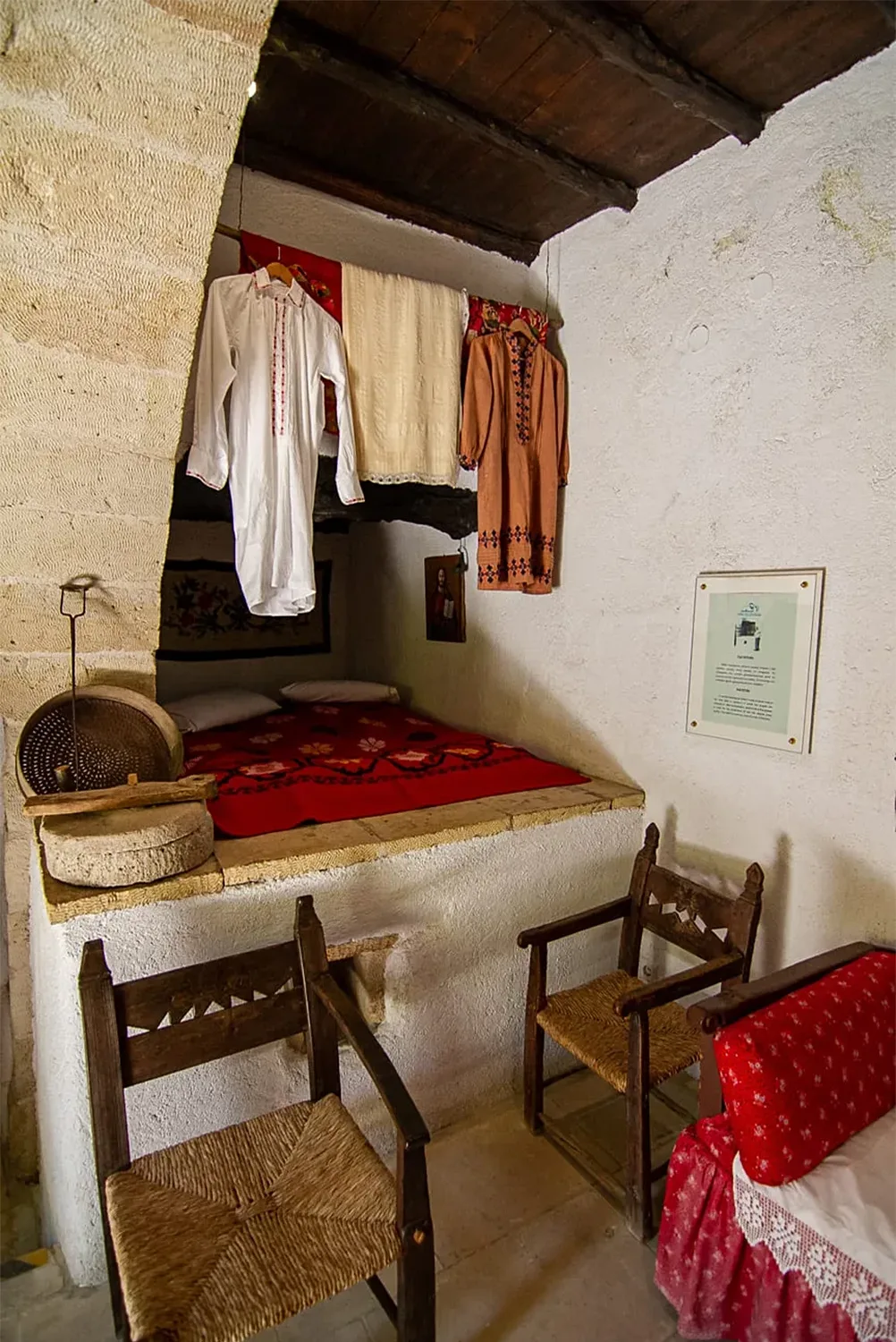
- Folklore Museum of Gavalochori. Part of the arch separating the space into “rooms” can be seen, as well as the wine press, which, when not in use, serves as a “bedroom” (source: https://gavalochorigreece.org/el/things-to-see-and-do/folklore-museum/).
 Folklore Museum of Gavalochori in the Route of Rural Life
Both the building itself and many of its exhibits reflect local society and a way of life dependent on farming and animal husbandry.
-
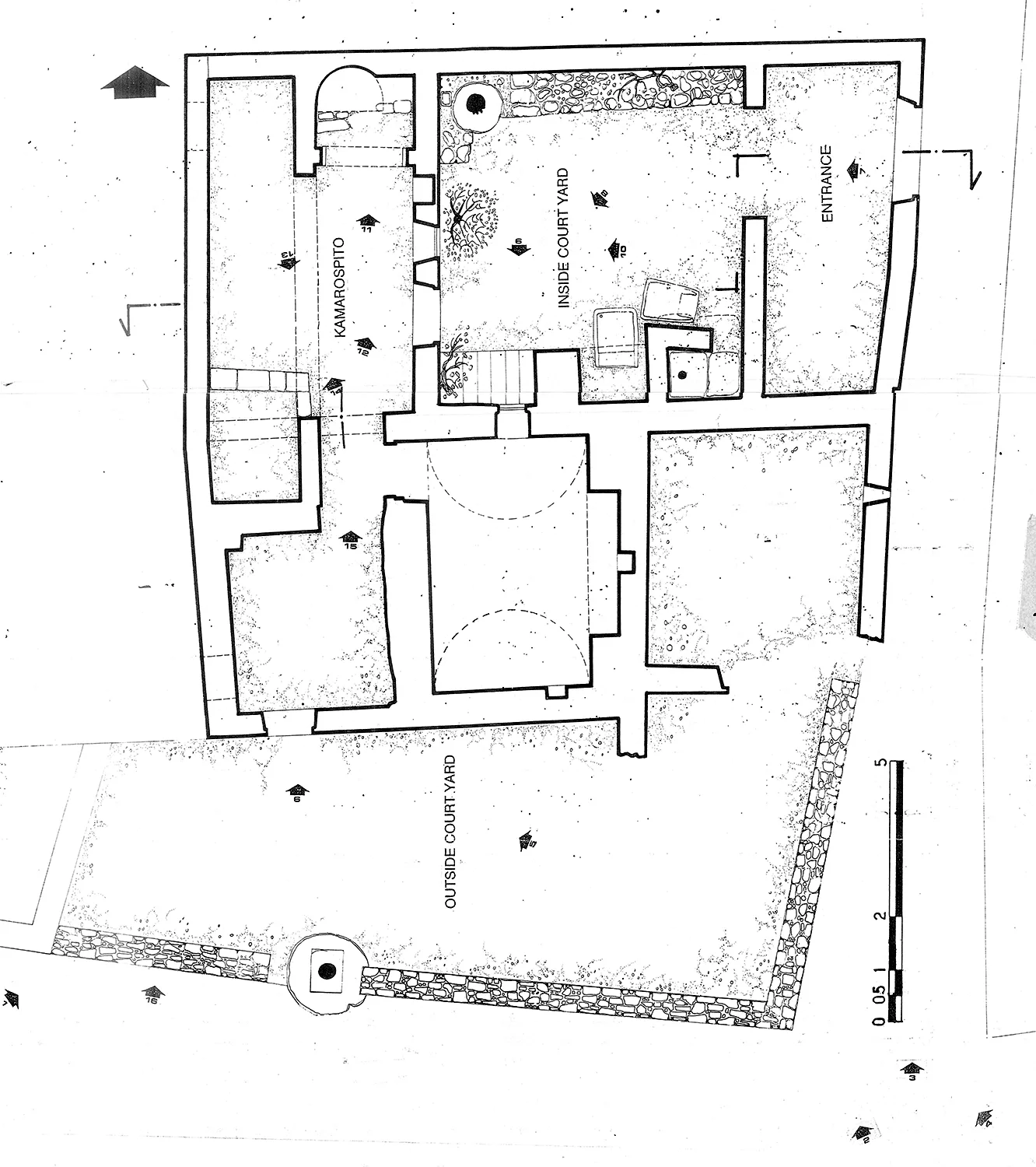
- Historical and Folklore Museum of Gavalochori. Floor plan with handicraft areas (source: Ministry of Culture, Ephorate of Antiquities of Chania).
Gavalochori
Gavalochori is located at an altitude of 100 meters, in a rocky valley, 26 kilometers from Chania.