Late Minoan pottery kiln at Stylos
A pottery kiln was discovered during the excavation of the Minoan settlement on the hill of Azogyres. The site is located just outside the village of Stylos, south of ancient Aptera (Megala Chorafia).
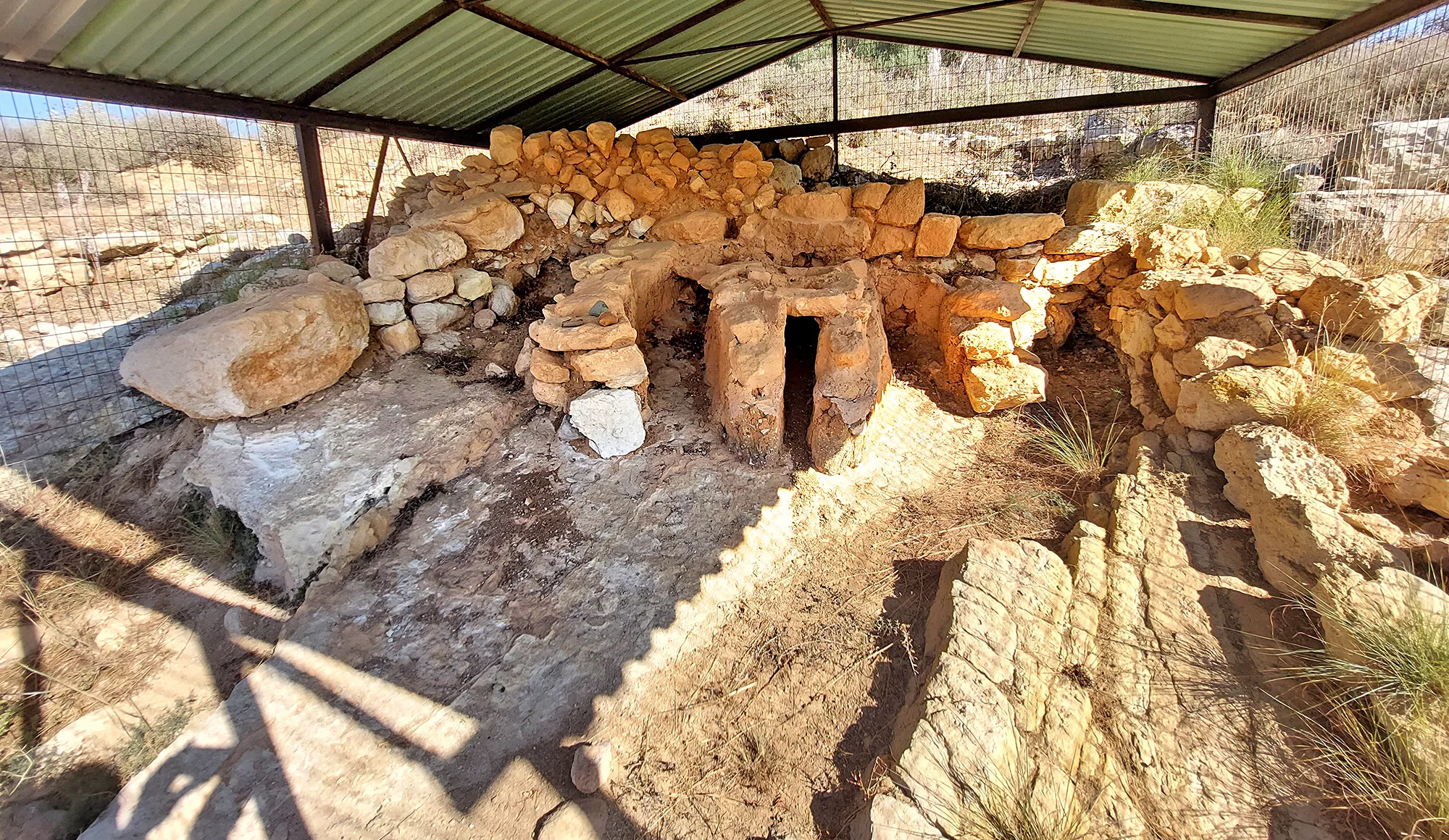
It is a roughly circular kiln with a domed roof, for firing ceramic vessels, mainly small pots. This type of kiln allowed a uniform distribution of heat. Kilns of this shape are found in Greece in prehistoric and historical times. The existence of the kiln is evidence of industrial activity at the site. It dates from the early 13th c. BC (Late Minoan IIIB).
The kiln was built against the outer side of the south wall of a large building.
It has a diameter of 2.30 m and is preserved to a height of 0.70 m. Its solidly constructed surrounding wall is about 0.50 m thick. In the lower part there would have been the firing pit and the stoking channel, which have not been preserved. The firing pit inside the kiln contained three long, narrow channels with a maximum length of 1.30 m. The central channel was straight, while the side channels were slightly curved, following the shape of the kiln. They were covered to a height of approximately 0.60 m with a brick structure which had holes at intervals. Three such holes are preserved in the covering of the central channel. Above the firing floor with its vent-holes was the firing chamber, where the vessels were placed. The whole structure was roofed with a hemispherical dome with a small opening at the top. Air circulated within the structure from the kiln opening to the aperture in the roof, which allowed the combustion gases to escape. The dome must have been a permanent structure; however, only the lower part is visible in places.
The whole of the interior was lined with a thick layer of clay with strong traces of burning.
Circular kilns had firing temperatures of up to 900-950°C.
-
- Pottery kiln at Stylos (source: Alexandros Vazakas).
 Late Minoan pottery kiln at Stylos in the Route of Timelessness
 Late Minoan pottery kiln at Stylos in the Route of Rural Life
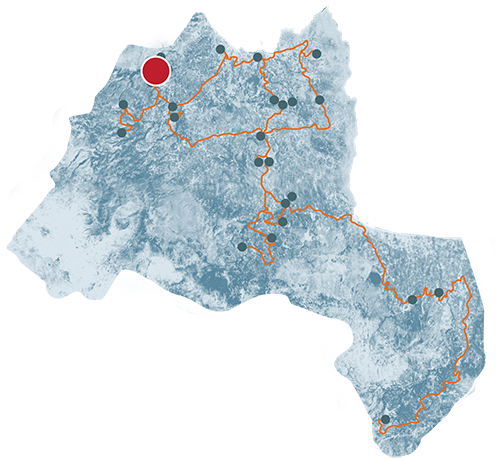
Stylos
Stylos is located at an altitude of 40 meters, on the banks of the river Koiliaris, and has abundant springs.
It is 18 kilometres from Chania.