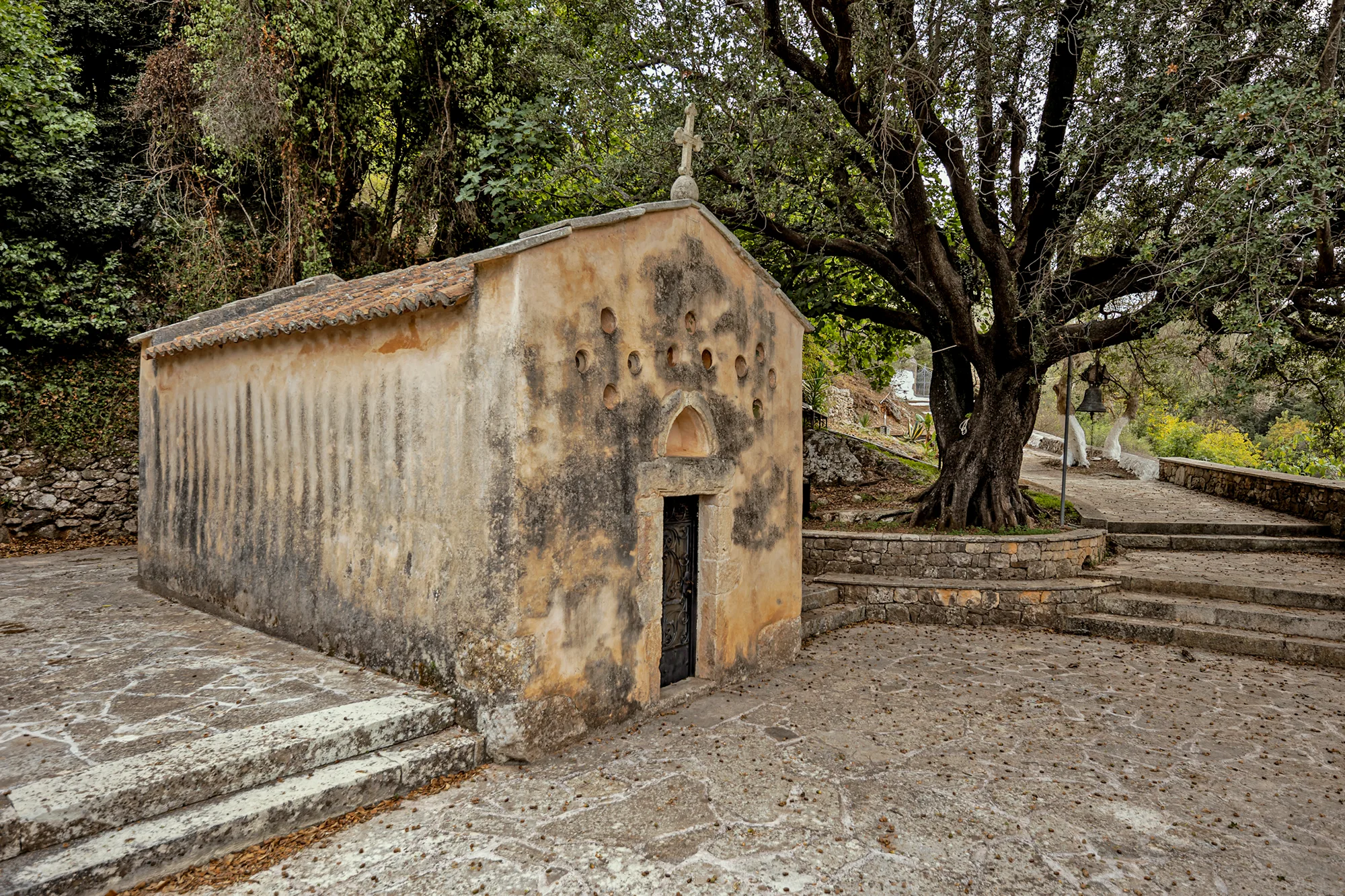
Church of Panagia (the Virgin Mary) in Alikambos
The small church is located in a farming area outside the village of Alikambos. It is a simple single-nave, barrel-vaulted church. Numerous bacini (glazed plates), a typical decorative feature, are set into the façade. The church frescoes date from the late 13th century and are the work of a local artist. The frescoes in the nave are dated by an inscription to 1316. The inscription also gives the name of Ioannis Pagomenos, the popular artist of West Crete who painted the frescoes in the nearby church of St Nicholas in Maza nine years later.
The church, known as Panagia Syrothiani, is dedicated to the Dormition of the Virgin.
Scenes of the liturgical cycle are preserved in the sanctuary, while scenes of the Life of Christ and his Mother can be seen in the upper zone of the nave. Individual male and female saints adorn the lower zone. Next to the figure of St George, a smaller-scale portrait of the donor, Martha the nun, stands out. Two other portraits of donors survive on the west wall below the dedicatory inscription. The couple, husband and wife, are depicted holding a model of the church and presumably funded its construction. The model of the church is not a realistic representation of the actual building but follows the standard typology of church models depicted in donors’ portraits.
The paintings in the nave are chronologically the third surviving work of Ioannis Pagomenos which bears his signature. The work of the folk artist includes features of his own time, although older painting styles predominate. As his works were created during the Venetian period, they include various elements influenced by Western art. However, Pagomenos utilises these motifs in aspects of everyday life, such as architectural members and the garments of secular figures.
-
- Church of the Panagia, Alikambos. View from the NW (source: Sotiris Zapantiotis).
-
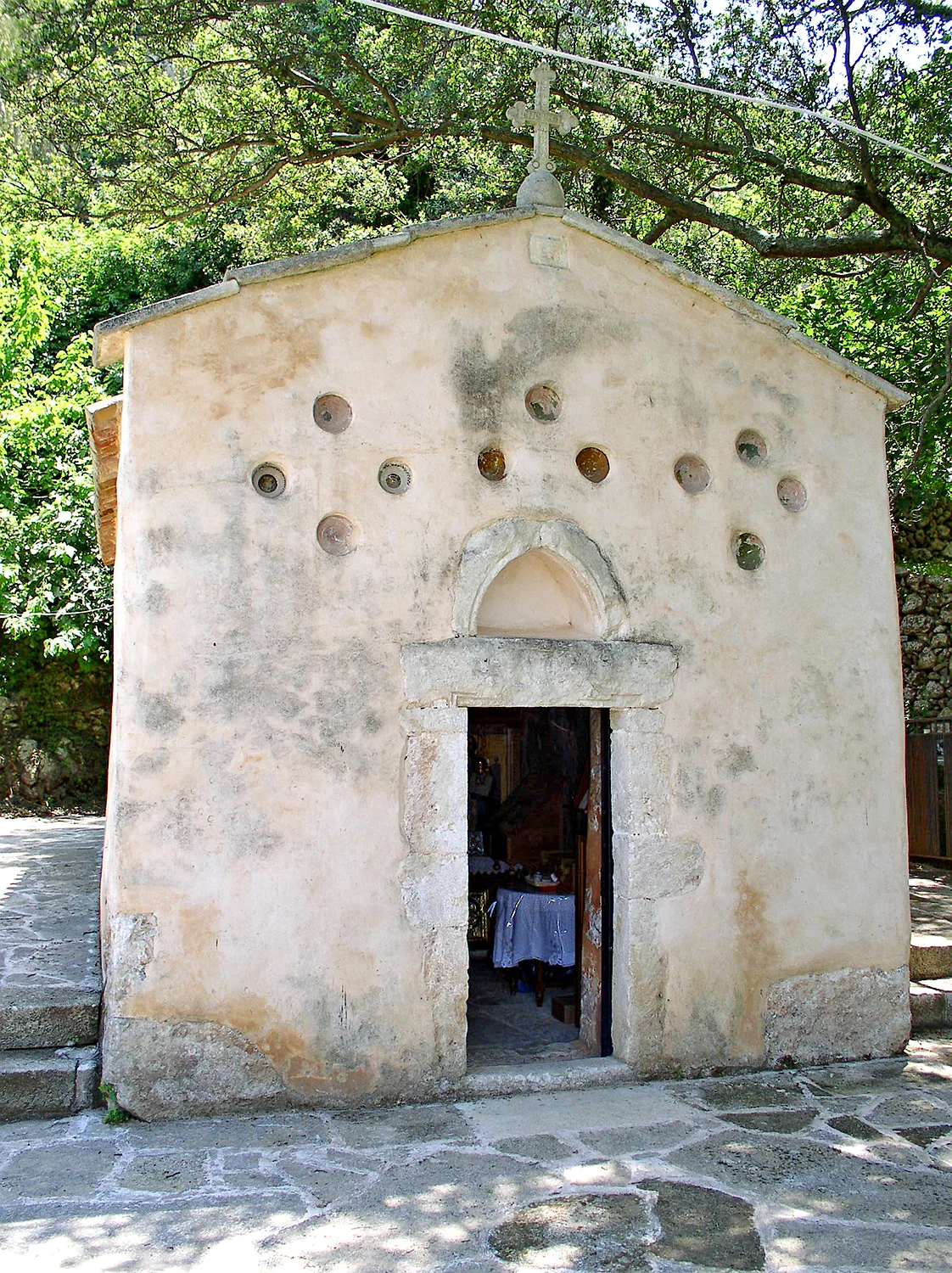
- Church of the Panagia, Alikambos. The west front with the bacini above the main entrance (source: Michalis Andrianakis Archive).
-
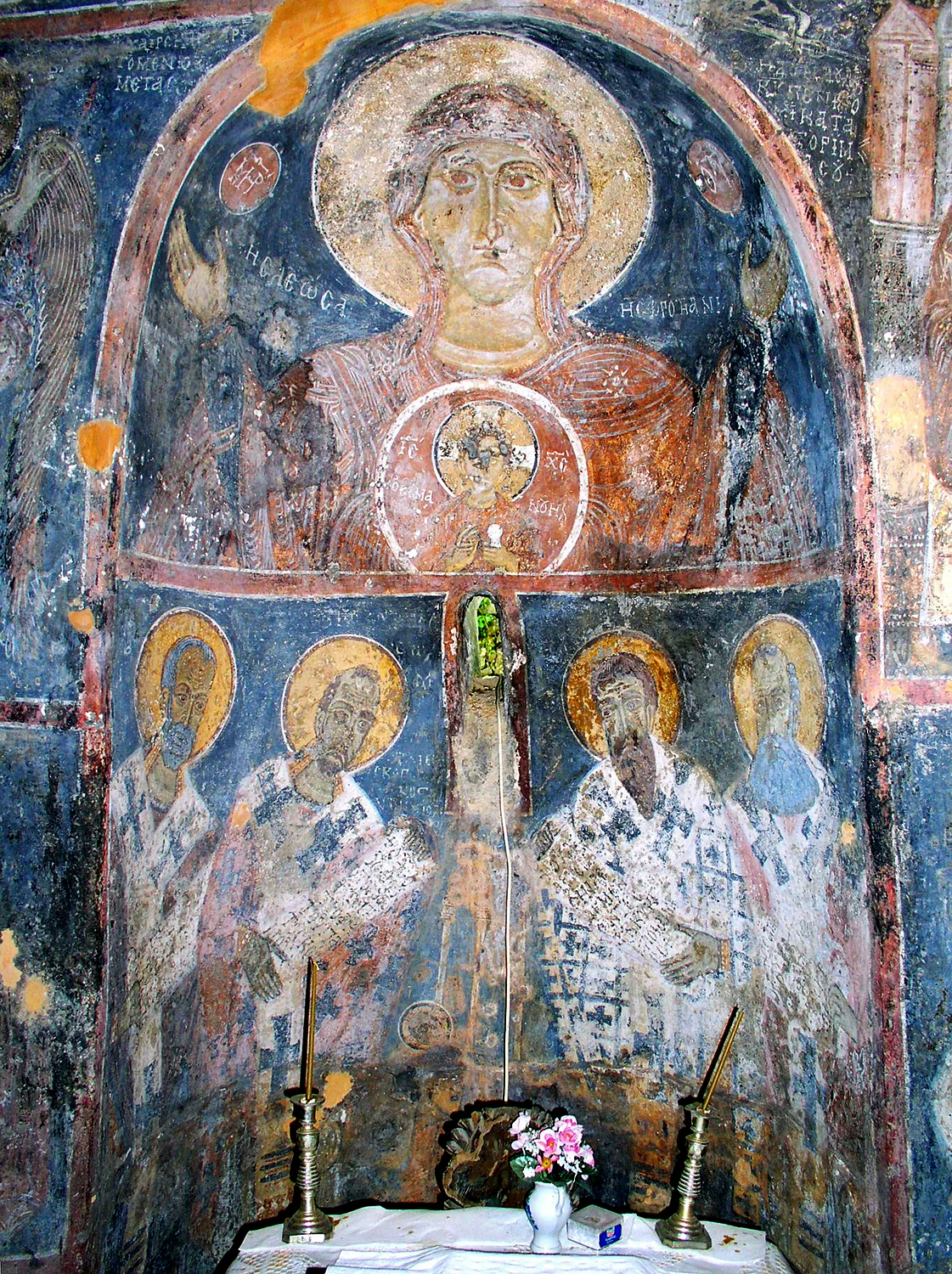
- Church of the Panagia, Alikambos. The frescoes in the apse (source: Michalis Andrianakis Archive).
 Church of Panagia in Alikambos in the Route of Timelessness
 Church of Panagia in Alikambos in the Route of Rural Life
 Church of Panagia in Alikambos in the Route of Life and Death
 Church of Panagia in Alikambos in the Route of Byzantine Art
The work of two painters can be distinguished in the church of the Virgin Mary in Alikambos. The main church, according to the dedicatory inscription, is decorated by Ioannis Pagomenos. Pagomenos painted over 30 churches in West Crete over a period of about 40 years, including that of St Nicholas in Maza.
The painters executed their works during the summer months, from May to October, so the painting of one of the 30 churches associated with Pagomenos would not have taken more than six months. The choice of weather conditions was due to the lower humidity, which meant that the frescoes could be worked on more easily. We see from his works that Pagomenos was often aided by an assistant, so the time required would have been even less. We can therefore suppose that this painter in high demand only went home during the winter months, his workload imposing a seasonal, nomadic lifestyle.
Surviving contracts of the Venetian period provide useful information on the painter’s profession and way of life. For example, the patron often paid for the food of the painters, who were responsible in turn for supplying the members of their workshop. It was not uncommon for the painter to cover the cost of materials, provided that they were of good quality, and there are also cases of artists asking the patron to pay for the scaffolding, for instance. Painters of the early Venetian period would probably have earned almost twice as much as an unskilled labourer.
The profession was often hereditary, kept within the family. Painters often had apprentices, whom they had to support as well as teach. The painters themselves had considerable theological knowledge and appear to have enjoyed a fair amount of freedom in their choice of subject and rendition. However, their commissioners also often indicated the more specific subjects they wished to have depicted in the churches they endowed.
-
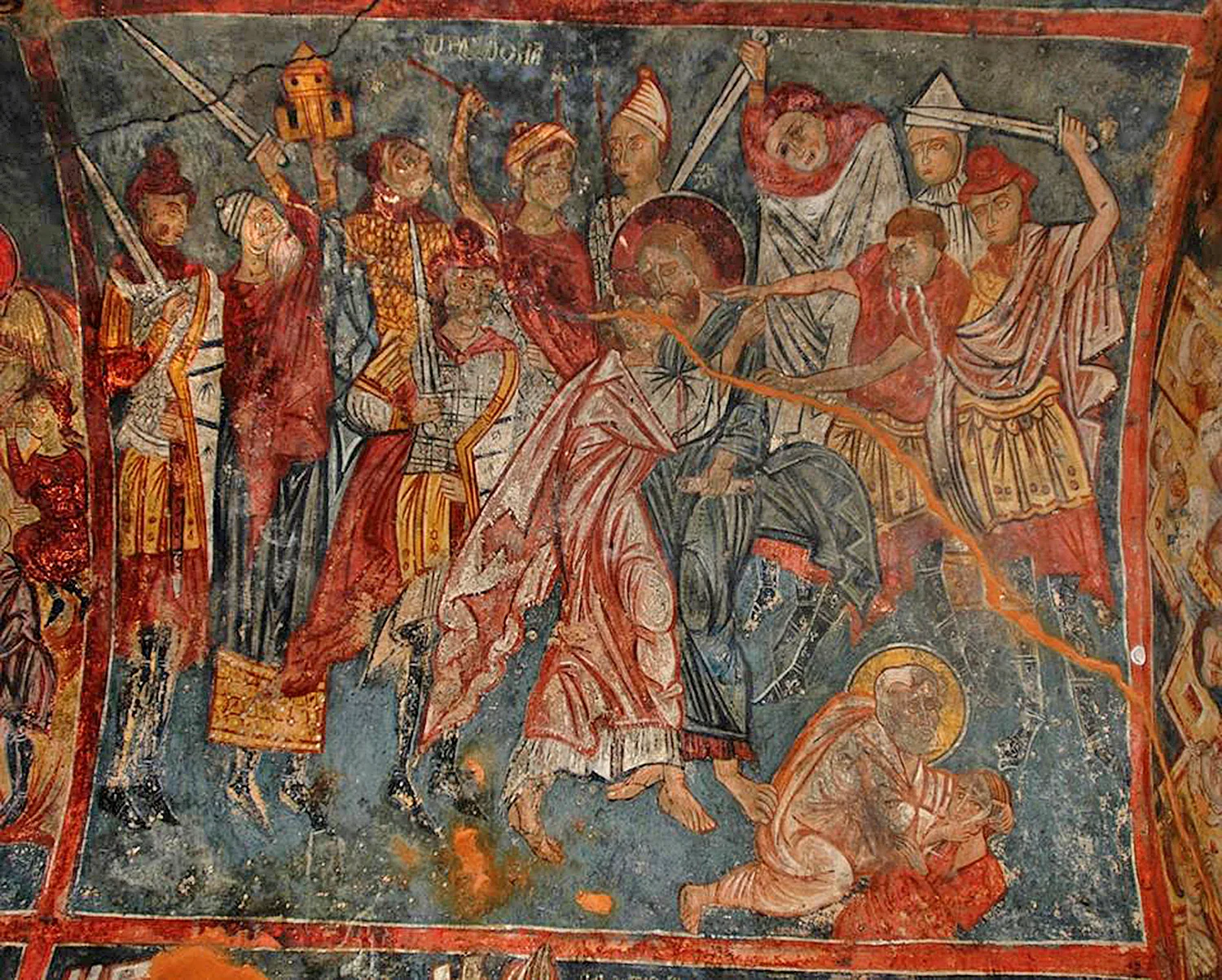
- The Betrayal. South wall, upper fresco zone.
-
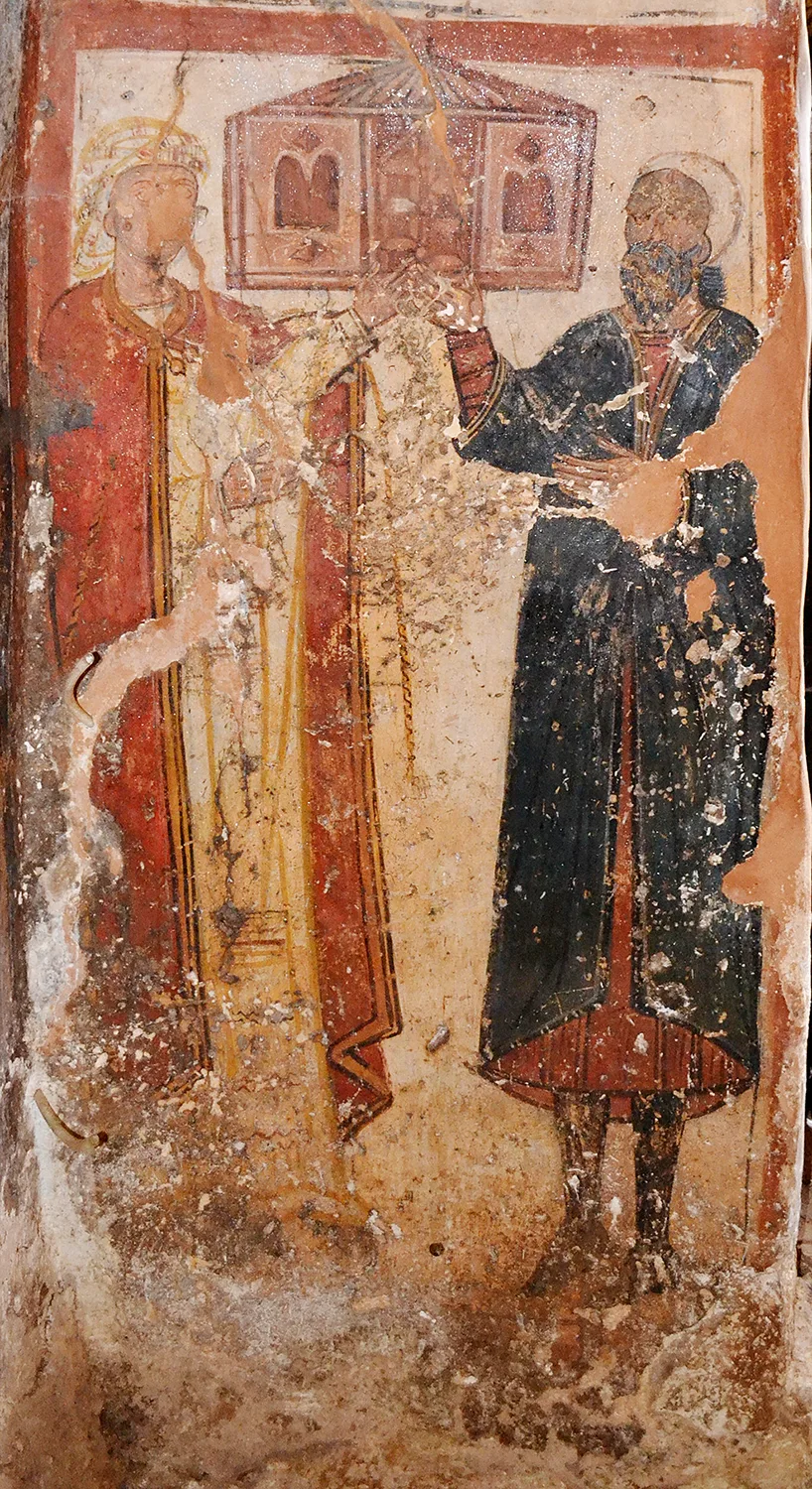
- Western wall, south side, lower fresco zone. The couple is holding a temple effigy.
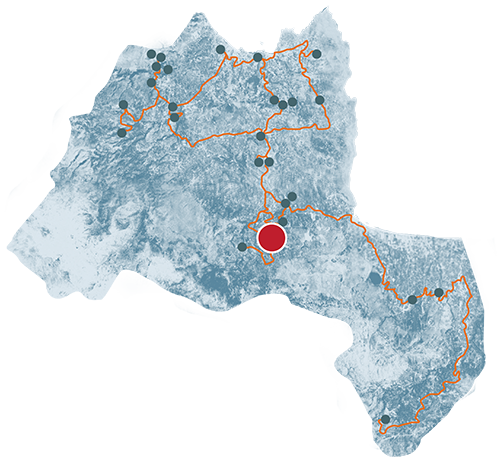
Alicambos
Alikambos is located at the northern foothills of the White Mountains, at an altitude of 310 m and 40 km from Chania, on the road to Sfakia.