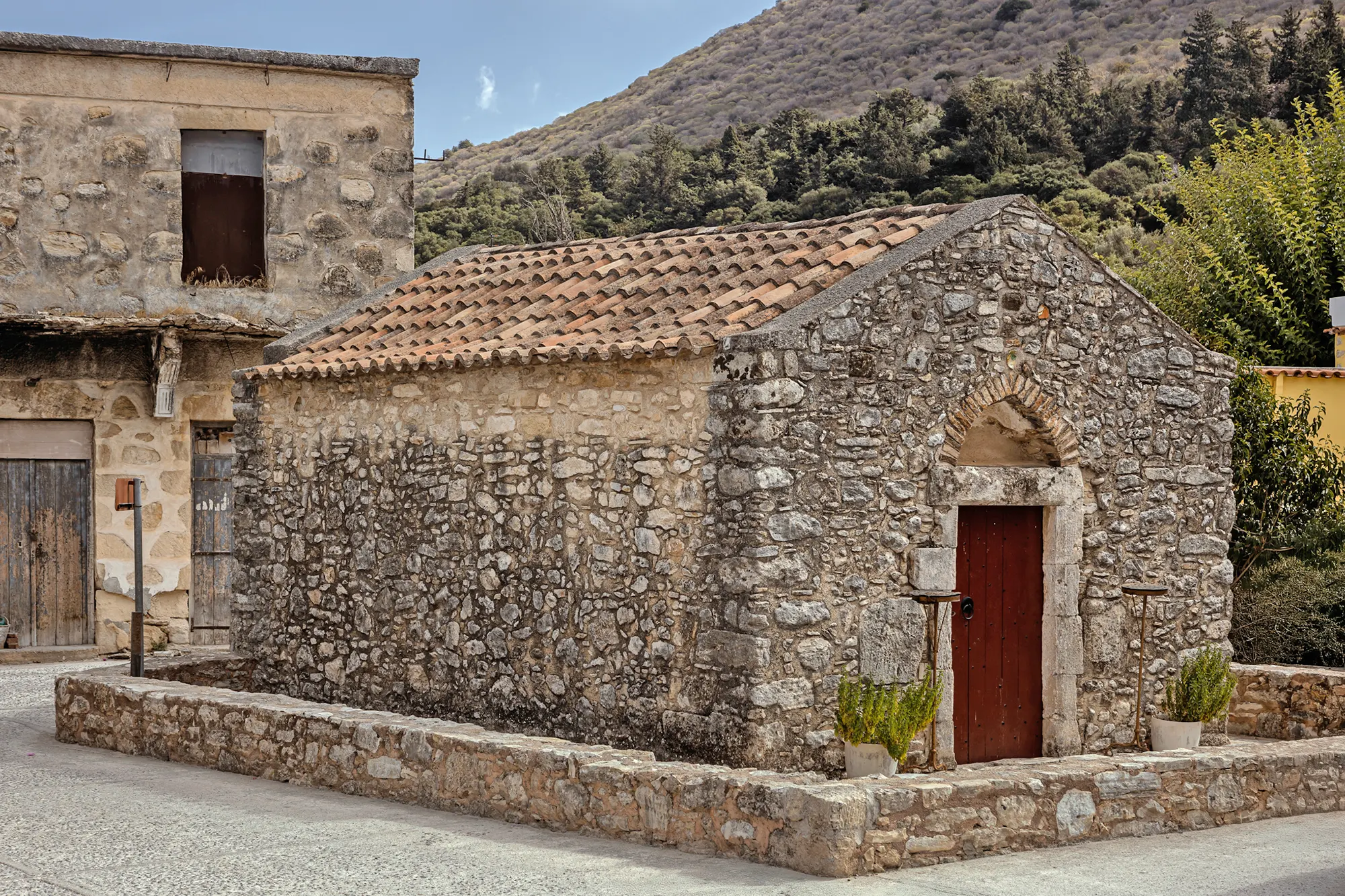
Church of Agios Nikolaos (St Nicholas) in Maza
The small church of St Nicholas is located in the centre of the village of Maza. It is a simple, single-nave, barrel-vaulted church. It was probably once surrounded by a cemetery.
On the west wall is the dedicatory inscription, which mentions 1325 as the year of construction and painting of the church. It also gives the names of prominent donors and refers to contributions from the whole “village of Maza”, meaning that building the church was a communal effort. The inscription also mentions the name of the painter Ioannis Pagomenos, an extremely popular artist of West Crete in the early 14th century. The fresco decoration of the church survives in its entirety and is a fascinating example of popular art of the early Venetian period.
St Nicholas is a simple, single-nave church with a pointed barrel vault, the most common type of rural church architecture during the Venetian period.
The complete iconographic programme of the church is preserved, including the Liturgical cycle in the sanctuary, the cycle of the Life of Christ in the upper fresco zone of the nave, and the cycle of the Life of St Nicholas. On the lower side walls are individual male and female saints: military saints, physicians, kings and martyrs.
The striking depiction of the Deesis in the conch of the sanctuary depicts the Virgin Mary and St Nicholas praying to Christ the Light-Giver. The inclusion of the Deesis in the conch of the sanctuary suggests that this was a cemetery church.
-
- St Nicholas, Maza. The church. View from the NW (source: Sotiris Zapantiotis).
-
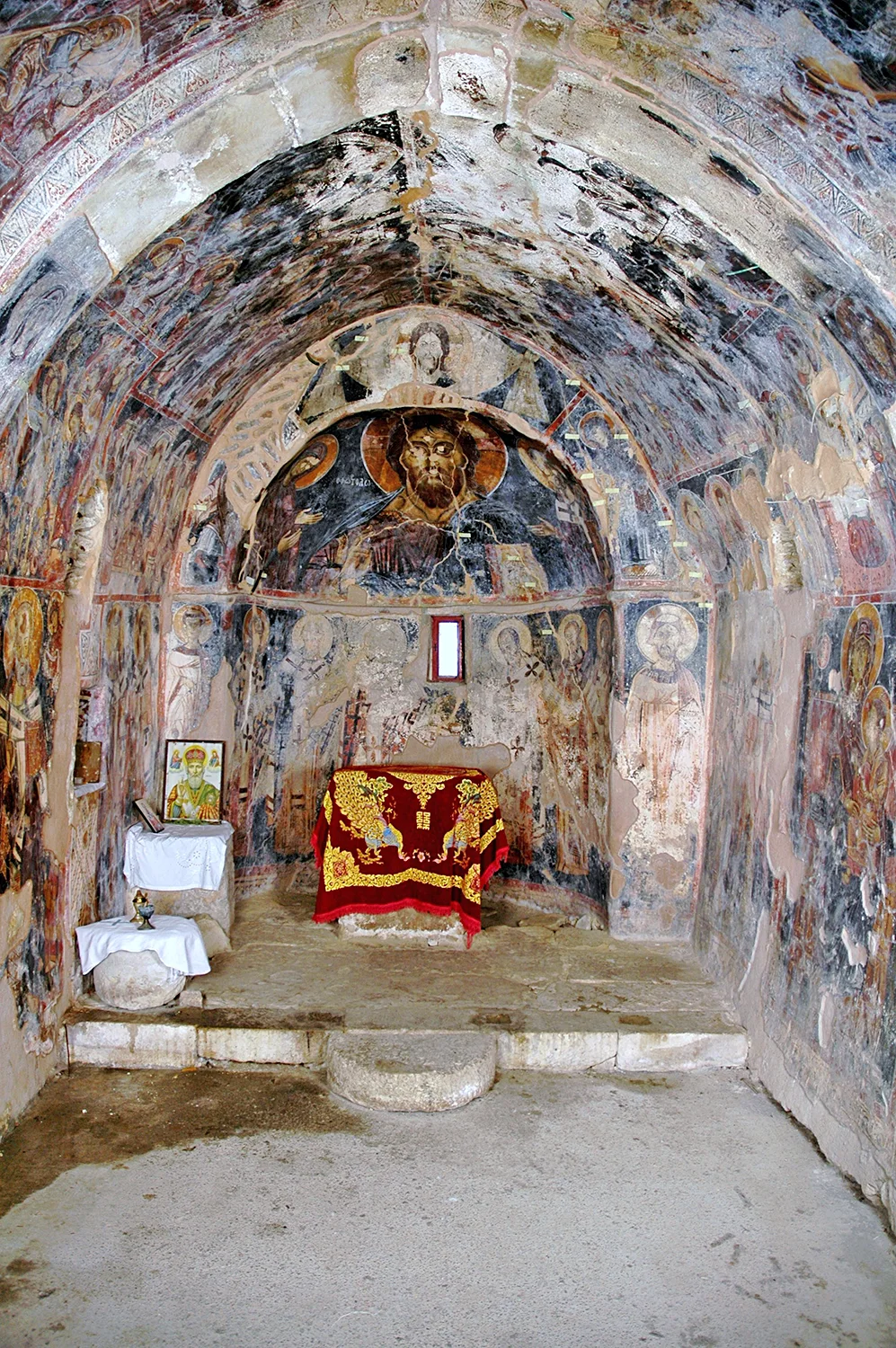
- St Nicholas, Maza. The frescoes in the interior of the church (source: Ministry of Culture, Ephorate of Antiquities of Chania).
 Church of Agios Nikolaos in Maza in the Route of Timelessness
 Church of Agios Nikolaos in Maza in the Route of Water
The holy nature of Nicholas is indicated by the upright posture of the newborn infant in the font-shaped bath. The Baptism is depicted on the side wall of the sanctuary, above the impost of the supporting arch. At the bottom of the painting are personifications of the Sea and the River Jordan.
-
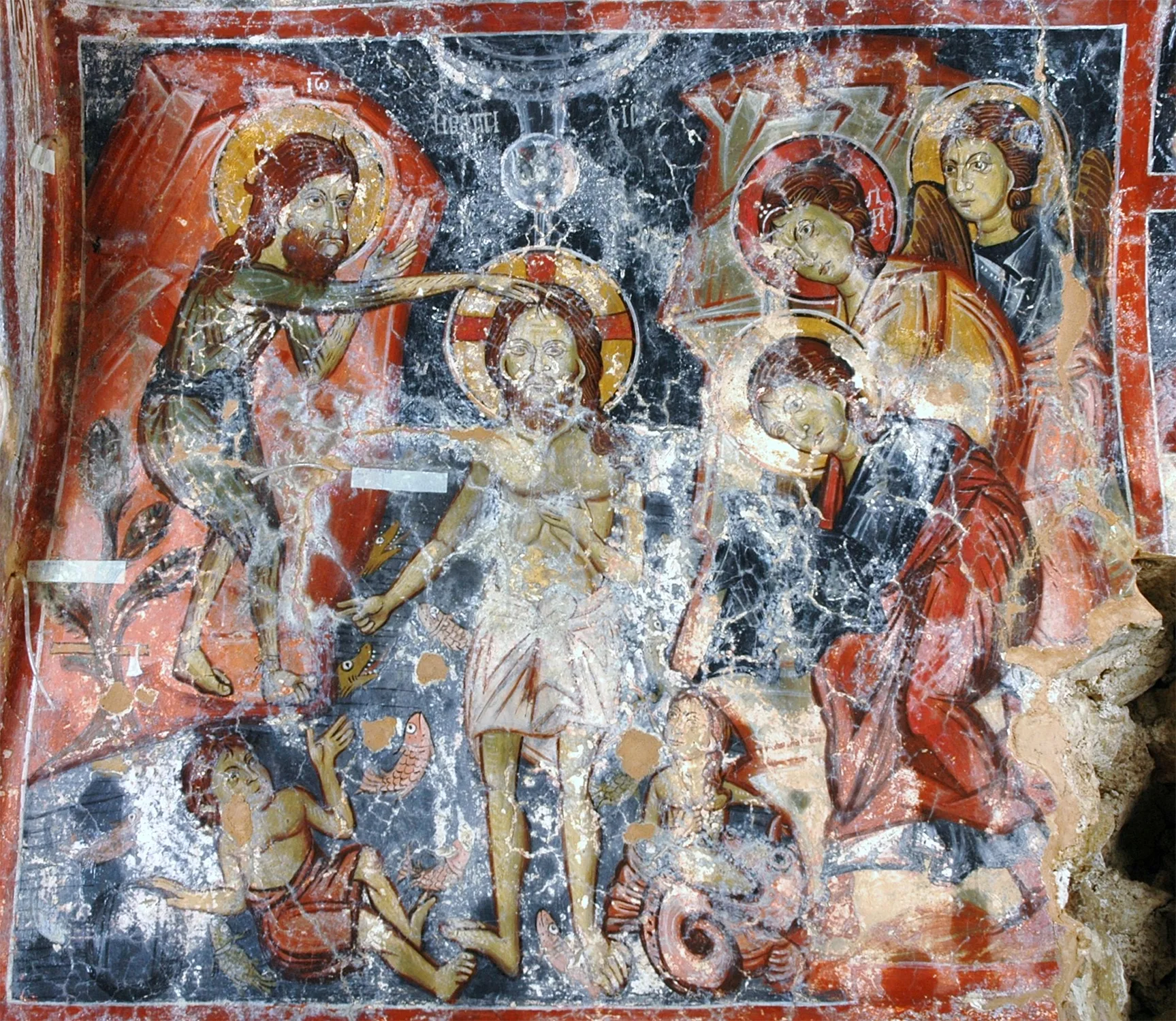
- St Nicholas, Maza. The Baptism of Christ. The personifications of the Sea and the River Jordan, with fish and sea-dragons (source: Ministry of Culture, Ephorate of Antiquities of Chania).
-
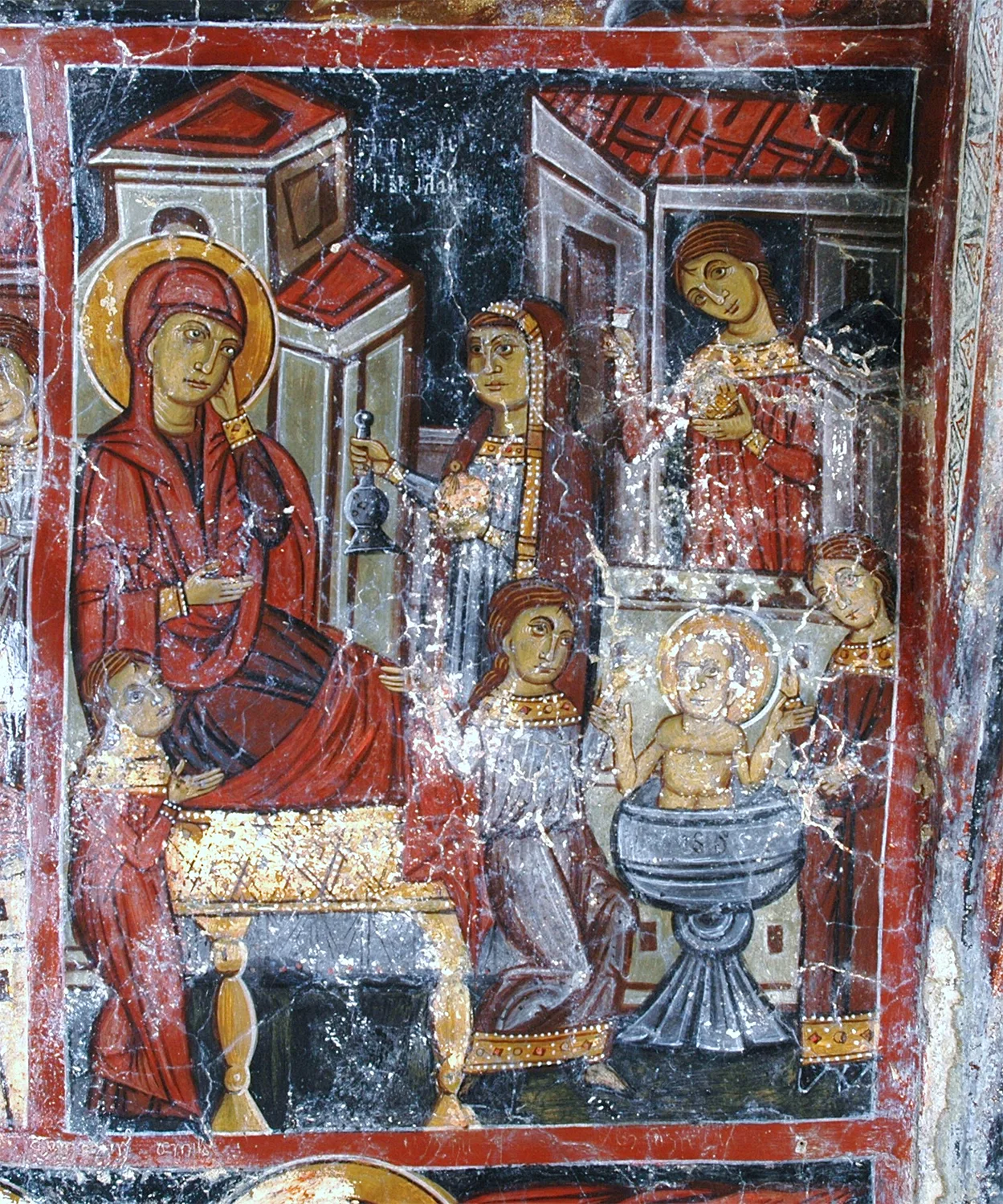
- St Nicholas, Maza. The Birth of St Nicholas. The newborn infant is standing upright in the bath (source: Ministry of Culture, Ephorate of Antiquities of Chania).
 Church of Agios Nikolaos in Maza in the Route of Rural Life
 Church of Agios Nikolaos in Maza in the Route of Life and Death
Christ the Light-Giver is the representation of Christ as light and conveys the close relationship between Christianity and the duality of light and darkness, the pillar of Christian life. The image of the Deesis is associated with funerary churches; in the case of Maza, graves were found around the church during the excavations.
-
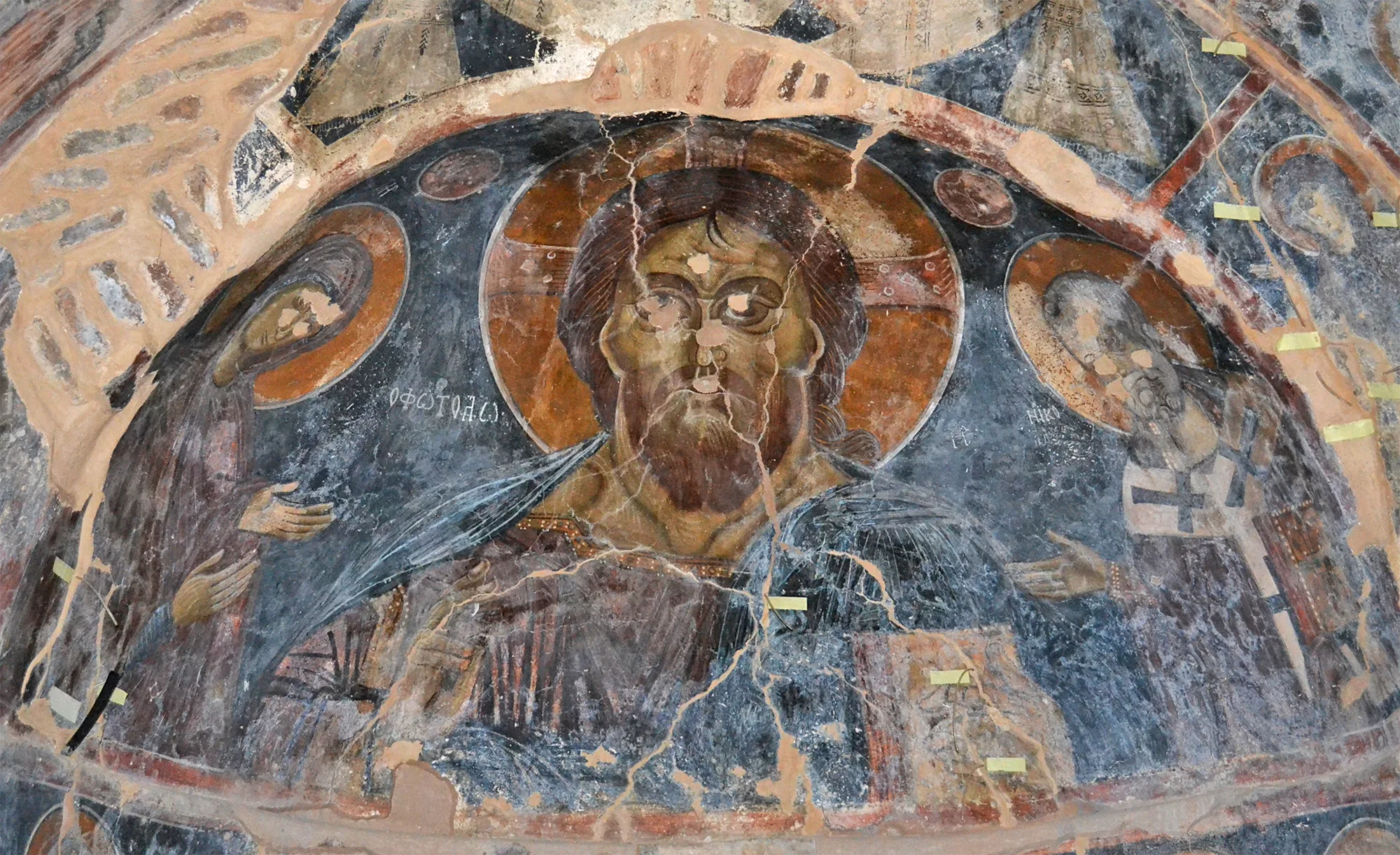
- St Nicholas, Maza. The Prayer. Christ Photodotis (Light giver) with the Virgin Mary and St. Nicholas (source: Ministry of Culture, Ephorate of Antiquities of Chania).
 Church of Agios Nikolaos in Maza in the Route of Byzantine Art
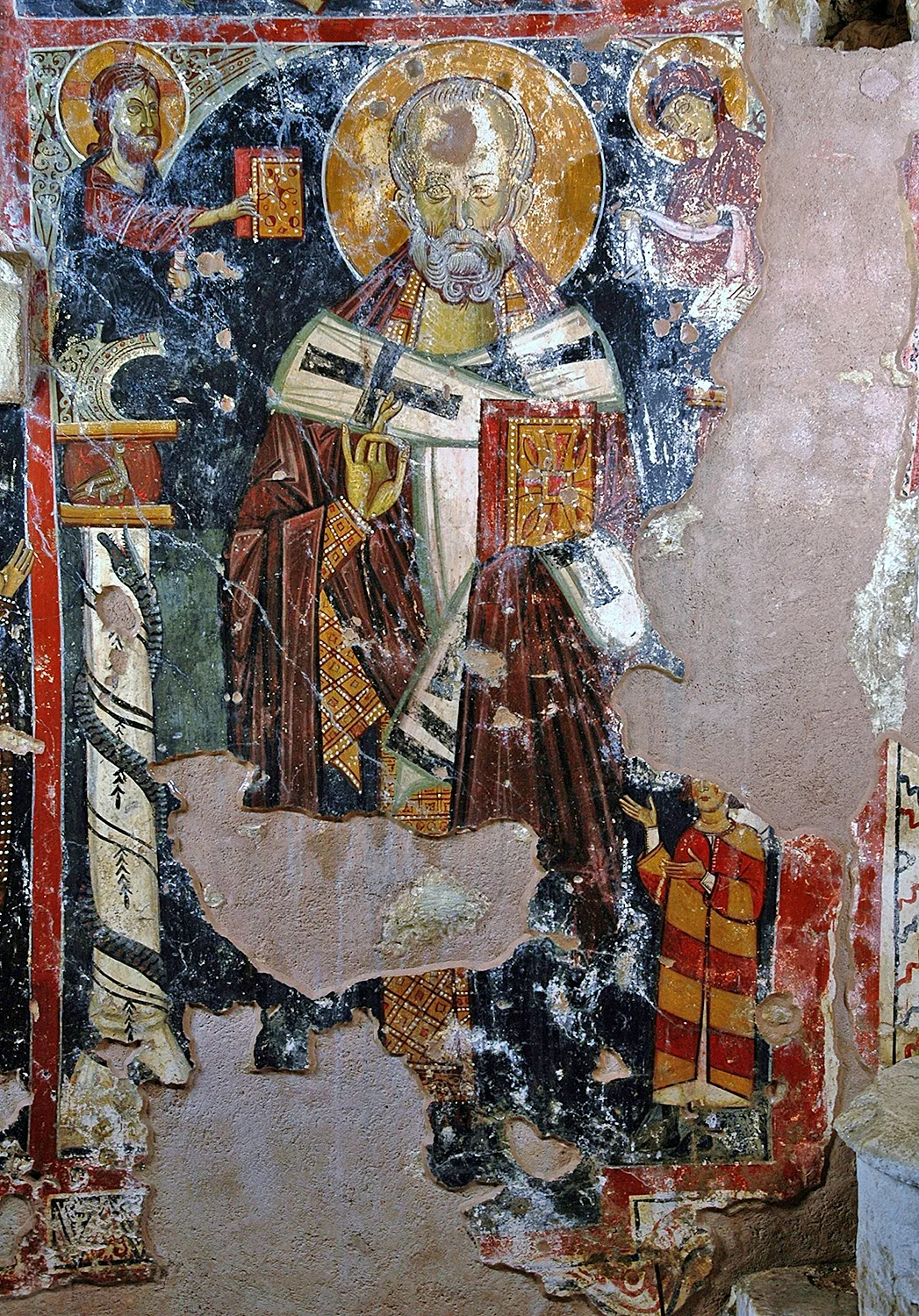
Two donors’ names are recorded in the dedicatory inscription of the church in Maza. They were the main sponsors of the project, while the whole village contributed financially, as the inscription attests. The order in which the names are listed indicates the size of the contribution. Thus Dimitris Sarakinopoulos, who is recorded first, must have been the person who paid the most money per capita; he is also the donor whose portrait is painted in the church.
Sarakinopoulos is depicted on a smaller scale within the main painting of St Nicholas, to whom the church is dedicated. He is facing the saint, his hands raised in a gesture of supplication. Sarakinopoulos is not holding a model of the church, like the pair of donors in nearby Alikambos, for the simple reason that he was not the only person who paid for its construction and renovation. However, the obviously larger amount of funding he provided secured him a place in the fresco decoration of the church.
-
- St Nicholas, Maza.
Maza
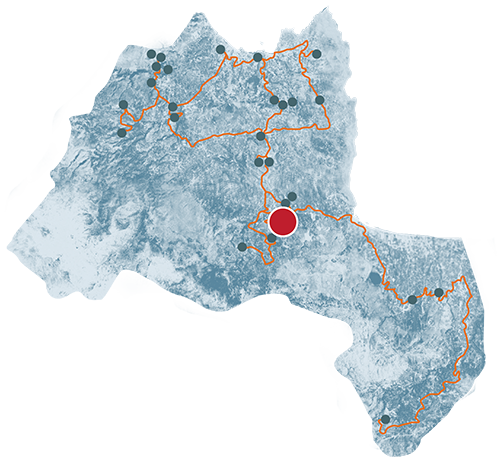
Maza is 37 km from Chania and is built at an altitude of 160 m.