Monastery of Agios Georgios (St George) in Karydi
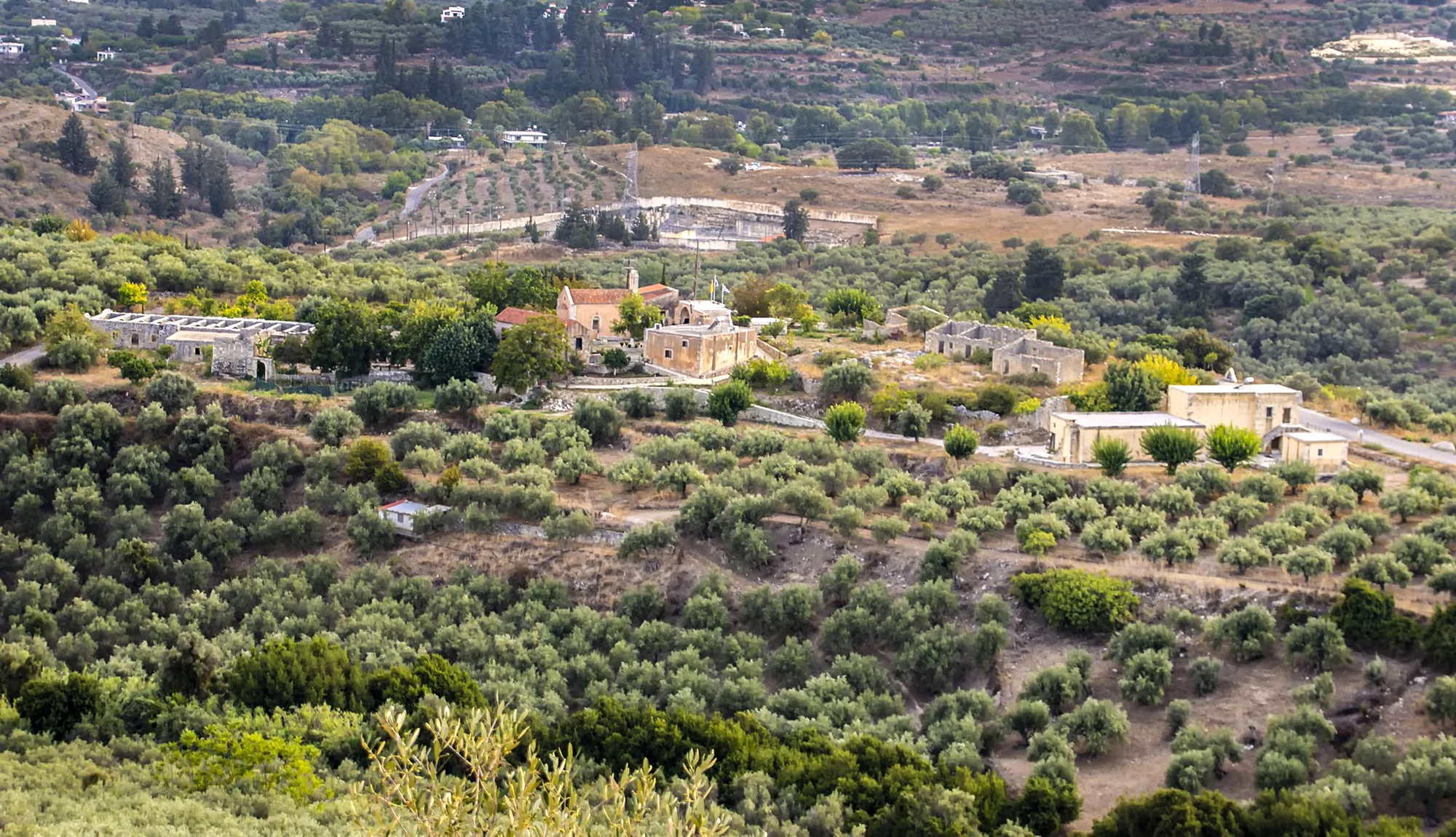
The Monastery of St George in Karydi is located between the villages of Vamos and Vryses in Apokoronas, on the site of the former village of Caridi San Zorzi (Karydi of St George). The monastery gradually assumed the form of an Orthodox monastic complex with wings surrounding a central courtyard. The main gate with a diabatikon (vaulted passage) is on the west. The catholicon (monastery church), dedicated to St George, stands in the central courtyard.
The monastery complex includes an olive mill, a large rectangular space with 13 arches, on the east. The monastery buildings date from the late 18th to the early 20th century.
West of the monastery precinct is a villa of the Late Venetian period (late 16th – first half of the 17th c.). Among the rooms of the villa is an olive mill, as olive cultivation was the main economic activity in the area as far back as Venetian times.
The monastery was built on the site of the village of Caridi San Zorzi (Karydi of St George), the ruins of which are still visible today. The village is mentioned in documents of the early Venetian period (14th c.), although there is no information on the village itself. However, the reference to 60 men of military age (between the ages of 16 and 50) in the list of the Rector of Chania Marcantonio Bernardo in 1536 indicates that it was reasonably large. The mention of surnames of noble origin also shows that the settlement was probably an important one.
In the 1637 ecclesiastical census of Orthodox churches and monasteries there is a reference to “the noble lord Vizzamano”, who must have been the owner of the villa with the olive mill that dominated the settlement. The olive mill, which was contiguous with the villa, also shows that the village was the fief of a Venetian nobleman, who owned a residence with industrial facilities in the village in order to process the olive oil produced by the surrounding farm.
The first clear evidence of the relationship between the village and the Monastery of Agia Triada (Holy Trinity) Tzagarolon comes from the chronicle of Gregorios Papadopetrakis. According to this, the villagers, apart from the priest, converted to Islam en masse at some point in the 18th century. After their conversion, they insistently demanded that the village church be handed over and converted into a mosque. The pressure from the villagers led the priest to turn to a Janissary corps for assistance. He had to give them gifts in order to secure their aid. As he had no money, he borrowed it from the Janissaries and was subsequently unable to repay them. He therefore appealed to the Monastery of the Holy Trinity to repay the Janissaries in exchange for ceding his church and its property to the monastery (before 1872).
Until recently, the Monastery of St George was not an autonomous monastery but a dependency of Agia Triada Tzagarolon. In 1995, the Holy Synod of the Church of Crete designated it an autonomous monastery.
-
- Monastery of Agios Georgios (St George) in Karydi
-
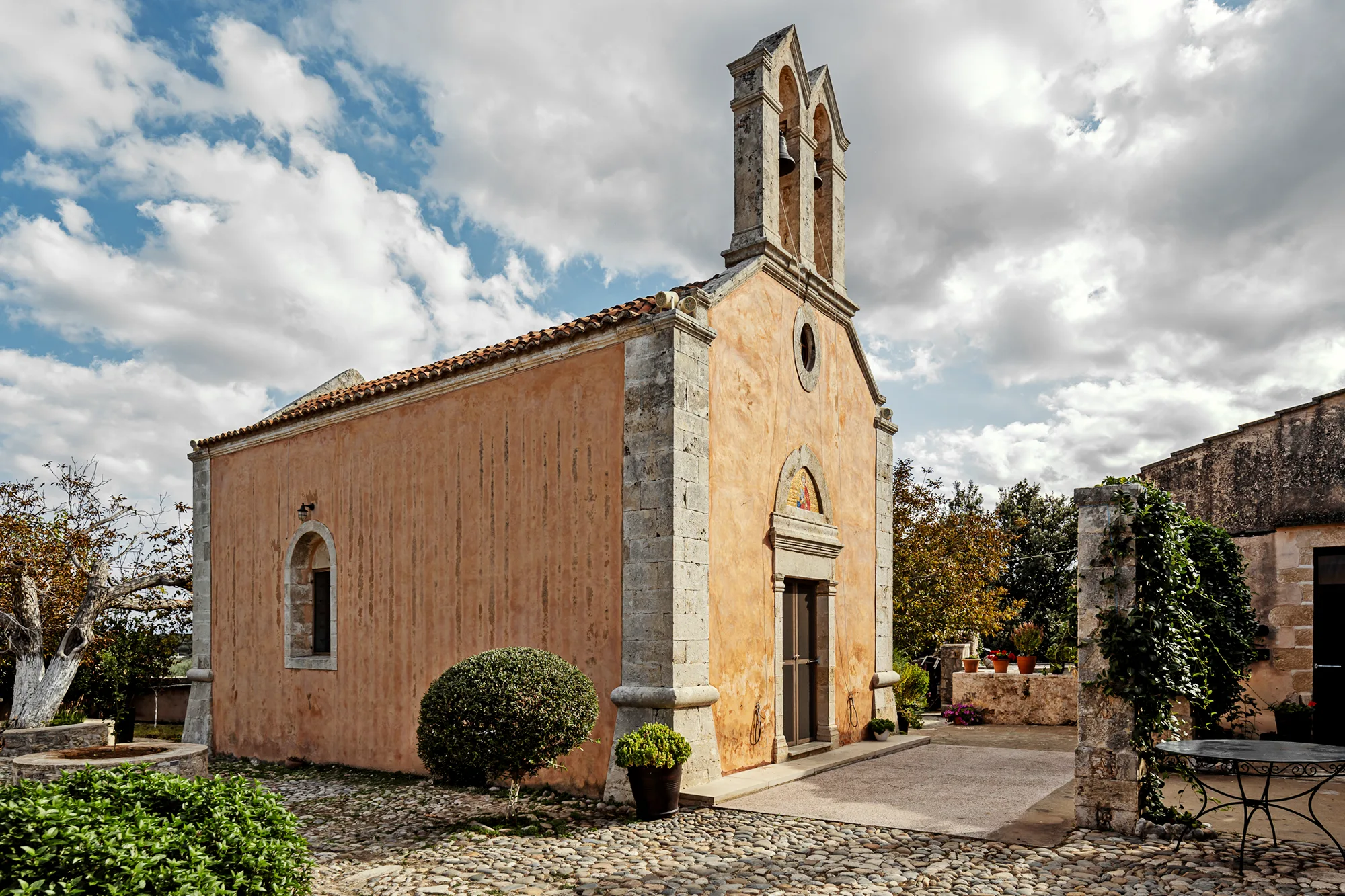
- Monastery of St George, Karydi. The catholicon. View from the NW (source: Sotiris Zerveniotis).
-
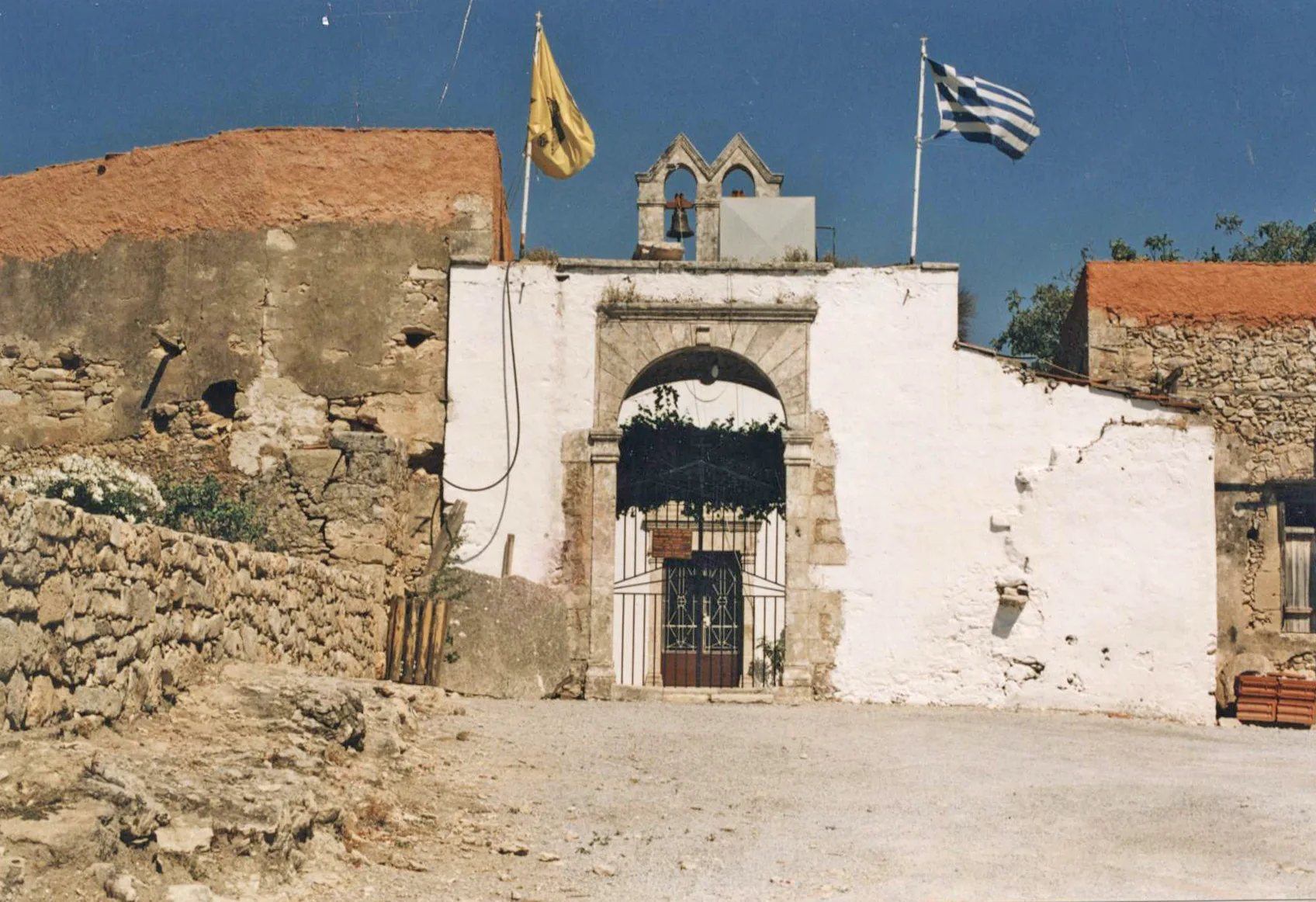
- Monastery of St George, Karydi. The main gate of the monastery (source: Michalis Andrianakis Archive).
-
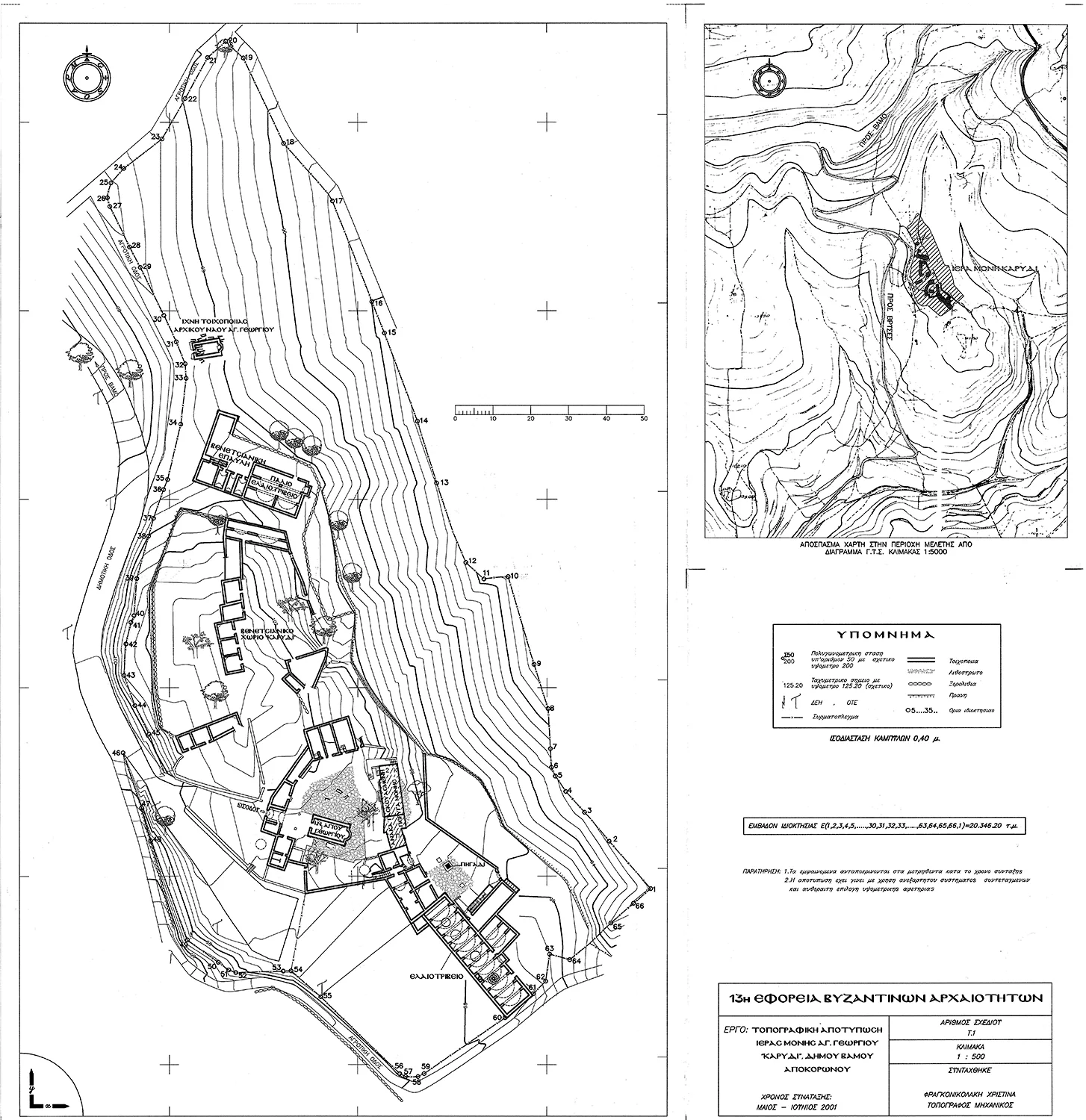
- Monastery of St George, Karydi. Topographical plan of the complex (source: Ministry of Culture, Ephorate of Antiquities of Chania).
 Monastery of Agios Georgios in Karydi in the Route of Timelessness
 Monastery of Agios Georgios in Karydi in the Route of Sustainability
 Monastery of Agios Georgios in Karydi in the Route of Rural Life
In the 1637 ecclesiastical census of Orthodox churches and monasteries there is a reference to “the noble lord Vizzamano”, who must have been the owner of the complex. The olive mill, which is contiguous with the villa, also shows that the village was the fief of a Venetian nobleman, who owned a residence with industrial facilities in the village in order to process the olive oil produced by the surrounding farm. The current monastery of Agios Georgios was originally a dependency of the Monastery of Agia Triada (Holy Trinity) Tzagarolon. With the gradual increase in olive production, an additional olive mill was constructed in the dependency, reflecting its importance to the rich monastery of Agia Triada Tzagarolon.
-
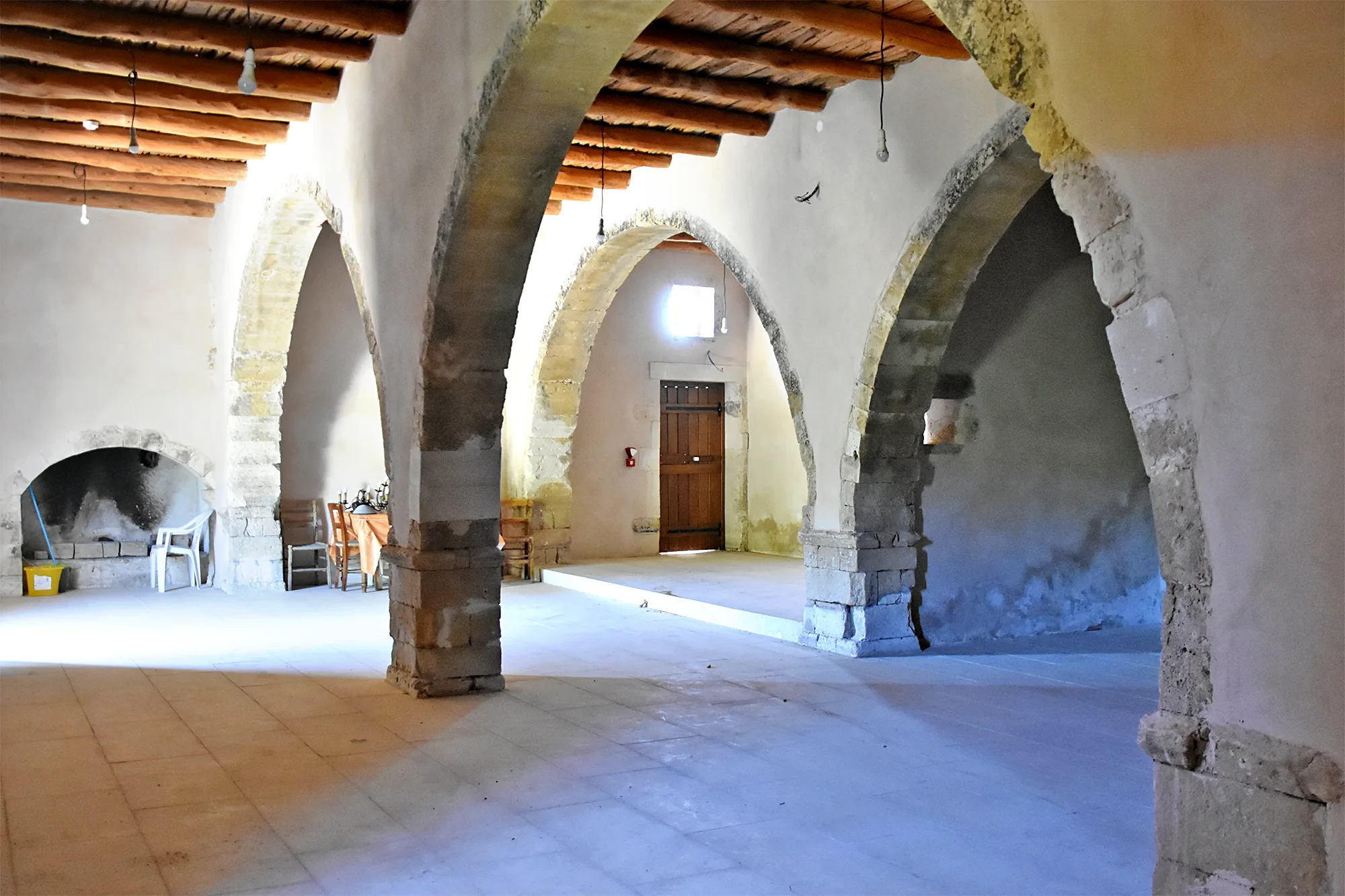
- Venetian villa. Monastery of St George in Karydi. The olive mill (source: Michalis Andrianakis Archive).
-
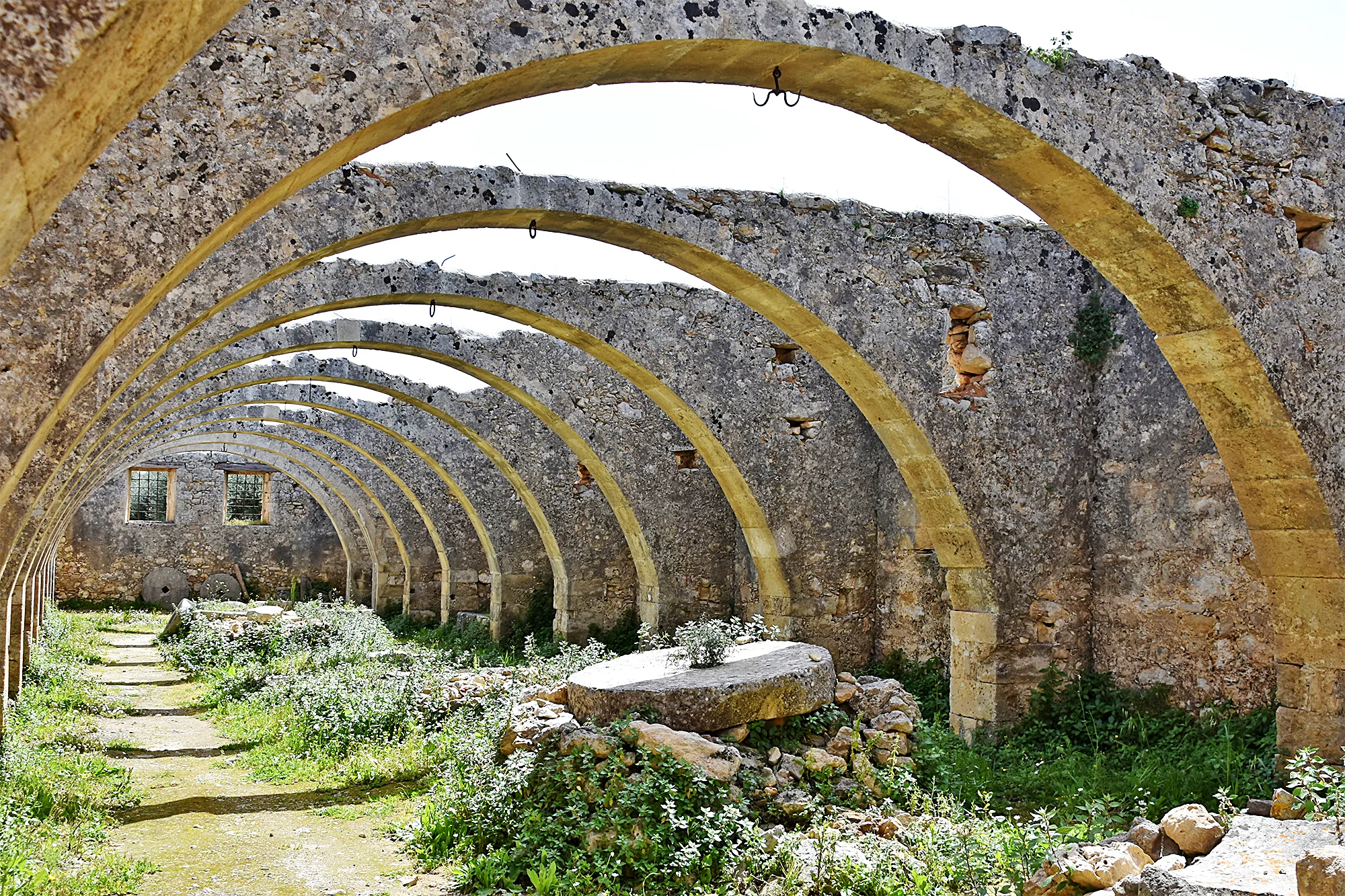
- Monastery of St George, Karydi. The olive mill in modern times. View from W (source: Michalis Andrianakis Archive).
Karydi
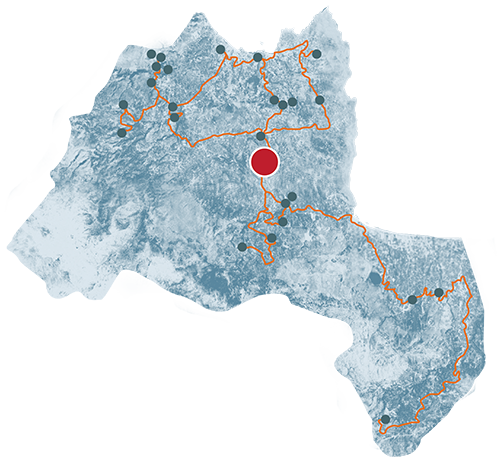
The monastery is located between the villages of Vamos and Vryses Apokoronas at the place where the Venetian settlement of Karidi Agios Georgios was built, 2 km east of Vamos, at an altitude of about 190m.